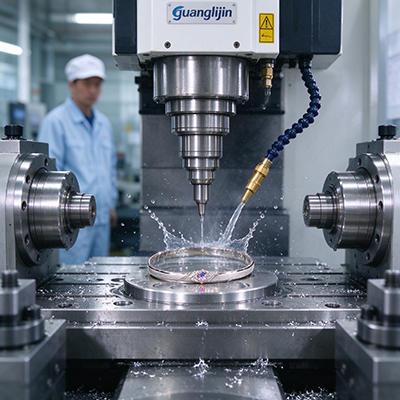
SEO Description: Industrial cnc 5 axis machine for sale guide. Real cost data, inspection steps, and aerospace risks.
A used five-axis machining center can be the smartest purchase a component shop makes. It can also become a $200,000 lesson in hidden wear. The difference is not luck. It is inspection discipline applied before the riggers arrive.
The industrial market for a cnc 5 axis machine for sale splits into clear tiers. Used platforms range from roughly $36,000 to $150,000 depending on age and condition [citation:7]. Premium recent models command more. Each tier carries a different risk profile, and component machining tolerances expose those risks quickly.
Why Component Machining Punishes Weak Five-Axis Platforms
Component work means bores, faces, and features that must align across multiple orientations. A five-axis machine earns its price by cutting those features in one setup. It loses that advantage when thermal deformation shifts the geometry mid-cycle.
Thermal error accounts for roughly 50% to 70% of total machine tool accuracy error [citation:3]. That figure matters more on five-axis platforms because rotary axes amplify the effect. A spindle that grows 10 microns on a three-axis mill shifts one tool position. On a five-axis machine, that same growth interacts with rotary center geometry and produces contour error that varies with angle.
RTCP compensation is the countermeasure. Rotational Tool Center Point control recalculates tool position as the rotary axes move [citation:3]. A machine with drifted RTCP tables cuts inaccurate geometry even when every linear axis holds position perfectly.
Comparison: Two Used Five-Axis Purchase Profiles
| Factor | Project A: Older Premium Platform | Project B: Recent Mid-Range Platform |
|---|---|---|
| Typical Age | 10–15 years | 4–8 years |
| Price Range | $80,000–$150,000 | $180,000–$280,000 |
| Structure | Heavy cast iron, box ways | Cast iron, linear guides |
| Rotary Drive | Worm gear, possible backlash | Roller gear cam or DD |
| Control Risk | Older software, parts availability | Current generation, supported |
| Annual Maintenance Estimate | 10–20% of purchase price [citation:7] | 5–10% of purchase price |
| Best For | Shops with in-house maintenance | Shops needing production certainty |
Project A offers rigidity at a discount. The heavy frame that made the machine expensive when new still absorbs vibration. The risk lives in the rotary axes and the control. A worm gear set that has run 20,000 hours may hold position during inspection and drift under cutting load.
Project B costs more upfront. The maintenance burden is lower and the control software is current. For a shop without a dedicated maintenance technician, that trade favors the newer platform.
Step-by-Step: Inspecting a Used Five-Axis Machine for Component Work
- Request Service Records Before Scheduling a Visit. Look for gaps longer than six months. Repeated spindle or axis repairs signal deeper problems [citation:1]. A crash noted without a follow-up alignment check is a warning. The paperwork tells you how the machine lived before it appeared in the listing.
- Verify Control Licenses for Simultaneous Five-Axis. A machine may have five axes and lack the software option to move them together. Check the option pages in the control. Confirm that any dongles or license keys transfer with the sale [citation:1]. A missing five-axis license turns the purchase into an expensive three-axis mill.
- Measure Rotary Axis Backlash With a Dial Indicator. Mount a test bar in the spindle. Position the indicator against the rotary table. Push and pull by hand. Measure the play. Repeat on the tilt axis. Backlash beyond a few microns means gear wear or bearing degradation.
- Check Spindle Runout Across the Speed Range. Run the spindle from minimum to maximum rpm. Listen for bearing noise. Measure total indicated runout inside the taper. Component machining demands runout below 0.005 mm at the tool tip. Higher runout cuts oversized bores before any positioning error enters.
- Run a Ballbar Test or Arrange a Test Cut. A ballbar reveals servo mismatch, squareness error, and backlash in one circular test [citation:6]. If the seller permits, run it. A test cut with known geometry confirms what the ballbar suggests. A machine that passes both is ready for component work.
- Confirm Thermal Compensation Is Active and Verified. Ask when the thermal model was last tuned. Cut a test part, let the machine run for two hours, and cut another. Measure both. If the second part drifts, the compensation model is stale or inactive.
Mistakes That Turn a Good Deal Into a Downtime Project
⚠ Attention: Avoid judging condition by spindle hours alone. A machine that ran aluminum at high speed for 8,000 hours may have more thermal cycles than one that ran titanium at low speed for 15,000 hours. Check runout and backlash directly. Hours are context, not proof.
We worked with a component shop in 2025 that bought a used five-axis horizontal for $195,000. The spindle ran quietly. The service records looked clean. What the records missed was a minor crash that shifted the B-axis center by 16 microns. First-article inspection caught it. Realignment and recalibration cost $18,000 and two weeks of downtime. A ballbar test during inspection would have found the shift before money changed hands.
Component Machining Demands on a Used Platform
Component work rewards repeatability. A five-axis machine that cuts one accurate part proves little. The question is whether it cuts the hundredth part to the same tolerance. Thermal stability and rotary axis wear determine that answer.
Titanium components add another layer. Ti-6Al-4V conducts heat poorly. Cutting heat concentrates at the edge. Through-spindle coolant at 70–80 bar is not a luxury on aerospace work [citation:4]. It is the difference between a tool that lasts and one that fails mid-cycle. Verify that the used machine’s coolant system reaches that pressure at the tool, not just at the pump.
Chip evacuation on five-axis platforms also differs from three-axis work. The tool reorients constantly. Chips that would fall away on a vertical mill wrap around the cutter on a tilted spindle. Good CAM accounts for chip flow direction. The machine must support that strategy with coolant delivered where the cut happens [citation:4].
Frequently Asked Questions
Q: What is a realistic price for a used 5-axis CNC machine for component machining?
A: Used five-axis machining centers range from roughly $36,000 to $150,000 for older models, with premium recent platforms reaching $280,000 or more [citation:7]. Budget an additional 10% to 20% of the purchase price annually for maintenance and repairs. Inspection and potential recalibration add $10,000 to $30,000 to the true cost.
Q: How do I check rotary axis backlash on a used 5-axis machining center?
A: Mount a dial indicator on a test bar in the spindle. Position it against the rotary table. Push and pull by hand. Measure the play in both rotary axes. Backlash beyond a few microns indicates gear or bearing wear. Repeat with the brake engaged to verify holding torque.
Q: Why does RTCP matter when buying a used 5-axis machine?
A: RTCP compensation keeps the tool tip on the programmed path as rotary axes move. Drifted or missing calibration produces contour error that varies with angle. Factory tables can be lost during battery failures or control upgrades. Verify RTCP accuracy with a test cut before purchase [citation:3].
Q: Can a used 5-axis machine handle titanium aerospace components?
A: Yes, if the machine has sufficient rigidity and coolant pressure. Titanium demands through-spindle coolant at 70–80 bar and a rigid frame that absorbs cutting force [citation:4]. Older premium platforms with box ways often outperform lighter newer machines on titanium roughing. Verify coolant pressure at the tool before committing.
The industrial cnc 5 axis machine for sale that serves your component work is the one that passes inspection, not the one with the lowest sticker price. Service records, rotary backlash, spindle runout, and RTCP verification separate a productive asset from a maintenance liability.
✅ Used Five-Axis Machine Inspection Checklist
- Service records reviewed for gaps, crashes, and repeated repairs
- Control option pages checked for simultaneous five-axis license
- Software dongles and license keys confirmed to transfer
- Rotary axis backlash measured with dial indicator on test bar
- Brake holding torque verified on both rotary axes
- Spindle runout measured below 0.005 mm across speed range
- Ballbar test completed or arranged through third party
- RTCP calibration status confirmed with test cut
- Through-spindle coolant pressure verified at the tool
- Thermal compensation model status checked and documented
- Total cost calculated including maintenance reserve and recalibration
- Local service and parts availability confirmed before purchase
Data sources: CNC Exchange used equipment verification guide [citation:1] ; ANOK Precision Manufacturing five-axis cost analysis [citation:7] ; Taiwan machine tool B2B thermal deformation and RTCP report [citation:3] ; OEM Update five-axis aerospace machining guide [citation:4] ; Machinio used five-axis inspection FAQ [citation:6] .