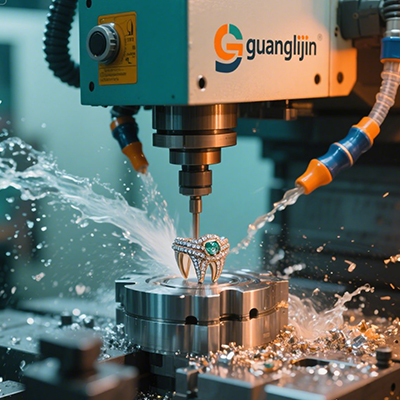
Choosing the right CNC machining setup can make or break a project. We often see teams struggle with the trade-off between cost and capability. This guide breaks down the practical differences between 3 4 5 axis CNC configurations. You will see how each setup handles real-world parts, where mistakes happen, and which option fits your production floor.
What Do the Axis Numbers Actually Mean on the Shop Floor?
The axis count refers to how many directions the cutting tool or workpiece can move. A 3-axis machine moves linearly in X, Y, and Z. A 4-axis machine adds rotation around one axis, usually the A-axis. A 5-axis machine adds two rotational axes, letting the tool tilt and pivot from nearly any angle [citation:1].
This difference matters because it changes how many times you must stop the machine to flip a part. More axes mean fewer setups. Fewer setups mean tighter tolerances and less handling time. But more axes also mean higher programming complexity and a bigger capital investment.
3-Axis: The Workhorse for Simple Geometry
Three-axis milling remains the backbone of most machine shops. The setup is straightforward. Programming uses basic G-code. For flat plates, brackets, heat sinks, and simple enclosures, a 3-axis machine is the most cost-effective choice [citation:2].
However, the limitation appears fast when a part needs features on multiple faces. The operator must stop, unclamp, reposition, and re-zero the part. Each repositioning adds time and introduces a chance for alignment error. Deep pockets and undercuts become difficult or impossible without special tooling.
4-Axis: Adding Rotation Without Full Complexity
A fourth axis brings rotation into the process. The workpiece can turn while the tool cuts. This capability unlocks cylindrical features, helical grooves, and multi-face machining in fewer setups [citation:1].
For parts like crankshafts, pump impellers, or custom rifle barrels, the 4-axis setup hits a sweet spot. You get improved access and reduced handling without the full jump to 5-axis programming. The investment sits between the two extremes. But angled features that require simultaneous tilt and rotation still fall outside its reach.
5-Axis: Simultaneous Control for Complex Geometries
Five-axis machining lets the tool approach the part from almost any direction. The machine can run in 3+2 mode, where the part rotates to a fixed angle and then cuts linearly. Or it can run simultaneous 5-axis, where all axes move together to follow complex contours [citation:10].
The payoff is significant. One setup can complete a part that would require three or four setups on a 3-axis machine. Surface finish improves because the tool stays at an optimal angle. Tool life extends because cutting forces stay consistent. For aerospace components, medical implants, and complex mold cavities, 5-axis is often the only viable path.
Direct Comparison: Project A vs. Project B
Numbers on a spec sheet do not tell the whole story. Consider two real production scenarios. Project A involves a batch of aluminum mounting brackets with holes on two faces. Project B involves a titanium medical implant with freeform surfaces and undercuts.
| Factor | Project A: Aluminum Brackets | Project B: Titanium Implant |
|---|---|---|
| Recommended setup | 3-axis (or 4-axis for moderate volume) | 5-axis simultaneous |
| Typical tolerance | ±0.001″ | ±0.0005″ or tighter [citation:2] |
| Number of setups | 2 (flip part for back features) | 1 (all features in one clamping) |
| Surface finish (Ra) | ~1.6 µm | ~0.4 µm achievable [citation:2] |
| Programming complexity | Low (standard CAM) | High (collision simulation required) |
| Machine hourly rate | Lower | Higher |
| Total cost per part | Lower for simple geometry | Lower only when complexity justifies the setup savings |
Project A does not benefit from a 5-axis machine. The extra capability sits idle while the hourly rate climbs. Project B cannot be machined efficiently on a 3-axis machine. The multiple setups would introduce alignment errors and add hours of handling time. Matching the machine to the part geometry is the core decision.
A Step-by-Step Guide to Selecting Your Axis Configuration
We use a structured evaluation process with every new part inquiry. This five-step approach prevents over-investing in capability you do not need and under-investing in precision you do need.
- Map every feature and its orientation. List all holes, pockets, contours, and surfaces. Note which faces they sit on. If all features are accessible from the top, 3-axis is likely sufficient.
- Count the required setups on a 3-axis machine. If the part needs more than two setups, calculate the handling time and error risk. Multiple setups on complex parts often justify moving to 4 or 5 axes.
- Evaluate tolerance and surface finish requirements. Tolerances tighter than ±0.001″ on angled or contoured features point toward 5-axis. Standard prismatic tolerances stay comfortably in 3-axis territory.
- Estimate annual volume and batch size. High-volume simple parts favor 3-axis efficiency. Low-volume complex parts favor 5-axis single-setup capability. The break-even point depends on your hourly rates and scrap risk.
- Run a cost simulation including scrap and rework. A cheaper machine rate means nothing if the part requires three setups and one gets scrapped. Factor in the true cost of manual handling and potential misalignment.
⚠ Attention: Common Misconceptions That Cost Money
Where 3 4 5 Axis CNC Capability Fits in Real Production
We worked with a medical device client in 2025 who was machining titanium bone plates on a 3-axis mill. The parts required three setups. Scrap rate hovered near 12% due to re-alignment errors on the second operation. The cycle time per part was acceptable, but the scrap and rework costs were not.
After reviewing the geometry, our team recommended a 5-axis machine running in 3+2 mode. The change eliminated two setups. Scrap dropped below 2%. The higher hourly rate was offset within four months by reduced scrap and handling time. This is a common pattern: the machine cost dominates the purchase decision, but the true savings come from eliminating manual intervention.
For shops considering 3 4 5 axis CNC equipment, the decision framework should center on part geometry and handling risk. If you can hold tolerance and finish with a 3-axis setup and one flip, the extra axes add cost without proportional benefit. If you find yourself designing fixtures to avoid a fourth setup, the math has already tipped toward multi-axis.
Frequently Asked Questions from Search Data
What is the main difference between 3-axis and 5-axis CNC machining?
The main difference is simultaneous motion capability. A 3-axis machine moves the tool linearly in X, Y, and Z only. A 5-axis machine adds two rotational axes, allowing the tool to approach the part from nearly any angle in a single setup. This reduces handling and improves access to complex features.
Is 4-axis CNC worth it for small machine shops?
It depends on the part mix. If you regularly machine cylindrical features, helical grooves, or parts with features on multiple faces, a 4-axis machine cuts handling time and improves accuracy. If your work stays prismatic, the investment may not pay back quickly enough.
Can a 3-axis CNC machine cut curved surfaces?
A 3-axis machine can produce curved surfaces using ball-end mills and parallel passes. However, steep walls and deep cavities suffer from poor tool engagement and longer cycle times. The surface finish is generally inferior to what a 5-axis machine achieves with optimal tool orientation.
What tolerances can 5-axis machining hold?
Typical 5-axis tolerances reach ±0.0005″ or ±0.008° for simultaneous motion. This precision comes from shorter, more rigid tooling and fewer re-clamping operations. The exact tolerance depends on machine condition, thermal stability, and programmer skill.
✅ Pre-Purchase CNC Axis Checklist
- List all part features and the number of faces they occupy.
- Count the setups required on a 3-axis machine for your top three parts.
- Estimate annual volume and batch sizes for each part family.
- Calculate current scrap and rework rates tied to multi-setup operations.
- Confirm your CAM software supports 4- or 5-axis tool paths and simulation.
- Request a test cut on representative geometry from the machine supplier.
- Verify post-processor availability and quality for your specific machine model.
- Compare total cost per part, not machine hourly rate, across configurations.
- Check floor space, power, and foundation requirements for the new machine.
- Plan operator training for collision avoidance and multi-axis programming.
The right axis count is the one that matches your part geometry, volume, and tolerance requirements. A 3-axis machine remains the most efficient choice for simple prismatic work. A 4-axis machine bridges the gap for rotational features. A 5-axis machine unlocks complex single-setup production. Match the capability to the job, and the investment pays back through reduced handling, tighter precision, and lower scrap.