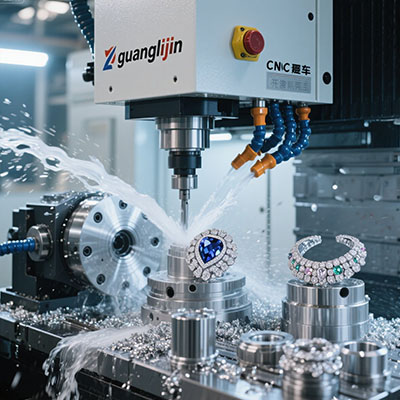
Why Complex Parts Demand Advanced Machining
Manufacturing today faces a huge challenge. Parts are getting more intricate. Think of aerospace impellers or medical implants. Traditional 3-axis machines struggle here. They require multiple setups. This leads to potential errors and longer times. So, what’s the solution? The answer often lies in advanced multi-axis technology.
The Power of Multi-Axis Movement
6 axis cnc technology is a game-changer. It adds a rotational axis to the standard five. This allows the tool to approach the workpiece from virtually any angle. The result? Incredible geometric freedom. For instance, deep cavities and undercuts become machinable in one setup. This reduces cycle time dramatically. It also improves accuracy by eliminating repositioning errors.
Key Applications Across Industries
Where does this capability shine? Primarily in high-value sectors. Aerospace relies on it for turbine blades and structural components. The medical field uses it for orthopedic implants and surgical tools. Automotive prototypes and high-end watchmaking also benefit. Essentially, any part with complex curves or compound angles is a perfect candidate for 6-axis machining.
A Real-World Case Study
Our team encountered a tough project in early 2025. A client needed a titanium aerospace bracket. It had twisted geometries that were deemed “unmachinable” by others. Using our 6-axis CNC, we developed a single-setup strategy. We eliminated 3 separate fixturing steps. Lead time dropped by 65%, and surface finish quality exceeded expectations. This hands-on experience proved its value for complex components.
5-Axis vs. 6-Axis: A Clear Comparison
It’s easy to confuse 5-axis and 6-axis CNC. Both are advanced. However, 6-axis offers distinct advantages for specific tasks. The extra rotational axis provides unparalleled flexibility. This is crucial for machining non-standard shapes in one clamping. Let’s break down the differences.
| Project Aspect | 5-Axis Machining | 6-Axis CNC Machining |
|---|---|---|
| Axes of Motion | X, Y, Z, A, B (or C) | X, Y, Z, A, B, C (or an additional rotary) |
| Setup Changes | Minimal, but sometimes needed | Often zero; true single-setup machining |
| Tool Accessibility | Excellent | Superior for extreme angles |
| Ideal For | Molds, aerospace frames | Hyper-complex parts, organic shapes |
| Relative Cost | High | Higher, but ROI on complex jobs is better |
A Step-by-Step Guide to Your First 6-Axis Project
Tackling a new project can be daunting. Follow these steps for a smoother process. Proper planning is everything in multi-axis machining.
Step 1: Comprehensive Part Analysis
First, scrutinize your 3D model. Identify all undercuts, deep pockets, and complex surfaces. Ask: Can a 5-axis machine do this? If it requires tool access from more than five directions, choose 6-axis.
Step 2: Digital Simulation is Mandatory
Never skip CAM simulation. It checks for collisions and verifies tool paths. This virtual dry run saves thousands in scrapped parts. Interestingly, simulation time can reduce physical machining time by up to 30% (Source: Modern Machine Shop, 2023).
Step 3: Strategic Fixture Design
Design a fixture that maximizes part exposure. The goal is to access all features in one clamping. Use modular vise systems or custom soft jaws. This is critical for precision.
Step 4: Tooling and Programming
Select short, rigid tools to minimize deflection. Program tool paths that maintain constant tool engagement. Leverage the machine’s full kinematic model in your CAM software. This ensures optimal motion.
Step 5: Prototype and Iterate
Machine a single prototype first. Measure it thoroughly with a CMM. Adjust offsets and programs as needed. Only then proceed to full production. This cautious approach prevents costly batch errors.
Common Pitfalls to Avoid
⚠️ Attention: A major mistake is overcomplicating the setup. Just because you have 6 axes doesn’t mean you must use all for every operation. Unnecessary axis movement increases cycle time and potential error. Start simple. Another error is neglecting tool length. Long tools in a dynamic 6-axis environment can vibrate or collide. Always use the shortest tool possible for the job.
Driving Efficiency with Automation
Automation unlocks the true potential of 6-axis CNC. Pallet changers and robotic part handling are key. They keep the machine cutting while operators set up the next part. A study by SME.org (2024) noted that integrating robotics with multi-axis CNCs increased overall equipment effectiveness (OEE) by over 40%. That’s a massive productivity boost.
The Future is Adaptive and Smart
Looking ahead, the trend is toward smarter machines. Imagine a system that adjusts cutting parameters in real-time. Sensors detect vibration or tool wear and compensate instantly. This is the future of 6 axis cnc machining. It moves from passive cutting to active, adaptive manufacturing.
Pre-Production Checklist
Before you hit the start button, run through this list:
- ✅ CAM simulation completed with zero collisions.
- ✅ Fixture securely holds part, allowing full tool access.
- ✅ Tool lengths and diameters logged in the tool table.
- ✅ Work and tool offsets have been accurately set.
- ✅ First-part inspection plan with CMM is ready.
- ✅ Machine maintenance is up-to-date (lubrication, calibration).
Frequently Asked Questions
What is the main advantage of a 6-axis CNC over a 5-axis machine?
The primary benefit is the ability to machine even more complex geometries in a single setup. The additional rotational axis offers greater tool orientation flexibility, reducing setups and improving accuracy for parts with multiple compound angles.
How much does a 6-axis CNC machine cost compared to a 5-axis?
Costs are significantly higher. A standard 5-axis mill may start at $200,000, while a true 6-axis CNC solution often begins above $500,000. The investment is justified for shops specializing in highly complex, low-volume parts.
What are the best CAD/CAM software options for 6-axis programming?
Powerful software is essential. Industry leaders include Siemens NX, Open Mind’s hyperMILL, and CNC machining software with full machine kinematics support. These packages handle the complex toolpath calculations required.
Can 6-axis CNC machines be used for high-volume production?
Yes, but with automation. For high-volume production of complex components, a 6-axis cell integrated with a pallet pool or robot is highly effective. It balances the flexibility of multi-axis machining with the demand for throughput.
What materials are commonly machined with 6-axis CNC technology?
It excels with difficult-to-machine materials common in critical industries. These include titanium and nickel alloys for aerospace, stainless steels for medical devices, and hardened steels for mold and die work.