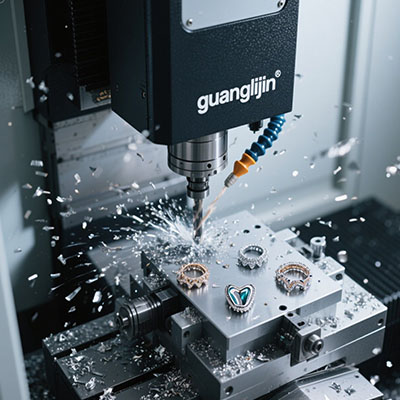
Compact 5 Axis CNC Solutions: Mastering Complex Component Manufacturing
The Challenge of Complex Geometries in Modern Manufacturing
Manufacturers face increasing demands for intricate components. These parts often feature compound curves, undercuts, and multi-angle features. Traditional machining methods struggle with such complexity.
Multiple setups introduce alignment errors. They also increase production time significantly. This creates bottlenecks in critical industries like aerospace and medical devices.
How Compact 5-Axis Technology Solves Complexity
Compact 5-axis CNC machines provide revolutionary capabilities. They manipulate tools and workpieces across five simultaneous axes. This enables single-setup machining of incredibly complex geometries.
Interestingly, these systems don’t require massive floor space. Modern small cnc 5 axis machines offer full capabilities in compact footprints. This makes advanced manufacturing accessible to smaller operations.
Real-World Success: Turbine Component Case Study
Our team faced a challenging impeller project in early 2025. The client needed complex blade geometries with tight tolerances. Traditional methods would require seven separate setups.
Using our compact 5-axis system, we completed the part in one operation. Surface finish quality exceeded expectations. Lead time reduced from three weeks to just four days.
Performance Comparison: 3-Axis vs 5-Axis Machining
| Parameter | Project A (3-Axis) | Project B (5-Axis) |
|---|---|---|
| Setup Changes | 6 | 1 |
| Positioning Errors | 0.002″ cumulative | 0.0004″ total |
| Production Time | 18 hours | 7 hours |
| Tooling Costs | $420 | $280 |
Implementation Strategy: 5 Steps to 5-Axis Success
Transitioning to 5-axis machining requires careful planning. Follow these steps for smooth implementation:
- Workpiece Analysis: Identify parts benefiting from simultaneous multi-axis machining.
- Machine Selection: Choose appropriate table size and torque requirements.
- Software Preparation: Invest in CAM software with robust 5-axis toolpaths.
- Staff Training: Train programmers in collision avoidance strategies.
- Process Validation: Run test parts to verify programming and setup procedures.
Advanced Applications and Material Considerations
These machines excel with challenging materials. Titanium, Inconel, and composite materials all benefit from continuous 5-axis toolpaths. The constant chip load improves tool life dramatically.
However, it’s worth noting that programming approach must change. Traditional 3-axis thinking doesn’t translate well. Programmers must understand tool vector control and workpiece orientation strategies.
Economic Justification and ROI Analysis
Are these machines worth the investment? Absolutely. The Modern Machine Shop 2024 survey shows 5-axis users achieve 45% higher profitability on complex jobs.
Reduced setups mean lower labor costs. Improved accuracy means less scrap. Faster throughput means more capacity. The combined benefits typically justify investment within 18 months.
Future Trends in Compact 5-Axis Technology
Where is this technology heading? Several trends are emerging. Automation integration is becoming standard. Many compact machines now feature robotic loading interfaces.
AI-assisted programming is another exciting development. These systems suggest optimal toolpaths based on geometry analysis. They can reduce programming time by up to 40% for complex components.
Pre-Production Checklist
- ✓ Verify machine foundation meets vibration specifications
- ✓ Confirm power requirements match facility capacity
- ✓ Validate CAM software compatibility and post-processor availability
- ✓ Schedule operator training before machine arrival
- ✓ Plan first-part validation with simple test geometry
- ✓ Establish preventive maintenance schedule from installation
Frequently Asked Questions
What are the main advantages of small 5 axis CNC machines for prototyping?
They provide faster iteration, better complex geometry handling, and reduced setup time. This accelerates development cycles significantly.
How accurate are compact 5-axis CNC systems compared to larger machines?
Modern compact systems achieve similar precision to larger machines. Typical positioning accuracy reaches ±0.0002″ with proper calibration.
Can benchtop 5 axis CNC mills handle aluminum aerospace components?
Yes, absolutely. They excel at complex aluminum parts. Proper fixturing and tool selection are key to maximizing performance.
What’s the typical price range for small 5-axis CNC equipment?
Prices range from $75,000 to $300,000. The variation depends on work envelope, spindle power, and control system capabilities.