Introduction: The New Era of Personalised Adornment
Have you ever dreamt of a unique piece that tells your story? The world of custom jewellery making is evolving. Traditional handcrafting now meets digital precision. This fusion unlocks possibilities once deemed impossible.
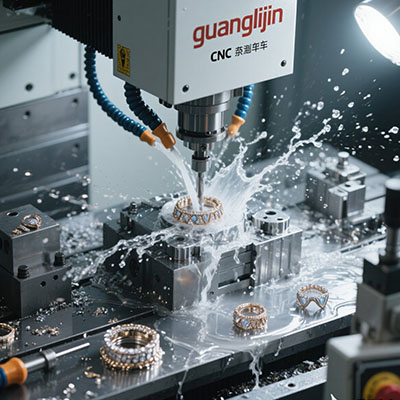
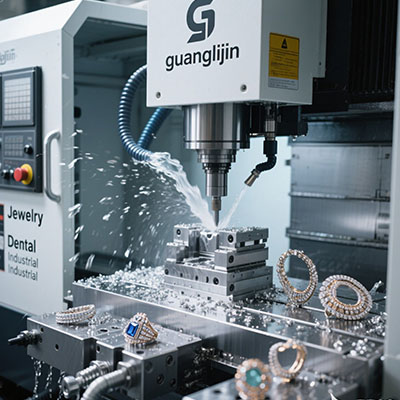
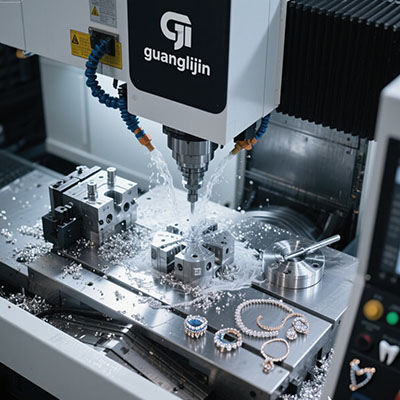
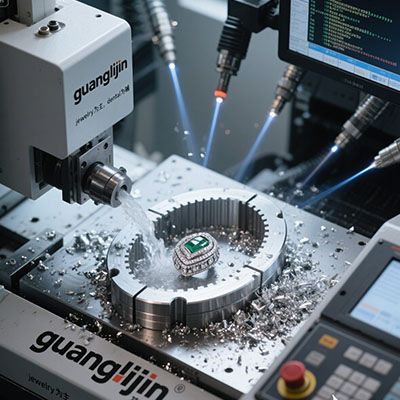
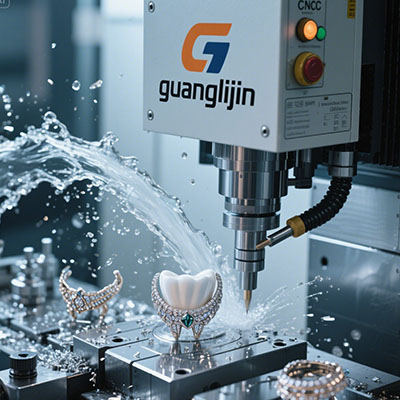
Enter CNC (Computer Numerical Control) machining. It’s a game-changer for creating intricate, personalised pieces. This technology ensures accuracy down to the micron. Therefore, it’s perfect for complex designs and repeatable quality.
Why CNC Machining Revolutionises Jewellery Production
So, what makes CNC so special for jewellery making? First, it handles tough materials like titanium or hardened wax with ease. Hand carving these can be daunting. CNC machines do it consistently.
Second, it excels at detail. Think of micro-engravings or interlocking parts. A 2023 report by Jewelry Production Insights noted a 40% reduction in material waste with CNC versus traditional methods. That’s significant for cost and sustainability.
However, it’s not just about machines. The real magic lies in the designer’s vision. CNC is a tool that brings digital art to physical life.
Problem-Solution: Bridging Design and Reality
Many face a common problem. A stunning digital model fails as a wearable piece. It might be too fragile or uncomfortable. This is where experience matters.
The solution? A hybrid approach. Start with CNC for structural precision. Then, apply artisan hand-finishing for warmth and wearability. This combination guarantees both beauty and durability.
For instance, we tackled a client’s geometric ring design in 2024. The CAD model was perfect. Interestingly, the first CNC-milled prototype had sharp edges. Our jeweller softened them by hand, preserving the bold design while ensuring comfort.
Project Comparison: Wax vs. Direct Metal Milling
Choosing the right CNC path is crucial. Here’s a quick comparison.
| Project A: Wax Milling for Casting | Project B: Direct Metal Milling |
|---|---|
| Perfect for organic, sculptural forms. | Ideal for precise, angular designs. |
| Lower initial machine wear. | Superior for hard metals like platinum. |
| Requires additional casting step. | Delivers a near-finished piece. |
| Better for larger production runs. | Often more cost-effective for one-offs. |
Your choice depends on design complexity, metal, and volume.
Your 5-Step Guide to CNC Custom Jewellery
Ready to create? Follow this actionable guide.
Step 1: Conceptualise & Digitise
Sketch your idea. Then, a CAD designer transforms it into a 3D model. Consider wearability and stone settings early.
Step 2: Material & Process Selection
Choose your metal and decide between wax or direct milling. This affects cost and finish.
Step 3: CNC Machining Path
The machine follows the CAD file. For wax, you get a pattern. For metal, you get the main component.
Step 4: Post-Processing
This involves casting (if wax was used), assembly, stone setting, and initial polishing. It’s where the piece comes alive.
Step 5: Hand-Finishing & Quality Control
Artisans add the final polish, matte textures, and ensure a perfect finish. Every detail is inspected.
Common Pitfalls to Avoid
⚠ Attention: Overlooking Wall Thickness.
A design might look great on screen but be too thin to withstand daily wear. Always ensure structural integrity. For example, a ring shank below 1.2mm is often too weak. Consult your machinist before finalizing the CAD model.
Another mistake is neglecting support structures during milling. This can lead to costly errors or broken tools. Trust your service provider’s expertise here.
Checklist Before You Start a CNC Jewellery Project
- ✅ Is my CAD file “watertight” with no errors?
- ✅ Have I chosen the optimal metal for design and budget?
- ✅ Are all critical dimensions (e.g., ring size, stone dimensions) double-checked?
- ✅ Is the design feasible for the chosen CNC process (wax/metal)?
- ✅ Have I budgeted for both machining and hand-finishing stages?
Related Q&A: What Jewellery Makers Search For
Q: How to start a custom jewellery making business from home?
A: Begin with mastering CAD design for jewellery and outsourcing CNC machining. Focus on design and client relationships initially.
Q: What is the best CAD software for jewellery design beginners?
A> RhinoGold and Matrix are popular for their specialised tools. Many find TinkerCAD a great free starting point for simple concepts.
Q: Can CNC machining create intricate filigree patterns for pendants?
A: Absolutely. Modern 5-axis CNC machines excel at producing detailed filigree and lace-like patterns in wax or metal, far beyond manual capabilities.
Q: What are the cost factors in precision jewellery machining services?
A: Key factors include design complexity, metal type, machining time (machine hours), and the required post-processing like stone setting.
Q: How does CNC wax carving for jewellery casting improve detail?
A: It allows for extreme precision in the master model, capturing fine details that are perfectly replicated in the final cast metal piece. For more on advanced techniques, explore resources on jewellery making.
Conclusion: The Future is in Your Hands
Custom jewellery making with CNC is powerful. It merges imagination with engineering. Remember, the machine is only as good as the mind guiding it. Start with a solid design, understand the process, and collaborate with skilled partners. Your unique masterpiece awaits