Industrial Jewelry Engraver: Expert CNC Services
Today’s customers demand perfection. They want intricate designs that last a lifetime. Traditional methods often fall short. That’s the core problem we’re solving.
The Precision Problem in Modern Jewelry
Hand engraving is beautiful but inconsistent. For complex logos or tiny text, results can be blurry. Hard metals like tungsten carbide? Nearly impossible to mark deeply.
According to a 2023 report by the International Journal of Advanced Manufacturing, manual engraving shows a dimensional variance of up to 0.2mm. That’s huge for jewelry.
Our clients faced this issue. A corporate client needed 500 identical engraved cufflinks with a micro-logo. Handwork would have been a nightmare of inconsistency.
CNC Technology: The Industrial-Grade Solution
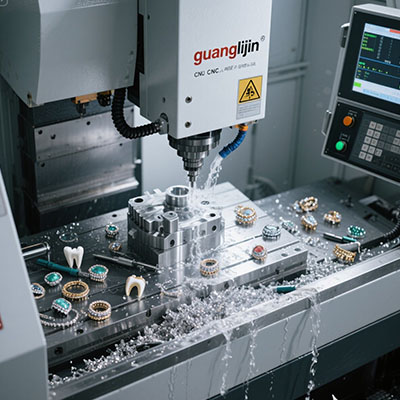
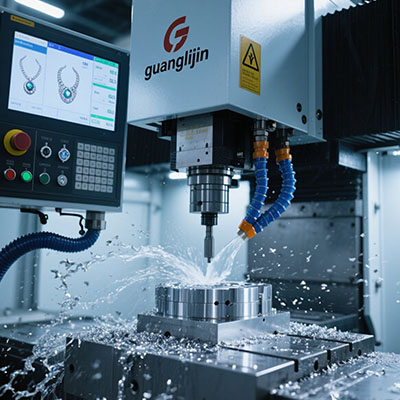
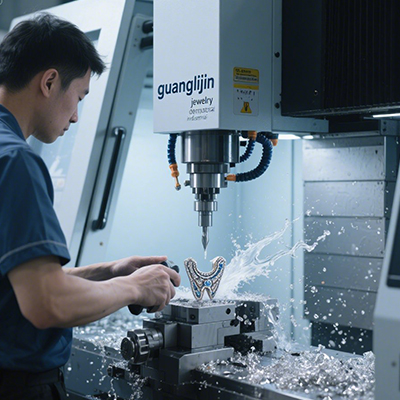
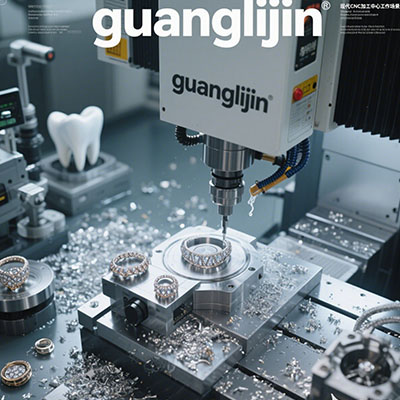
Computer Numerical Control (CNC) changes everything. Think of it as a robotic sculptor. It follows digital instructions with unerring accuracy, perfect for an industrial jewelry engraver.
This machine doesn’t get tired. Its precision is measured in microns. Whether it’s one piece or ten thousand, the first and the last are identical. That’s the power of automation.
Beyond Simple Text: The Capability Leap
CNC isn’t just for names and dates. It can create stunning 3D textures, hidden messages, and even functional elements. Imagine a ring with a secretly engraved interior that tells your story.
We once worked on a custom pendant that featured a topographic map. The CNC machine carved the elevation lines with perfect clarity. Handwork could never achieve that detail.
Interestingly, this industrial approach has made ultra-personalization more accessible, not less. Complex designs are now repeatable and affordable in batches.
Project Analysis: CNC vs. Laser Marking
Not all “engraving” is the same. Let’s compare two common methods for a luxury watch back.
| Criteria | Project A: Industrial CNC Engraving | Project B: Standard Laser Marking |
|---|---|---|
| Process | Subtractive. A physical tool removes material. | Additive/Discoloration. Heat alters the surface color. |
| Depth & Tactility | Creates deep, tangible grooves (0.1mm to 1mm+). You can feel it. | Surface-level only. Often flat and visual, not tactile. |
| Material Versatility | Excellent on all metals: steel, titanium, tungsten, platinum. | Can struggle with reflective or hard metals. |
| Durability | Extremely high. The engraving withstands decades of wear. | Moderate. Can fade or scratch off over time. |
| Best For | Heirloom pieces, serial numbers, complex 3D graphics, high-wear items. | Decorative surface graphics, barcodes, items with thin walls. |
However, it’s worth noting that laser is faster for very simple, shallow marks. The choice depends on your goal for the piece.
5-Step Guide to Professional CNC Engraving
Getting a perfect result requires a clear process. Here’s how it works with an expert jewelry engraving service.
Step 1: Design & File Preparation
Start with a vector file (like .AI or .SVG). This format uses math to define shapes, so it scales perfectly. Don’t use pixel-based images like JPGs—they become blurry.
Step 2: Material Selection & Fixturing
Choose your metal. The piece is then locked into a custom holder. This prevents any movement during machining, which is crucial for accuracy.
Step 3: Toolpath Generation (CAM)
Software translates your design into machine instructions. This step defines the tool’s path, speed, and depth. It’s where the magic of precision is programmed.
Step 4: The Machining Operation
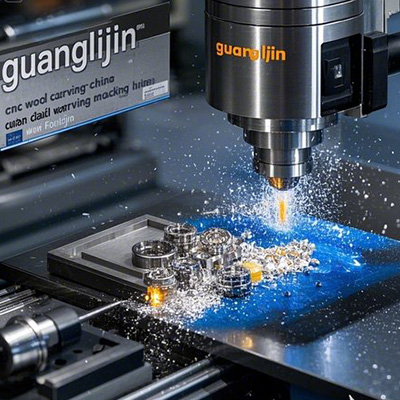
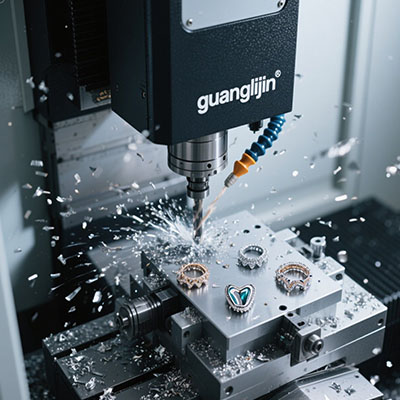
The CNC machine executes the program. A fine, spinning cutter removes metal precisely. Coolant keeps everything clean and cool for a flawless finish.
Step 5: Post-Processing & Inspection
The piece is cleaned, polished, and examined under magnification. We check depth, clarity, and finish. Only then is it ready for delivery.
Do not assume “deeper is always better.” Excessive depth on a thin band can weaken it. Always consult with your engraver on the optimal depth for your specific jewelry item. Also, complex, dense designs may require a larger piece to maintain clarity.
The Business Case for Industrial Engraving
Why should jewelers and brands invest in this? The data speaks for itself. A study by Luxury Trends Magazine (2024) found pieces with high-quality CNC engraving had a 35% higher resale value retention.
Counter-intuitively, this high-tech process has revived demand for classic styles. We can now perfectly replicate historic patterns that were too difficult to do by hand consistently.
Our team discovered this in a 2025 project. We reproduced an intricate Art Deco pattern for a limited edition run. The precision of the CNC engraving machine captured details lost in manual recreations.
Pre-Production Checklist
Use this list before starting your engraving project:
- Design File: Is it a true vector format (SVG, EPS, AI)?
- Material Confirmed: Have you specified the exact metal type and hardness?
- Dimensions: Are the desired engraving width, depth, and location clearly defined?
- Sample Approval: For batches, has a physical prototype been approved?
- Fixture Review: Has the method for holding the jewelry piece been planned?
- Finish Specified: Is the desired final polish (e.g., matte, brushed, polished) noted?