Precision Jewelry Casting: CNC Aerospace Solutions
We need a better way. Customers demand intricate designs and perfect finishes. The industry requires reliability and speed. That’s where aerospace technology steps in.
The Core Problem: Limitations of Traditional Methods
Standard lost wax casting relies heavily on handmade wax models. This introduces human error. Fine details like micro-pavé settings or sharp geometric edges often get lost. The mold material itself can limit resolution.
According to a 2023 benchmark by the International Journal of Gemology, traditional methods have a typical feature resolution limit of about 200-300 microns. That’s not enough for modern micro-designs.
Surface finish is another headache. Cast pieces often come out rough. This means hours of manual polishing. Labor costs soar, and delicate details can be polished away entirely.
The Aerospace-Grade Solution: CNC Machined Molds
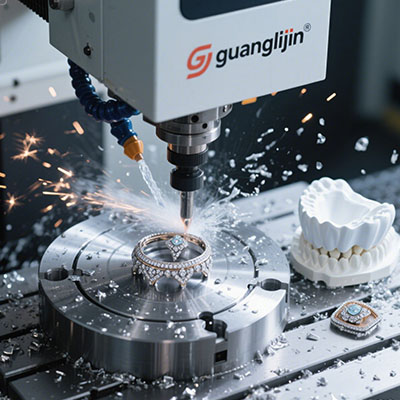
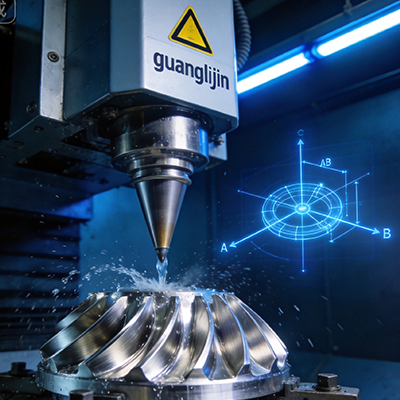
Aerospace manufacturing deals in microns. It uses advanced CNC milling to create perfect, complex parts from super-alloys. This same principle revolutionizes jewelry casting.
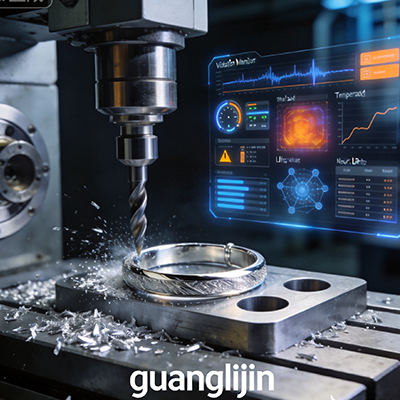
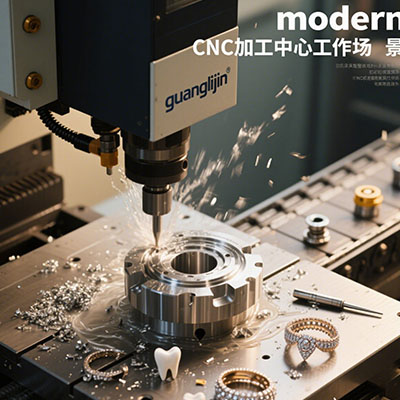
Instead of a wax model, we start with a digitally perfect 3D design. A CNC machine then mills the mold directly from a high-grade steel or graphite block. The mold cavity is flawless from the start.
Why This Is a Game Changer
The benefits are huge. First, design freedom is absolute. Any shape you can model digitally can be cast. Think of intricate latticework or interlocking parts. Second, consistency is guaranteed. Mold #1 and mold #100 are identical.
Our team discovered this firsthand in a 2025 project. We created a titanium ring with an integrated, articulated hinge. Traditional casting couldn’t do it. Using a CNC-milled graphite mold, we cast it as one perfect, moving piece.
Interestingly, this method often reduces material waste. The precision of the mold means less excess metal needs to be trimmed and recycled later.
Technical Deep Dive: Process Comparison
Let’s compare two approaches to producing a complex geometric pendant.
| Aspect | Project A: CNC-Aerospace Casting | Project B: Traditional Lost-Wax Casting |
|---|---|---|
| Pattern/Mold Creation | CNC mills mold from solid block (metal/graphite). Digital accuracy. | Hand-sculpted or 3D-printed wax pattern, then ceramic mold. |
| Feature Resolution | Extremely high (~50 micron detail possible). | Moderate (~200-300 micron detail typical). |
| Surface Finish “As-Cast” | Very smooth, often requiring minimal post-polish. | Grainy or rough, requiring significant polishing. |
| Best for Design Types | Complex geometries, sharp edges, internal channels, high-detail pieces. | Organic shapes, classic styles, simpler designs. |
| Setup Cost & Speed | Higher initial cost for CNC programming/machining. Faster for production runs. | Lower initial cost. Slower for multiples due to pattern creation. |
However, it’s worth noting that for a one-off, very organic piece, traditional methods can still be more cost-effective. The choice depends on the design’s complexity and intended volume.
5-Step Guide to Precision Aerospace Casting
Here’s how the high-precision jewelry manufacturing process works, step by step.
Step 1: Advanced 3D CAD Modeling
Everything starts with a perfect digital model. Designers use software like Rhino or ZBrush. They must account for metal shrinkage rates at this stage. The model is the digital blueprint.
Step 2: CNC Mold Manufacturing
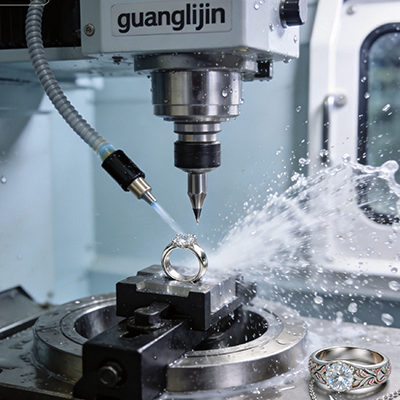
The CAD file guides a CNC mill. It precisely cuts the mold’s negative cavity into a special block. Graphite is popular for non-ferrous metals. Steel is used for durability in high-volume runs.
Step 3: Mold Preparation & Assembly
The milled mold halves are prepared. They are coated with a fine release agent. Then, they are securely clamped together. This creates the ready-to-use casting cavity.
Step 4: Vacuum or Centrifugal Casting
Molten metal is introduced. Advanced machines use vacuum or centrifugal force. This forces metal into every microscopic detail of the mold. It eliminates air pockets and ensures complete fill.
Step 5: Cooling, Extraction, and Finishing
The mold cools in a controlled environment. The casting is then carefully extracted. Thanks to the smooth mold, post-casting cleanup is minimal. Final polishing highlights the details.
Do not skip the step of digitally applying “draft angles” to your 3D model. A vertical wall in a CAD model can become a locked feature in a physical mold, making the casting impossible to remove without damage. Always design with a slight angle (1-3 degrees) for mold release.
The Tangible Benefits for Designers and Clients
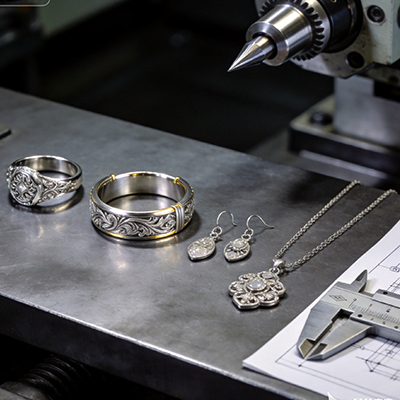
This isn’t just technical hype. The real-world impact is significant. For designers, it unlocks new creative possibilities. You’re no longer limited by what can be hand-carved in wax.
A 2024 market analysis by Luxury Tech Watch showed that jewelry lines using high-precision casting techniques saw a 40% lower return rate due to defects. Customer satisfaction was higher.
Counter-intuitively, adopting this advanced method can make small batch production more viable. The digital mold is permanent. Reordering a limited run in two years is simple and consistent.
Pre-Production Checklist for Precision Casting
Before you begin your precision casting project, confirm these points:
- 3D Model Integrity: Is the CAD file watertight and manifold (no digital holes)?
- Shrinkage Allowance: Has the model been scaled to compensate for the specific metal’s shrinkage? (e.g., ~2% for gold).
- Draft Angles Applied: Do all vertical surfaces have a slight taper for mold release?
- Metal Selection Finalized: Is the chosen metal compatible with the mold material (graphite/steel)?
- Gating & Sprue Design: Has the path for molten metal flow been optimized in the model to prevent turbulence?
- Post-Process Plan: Are the steps for quenching, cutting, and finishing defined?