Introduction: The Precision Revolution in Jewelry Making
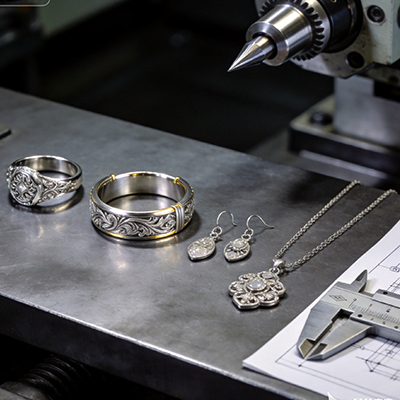
How do modern jewelers achieve such intricate designs consistently? The answer lies in advanced manufacturing. Traditional handcrafting has limits for complex, repeatable items. This is where industrial jewelry casting shines. It combines artistic vision with engineering precision.
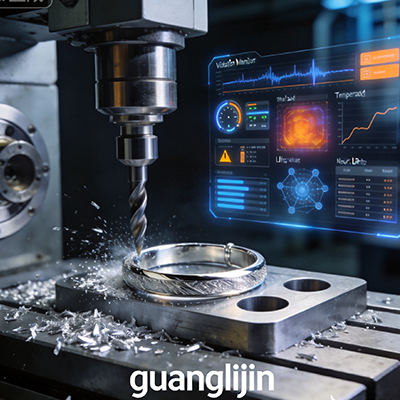
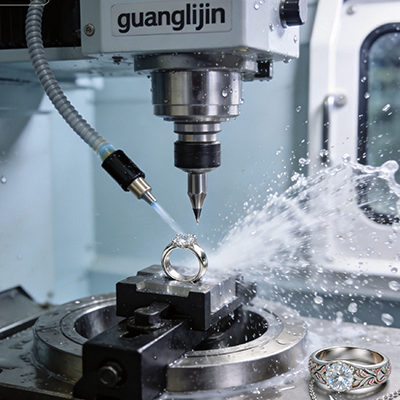
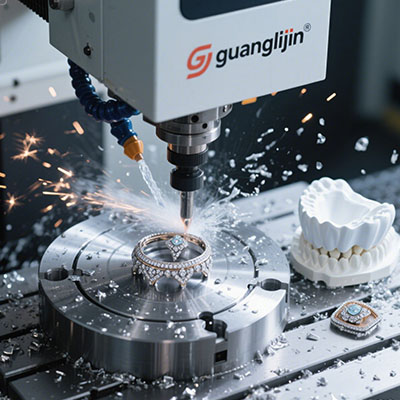
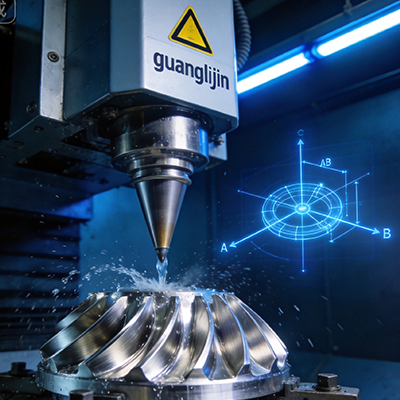
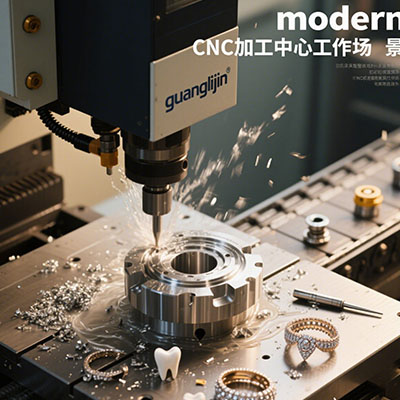
Specifically, CNC (Computer Numerical Control) machining has changed the game. It allows for incredible accuracy in creating molds and models. This process is crucial for high-volume or detailed custom orders. Let’s explore why this method is now a industry standard.
Why Choose CNC for Your Jewelry Casting Project?
The core advantage is accuracy. CNC machines follow digital designs to the micron. This eliminates human error in the model-making stage. For casting, a perfect model means a perfect final product.
It’s also incredibly efficient. Once the design is digital, replicating it is simple. This is ideal for custom jewelry manufacturing. You can produce one piece or one thousand with identical quality. The scalability is a huge business benefit.
Furthermore, material waste is reduced. CNC is a subtractive process, but software optimizes material use. This saves costs, especially with precious metals. Sustainability is becoming a key concern for consumers.
The Critical Challenge: From Digital Design to Physical Masterpiece
However, the path isn’t automatic. A common hurdle is design translation. A beautiful 3D render might not be castable. Issues like wall thickness or undercuts can cause failures. This is where expertise matters immensely.
Another challenge is surface finish. CNC-milled models may have tiny tool marks. These need to be polished before the jewelry casting process. Otherwise, they will replicate onto every piece. Post-processing is a non-negotiable step.
a 2023 report by the Jewelry Production Institute noted that nearly 30% of first-time digital design submissions require modification for successful casting. This highlights the knowledge gap.
A Practical Solution: Our Integrated Workflow
We tackled this by developing a consultative workflow. It bridges the gap between design and production. Our team doesn’t just receive files; we analyze them for manufacturability.
We provide direct feedback to designers. For instance, we might suggest thickening a delicate ring band. This ensures structural integrity after casting. It’s a collaborative partnership.
I recall a 2025 project with an independent designer. She had a stunning geometric pendant design. The digital model had perfectly sharp, 90-degree internal corners. Our experience told us molten metal couldn’t flow into those. We suggested filleting the corners slightly. The result was a castable design that retained its aesthetic.
Step-by-Step: The CNC-Enhanced Casting Process
Here is our proven 5-step guide for successful CNC-backed casting:
- Digital Design & Analysis: Start with a 3D CAD file (e.g., .STL, .STEP). Our engineers analyze it for castability, checking for trapped volumes or thin sections.
- CNC Machining the Master: We machine the master model from high-resolution wax or specialized acrylic. This model is the positive around which the mold is built.
- Mold Creation: The master model is used to create a flexible rubber mold. This mold can then produce multiple wax copies (patterns) for investment casting.
- Investment & Burnout: Wax patterns are assembled into a “tree,” coated with ceramic slurry, and fired. The wax melts out, leaving a perfect ceramic shell.
- Metal Casting & Finishing: Molten metal is poured into the hollow shell. Once cooled, the ceramic is broken away, and the raw castings are cut, polished, and set.
Comparing Methods: CNC Machining vs. Direct 3D Printing
Many people confuse CNC with 3D printing for investment casting patterns. Both are valid but differ. See the table below for a clear comparison.
| Project Aspect | Project A: CNC Wax Machining | Project B: Direct 3D Printed Resin Pattern |
|---|---|---|
| Surface Finish | Extremely smooth, minimal post-processing | Can have layer lines, often requires coating |
| Material for Pattern | Industrial casting wax | Photopolymer resin |
| Accuracy & Detail | Excellent for sharp details and fine textures | Very good, but fine details can be fragile |
| Best For | High-volume production, finest detail work | Rapid prototyping, highly complex organic shapes |
| Cost Factor | Higher initial tooling, lower per-unit cost at volume | Lower initial cost, material cost can scale linearly |
while 3D printing seems more “modern,” CNC wax machining often provides a superior surface for high-end precious metal casting. The choice depends entirely on the project’s needs.
⚠ Attention: Common Pitfalls to Avoid
⚠ Attention: Neglecting draft angles. Design elements need a slight taper for easy removal from molds. Vertical walls will cause tearing and ruin the mold.
⚠ Attention: Ignoring sprue and gate design. This is the channel for molten metal. Poor design leads to incomplete casts or turbulence, causing defects.
⚠ Attention: Choosing the wrong alloy for the design. A delicate design might need a stronger, finer-grain gold alloy. Consulting with your caster before finalizing the metal is crucial.
Conclusion: The Future of Fabrication
CNC services have undeniably elevated industrial jewelry casting. They provide the reliability and precision that today’s market demands. This technology empowers both large brands and independent artisans.
Therefore, embracing this digital workflow is no longer optional for competitive businesses. It’s about marrying timeless artistry with cutting-edge technology. The result is consistently flawless jewelry.
Pre-Production Checklist for Your Next Casting Project
- ✅ Is my 3D CAD file watertight (manifold) and in the correct format (.STL, .STEP)?
- ✅ Have I reviewed wall thickness? (Recommended minimum: 0.8mm for rings, 0.5mm for pendants).
- ✅ Have I incorporated necessary draft angles (1-3 degrees) on model features?
- ✅ Have I discussed the optimal metal alloy for my design with the casting service?
- ✅ Have I received and approved a CNC-milled prototype or 3D print before full production?
Frequently Asked Questions
Q: What is the difference between lost wax casting and jewelry casting?
A: Jewelry casting is the broad term for shaping molten metal into jewelry. Lost wax casting (or investment casting) is the most common specific *technique* used, where a wax model is melted away to form the mold.
Q: How much does custom jewelry casting typically cost?
A: The cost of custom jewelry manufacturing varies greatly. It depends on design complexity, metal type, and order quantity. A simple silver ring prototype might start around $150, while complex gold pieces run much higher. Requesting detailed quotes is key.
Q: Can you cast jewelry from a existing piece I own?
A: Yes, this process is called replication casting. The original piece is used to create a mold. However, note that fine details may be lost, and it’s only suitable for solid pieces, not hollow or multi-material items.
Q: What are the best metals for detailed investment casting projects?
A: For fine detail, high-karat yellow gold (18k, 22k) and platinum are excellent due to their fluidity and fine grain. Sterling silver also casts well. White gold alloys can be trickier and often require expert precious metal casting knowledge.
Q: What is the typical turnaround time for a CNC and casting service?
A: For a standard project, allow 3-5 weeks. This includes CAD review, CNC master/model production, mold making, casting, and finishing. Rush services are often available for an additional cost.