Where Artistic Vision Meets Digital Fabrication
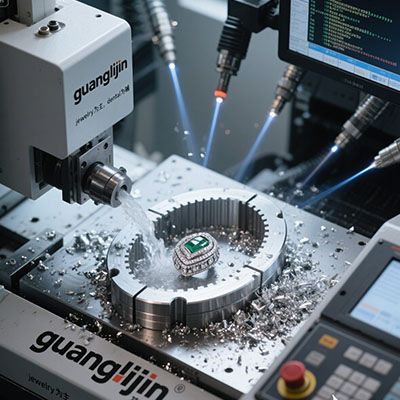
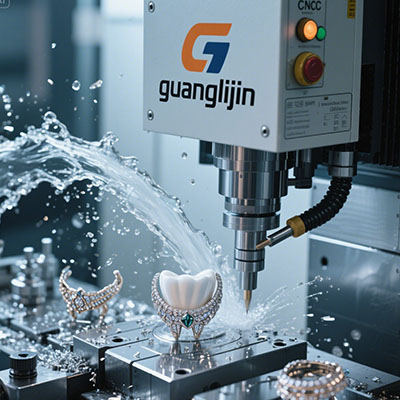
How do you create truly unique jewelry today? The answer lies in advanced technology. A custom jewelry CNC machine is the ultimate tool. It turns imaginative designs into tangible, wearable art with incredible precision.
This isn’t mass production. It’s personalized fabrication. Each piece can be distinct, yet flawlessly executed. This high-tech approach is redefining bespoke jewelry. Let’s dive into how it works.
Why High-Tech CNC is a Game Changer
Traditional methods have limits for complex geometry. Hand carving wax is slow and inconsistent. High-tech CNC machining shatters these barriers. It offers digital control over every cut and curve.
The result is absolute design freedom. Imagine intricate latticework, hidden engravings, or perfect symmetry. A modern jewelry CNC machine makes these easy. It brings digital complexity into the physical world reliably.
it enables rapid iteration. You can tweak a CAD file and mill a new prototype in hours. This speed accelerates the creative process for custom jewelry design dramatically.
The Central Challenge: From Digital Perfection to Physical Object
A common hurdle is the “digital divide.” A 3D model looks perfect on screen. But machining it introduces real-world physics. Factors like tool reach, material grain, and vibration matter immensely.
Another issue is cost justification for one-off pieces. Clients want uniqueness but may not understand the technology’s value. They see a high price tag without seeing the sophisticated process behind it.
according to a 2024 Digital Fabrication in Jewelry report, over 60% of custom jewelry designers now integrate CNC machining into their workflow. This signals a major industry shift towards tech-driven creation.
The Solution: An Integrated Digital Craft Workflow
Success comes from merging design and manufacturing early. We treat the CAD file as the blueprint and the machine as the artisan’s hand. Our process includes upfront manufacturability checks as a standard step.
We optimize designs for the chosen material and precision milling process. For instance, we might adjust an undercut’s depth for tool access. The goal is a design that looks stunning and machines perfectly.
Our team learned this in a 2025 project for an avant-garde ring. The design featured a thin, twisting band that flowed into a sculpted head. Machining it from a solid block of titanium in one piece seemed impossible. By using a 5-axis jewelry CNC machine and custom fixturing, we created the seamless, organic form exactly as envisioned. It was a triumph of digital craft.
Your Roadmap: Creating a Custom Piece with CNC
Follow these five key steps to bring your custom idea to life:
- Concept & 3D Modeling: Finalize your idea in CAD software. Focus on creating a clean, “watertight” 3D model with appropriate wall thicknesses for your metal.
- Technical Consultation: Share your model with your machining service. Discuss material options, finishing types, and any design adjustments needed for optimal results.
- CAM Programming & Setup: The service’s engineer programs the toolpaths. They select micro-tools and define cutting strategies to capture every detail of your bespoke jewelry design.
- Precision Machining: The CNC machine meticulously carves your piece from a solid block of metal or wax. This stage requires constant monitoring for flawless execution.
- Hand Finishing & Assembly: The machined component is carefully finished. It is polished, any stones are set, and final assembly occurs, blending high-tech production with traditional handcraft.
Project Comparison: Direct Metal vs. Wax for Casting
Choosing the right CNC strategy is crucial. Here’s a breakdown of two primary paths for custom work.
| Project Aspect | Project A: Direct Metal CNC | Project B: CNC Wax Model for Casting |
|---|---|---|
| Best For | One-off pieces, prototypes, metals hard to cast (e.g., titanium). | Multiple copies, pieces with complex hollows, precious metals. |
| Material Waste | Higher (subtractive process from solid block). | Lower (wax is cheap, metal is cast to near-net shape). |
| Surface Detail | Exceptional, with crisp machined lines if desired. | Excellent, but final metal surface depends on casting quality. |
| Lead Time | Often faster (no casting step). | Longer due to molding and casting steps. |
| Economic Sense | Ideal for single, complex pieces in challenging materials. | More cost-effective for creating multiples in gold or silver. |
for a single, highly detailed ring in platinum, direct machining can sometimes be more economical than casting. It avoids mold and casting risk, delivering a guaranteed perfect part.
⚠ Attention: Key Pitfalls in Custom CNC Jewelry
⚠ Attention: Overlooking internal stresses in metal. Machining can release stress, causing the part to warp slightly after it’s cut. Stress-relieving the metal blank beforehand is often essential.
⚠ Attention: Designing features smaller than the cutting tool. You cannot mill a 0.2mm wide channel with a 0.5mm diameter tool. Always design with the tool’s physical size in mind.
⚠ Attention: Neglecting post-processing. A CNC-milled part is not finished. It requires skilled handwork for polishing and setting. Budget and plan for this crucial stage.
The Future of Personalization is Here
High-tech CNC manufacturing makes extreme personalization viable. It allows for modifications that are impossible with traditional techniques. This empowers both designers and end clients.
Therefore, embracing this technology is not just about keeping up. It’s about leading the future of custom jewelry production. It unlocks a new realm of creative and commercial potential.
Pre-Production Design Checklist
- ✅ Is my 3D model final, manifold (watertight), and saved in the correct format (e.g., STEP, high-res STL)?
- ✅ Have I considered tool access? Are there deep, narrow areas a tool cannot reach?
- ✅ Are all walls and features thick enough to be machined and withstand daily wear?
- ✅ Have I selected the final metal and discussed its machinability with the service?
- ✅ Do I have a clear vision for the final finish (polished, matte, textured)?
Frequently Asked Questions
Q: What is the best CNC machine for small jewelry business?
A: For a small business, a reliable 3 or 4-axis desktop CNC milling machine for jewelry is a great start. Look for models known for precision, good software support, and a strong user community.
Q: How much does a custom CNC jewelry piece cost?
A: Costs vary widely. A simple silver pendant might start around $200+ for machining, plus material and design. Complex pieces in gold or platinum with extensive CAD work can cost several thousand dollars.
Q: Can you engrave inside a ring with a CNC machine?
A: Yes! This is a major advantage. Using a small, specialized tool, a CNC can engrave text or patterns on the inner band of a ring with perfect precision, creating deeply personal custom pieces.
Q: What file format do I need for CNC jewelry machining?
A> The best format is a solid CAD file like STEP or IGES. High-resolution STL files are also commonly accepted. Avoid low-poly or “mesh” files with too few triangles, as they lack smooth curves.