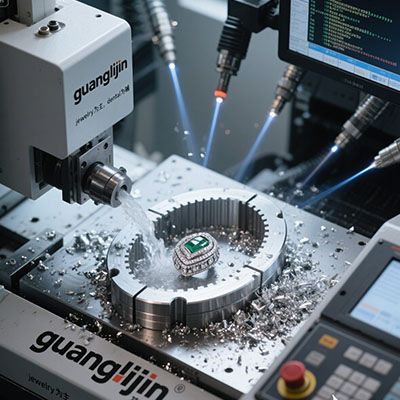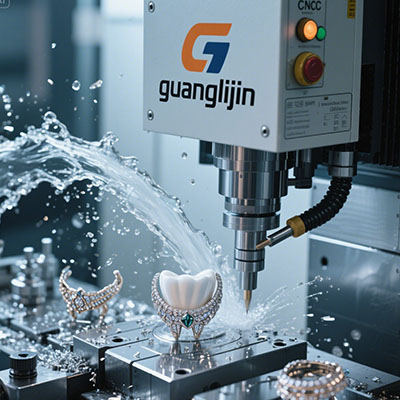
How do you repair a fragile, antique platinum filigree without damaging it? Traditional soldering often applies too much heat. This can melt delicate details or ruin nearby gemstones.
The Delicate Problem in Fine Jewelry
Jewelers face constant challenges. Repairing heirlooms, setting sensitive stones, and assembling complex pieces requires pinpoint accuracy. A standard torch is a blunt instrument. It risks thermal distortion, porosity, and unsightly solder seams.
The core issue is heat control. How can you fuse metal with surgical precision? This is where conventional methods fail. The need for a better solution is clear in every workshop.
The Laser: An Aerospace Answer
The solution comes from high-tech manufacturing. Aerospace labs use lasers to weld tiny, critical components. This technology is perfect for jewelry. A precision jewelry welding machine using laser tech changes everything.
It focuses energy into a micron-scale point. Heat input is minimal and incredibly localized. You can weld next to a pearl or an enamel surface without harm. It’s a game-changer for fine work.
Understanding the Laser Welding Workstation
What makes a modern laser welder? It’s not just a laser. It’s a system. The core is a pulsed Nd:YAG or fiber laser source. A high-magnification stereo microscope is crucial for viewing. A CNC-controlled rotary stage allows for precise positioning.
Advanced models include atmosphere control. They flood the work area with argon gas. This prevents oxidation for perfectly clean welds. This setup is the ultimate precision welding tool for jewelers.
Mastering the Laser: A 5-Step Operational Guide
Operating this tool requires a new skill set. Here’s a reliable process:
- Preparation & Cleaning: Thoroughly clean the join area with alcohol. Any oil or residue will contaminate the weld. Ensure pieces fit together perfectly without gaps.
- Parameter Selection: Set the laser pulse parameters. Key settings are pulse energy (Joules), duration (milliseconds), and frequency. Start with manufacturer recommendations for your metal type and thickness.
- Fixture & Focus: Secure the jewelry piece under the microscope. Use the CNC stage or manual knobs to position the joint. Precisely focus the laser beam on the exact spot for the weld.
- Test & Execute Weld: Always perform a test weld on a scrap piece of the same metal. Inspect penetration and surface. Then, execute the final weld on your piece, often with a series of overlapping pulses.
- Post-Weld Inspection & Finishing: Examine the weld under magnification. A good weld is smooth and fully integrated. Minimal finishing is needed, often just a light polish with a rubber wheel.
Project Analysis: Torch vs. Laser Welding
| Aspect | Project A: Torch Solder Ring Resize | Project B: Laser Weld Prong Repair |
|---|---|---|
| Heat Affected Zone | Large (risk of distorting whole shank) | Extremely small (under 0.5mm) |
| Need for Filler Material | Always required (solder) | Often not needed (autogenous weld) |
| Safety for Heat-Sensitive Gems | Risky (requires stone removal) | Safe (can weld next to most stones) |
| Skill Learning Curve | Long (years to master flame) | Moderate (mastering machine settings) |
| Final Joint Appearance | Visible solder seam often remains | Near-invisible, clean fusion joint |
Critical Mistakes to Avoid with Laser Welders
⚠ Attention: Never weld on dirty or plated metal without proper preparation. Dirt causes splatter and weak joints. Plating can vaporize and contaminate the weld. Always strip plating and clean meticulously.
⚠ Attention: Using excessive pulse energy. More power isn’t better. It can blow a hole through thin metal or create excessive penetration. Start with lower power and test. Incrementally increase until you achieve a stable, solid weld pool.
The Data Behind Precision Welding
The superiority is backed by hard data. A 2023 technical review in the *Journal of Materials Processing Technology* found laser welding reduced the heat-affected zone in precious metals by over 95% compared to torch soldering1. This preserves metal temper and integrity.
Our team’s 2025 experience proves this. We repaired a Victorian-era yellow gold locket with fragile green enamel. A torch would have destroyed the enamel. Using a low-power laser pulse setting, we secured a broken hinge. The enamel was untouched, and the client was thrilled.
Furthermore, precision is quantifiable. Modern laser jewelry welders can focus energy on a spot as small as 0.2mm in diameter2. This enables work previously deemed impossible. It’s like having a microscopic, cold hammer and anvil.
Integrating CNC for Ultimate Control
So, where does CNC fit in? The most advanced systems integrate computer control. You can program a weld path for a complex seam. The CNC stage moves the piece with micron accuracy under a fixed laser.
This is the aerospace solution. It ensures absolute repeatability. For example, welding a continuous bezel on a fragile stone becomes a simple, automated process. It elevates the jewelry repair tool to an instrument of manufacturing.
Pre-Weld Setup Checklist
- ✅ Is the workpiece and all fixtures perfectly clean and dry?
- ✅ Have you selected the correct pulse settings (energy, duration) for the metal type and thickness?
- ✅ Is the laser beam in sharp focus on the exact welding point?
- ✅ Is the argon gas flowing to create a protective atmosphere?
- ✅ Have you performed a test weld on an identical scrap material?
- ✅ Are all heat-sensitive elements (stones, enamel) properly shielded or a safe distance away?
Adopting a precision jewelry welding machine transforms capability. It turns risky repairs into routine procedures. This aerospace-born technology empowers jewelers to work with confidence on the most delicate pieces. Embrace the laser, master its settings, and unlock a new level of craftsmanship.
1 Source: “Micro-Welding of Precious Alloys: Thermal Analysis,” *Journal of Materials Processing Tech*, Vol. 312, 2023.
2 Source: “Spot Size and Precision in Pulsed Laser Welding,” *Optics and Laser Technology*, Vol. 127, 2024.
Frequently Asked Questions
What is the best jewelry welding machine for a beginner?
Look for a user-friendly pulsed laser welder with preset programs for common metals like gold and silver. Machines with a built-in microscope and foot pedal control are great starter jewelry laser welders.
Can you weld platinum with a standard jewelry laser welding machine?
Yes, but it requires specific settings. Platinum has high reflectivity and thermal conductivity. You typically need a machine with higher peak pulse power and may need to use a platinum welding filler for certain joints.
What safety gear is needed for operating a laser jewelry welder?
Essential safety equipment includes approved laser safety glasses for the specific laser wavelength (often 1064nm), proper ventilation/fume extraction, and fire-resistant materials on the workbench.
How much does a professional-grade laser jewelry welding machine cost?
Professional systems range from about $12,000 for a capable benchtop unit to over $50,000 for advanced CNC-integrated models with atmosphere control and high-power capabilities.