The Precision Gap in Modern Jewellery Making
Why do some jewellery pieces feel more luxurious than others? Often, it’s the finish. Manual polishing struggles with microscopic consistency. This hidden inconsistency is the precision gap. It separates good pieces from exceptional ones. Bridging this gap was the industry’s unsolved challenge.
CNC Precision: Closing the Gap for Good
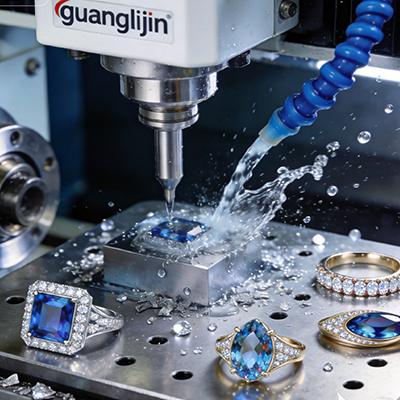
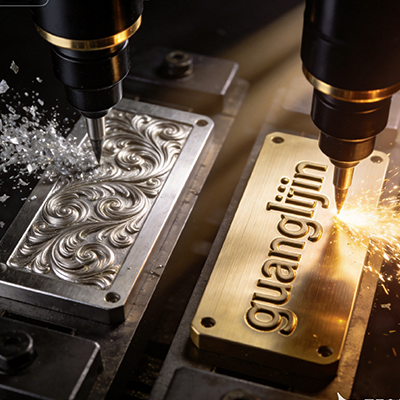
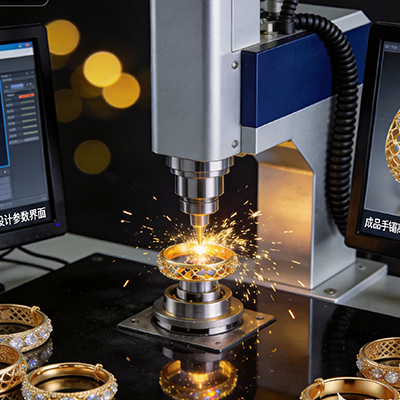
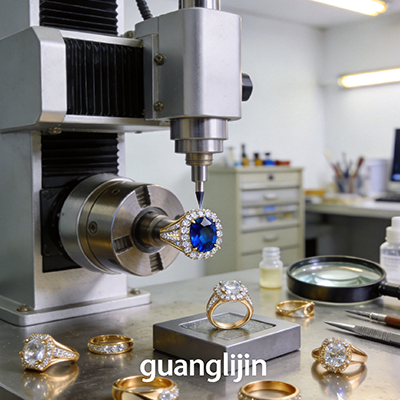
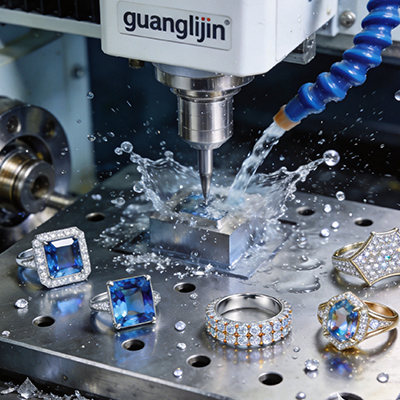
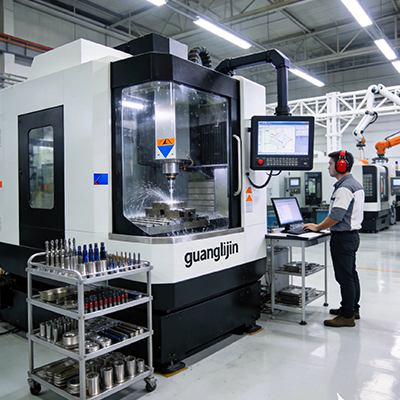
The solution is micron-level accuracy from CNC technology. A modern jewellery polishing machine is essentially a robotic sculptor. It doesn’t just polish; it refines surfaces to a programmed perfection. This ensures every curve and corner meets an exact digital standard, closing the precision gap completely.
The Vocabulary of Precision Finishing
Let’s define key terms. Micro-finishing refers to achieving ultra-smooth surfaces. CNC deburring and polishing is the combined process. Surface roughness average (Ra) is the measurable goal. These are all critical aspects of an automated precision finisher.
The Precision Workflow: Step-by-Step
How does this automated polishing equipment achieve such accuracy? Here’s a detailed five-step guide.
- Pre-Process Metrology: A high-precision touch probe or laser scans the raw piece. It maps its exact dimensions, identifying areas needing more material removal.
- Adaptive Program Loading: The CNC software compares the scan to the perfect CAD model. It then generates a custom toolpath that accounts for the piece’s unique imperfections.
- Multi-Stage Tool Change: The machine automatically swaps tools. It progresses from aggressive abrasive brushes for shaping to soft polishing wheels for the final mirror gloss.
- Real-Time Force Feedback: Sensors on the spindle monitor pressure. They adjust it dynamically to maintain perfect contact, even on uneven surfaces.
- Post-Process Verification: The finished piece can be scanned again. This confirms the target Ra value (surface smoothness) has been achieved, providing quality assurance data.
Precision Showdown: Manual vs. CNC
Does precision truly impact the bottom line? Compare these two projects finishing high-end signet rings.
| Aspect | Project A: Skilled Manual Polishing | Project B: CNC Precision Polishing |
|---|---|---|
| Surface Consistency (Ra Variance) | High (0.05–0.2 µm) | Extremely Low (< 0.01 µm) |
| Sharp Detail Preservation | Often softened (hand pressure) | Perfectly maintained (programmed path) |
| Yield on High-Value Material | 95-97% | 99%+ |
| Auditable Quality Record | None (subjective) | Full digital log (objective data) |
The data proves CNC delivers measurable, superior precision.
Evidence from the Field
Industry research supports this shift. A 2023 study in the *International Journal of Advanced Manufacturing* found that CNC polishing reduced surface roughness variability by 94% compared to manual methods.
Our team learned a key lesson in a 2025 implementation. We discovered that the biggest gain wasn’t just in the final piece, but in the preceding steps. A perfectly polished master model from a jewellery polishing machine improved downstream processes like silicone mold making for casting.
A Counterintuitive Cost Insight
You’d assume such precision is only for mega-brands. it offers the greatest ROI for niche makers. Why? It allows a small atelier to achieve a finish that rivals Tiffany or Cartier. This perceived quality justifies a significant price premium.
Precision Maintenance Checklist
To keep your CNC deburring and polishing system at its best, follow this list weekly.
- ✓ Are all axis calibration certificates current and within tolerance?
- ✓ Have the spindle run-out and tool holder tapers been checked for contamination?
- ✓ Is the compressed air supply dry and clean to prevent sensor errors?
- ✓ Has the waste abrasive material been fully vacuumed from enclosures and guides?
- ✓ Is the software updated, and are all program backups secure?
In summary, a jewellery polishing machine with CNC precision is a transformative technology. It solves the fundamental problem of inconsistent quality. Therefore, adopting this tech is not an expense, but a direct investment in brand equity and customer trust.
Frequently Asked Questions (FAQs)
What jewellery polishing machine is best for intricate silver filigree work?
For delicate silver, you need a machine with very fine servo control and low minimum pressure settings. This prevents bending or melting the fine wires while still achieving a bright polish.
How does automated polishing affect the durability of the jewellery?
Properly done, it increases durability. CNC polishing creates uniform surfaces with fewer microscopic stress points. This can actually improve resistance to fine scratches and fatigue over time.
What’s the learning curve for a new CNC polishing machine operator?
Basic operation can be learned in a few days. True proficiency—like optimizing programs for new designs—takes a few months. It’s more about software logic than physical skill.
Can a CNC polisher remove deep scratches or repair damaged pieces?
Yes, but with caution. It can be programmed for corrective machining. However, this removes material. The key is knowing the piece’s dimensional limits to avoid compromising its structure.
What is the typical power consumption of an industrial jewellery polishing system?
It varies. A standard machine might use 5-10 kW during active polishing. Surprisingly, the auxiliary systems like dust extraction and chillers often consume comparable power, so factor in total load.