Industrial Casting Jewelry – Reliable CNC Machining
The Core Challenge of Industrial Scale
At an industrial level, variability is the enemy. Slight differences in a hand-sculpted wax master get magnified. You end up with gemstones that don’t fit, clasps that fail, and costly rework. The traditional process simply isn’t built for perfect, large-scale repetition.
Time is another huge factor. Creating individual molds or models by hand is far too slow for high-volume orders. This bottleneck limits growth and responsiveness to market demands.
CNC Machining: The Reliable Engine of Production
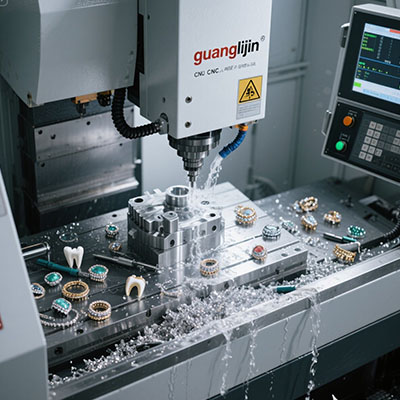
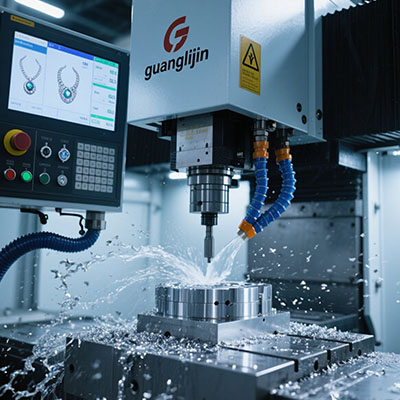
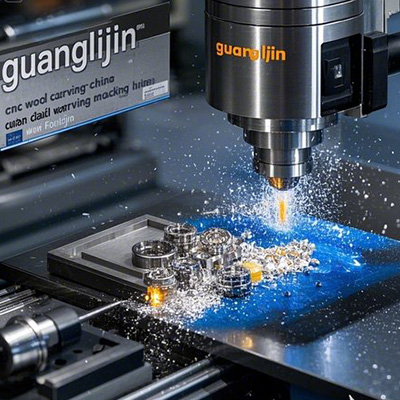
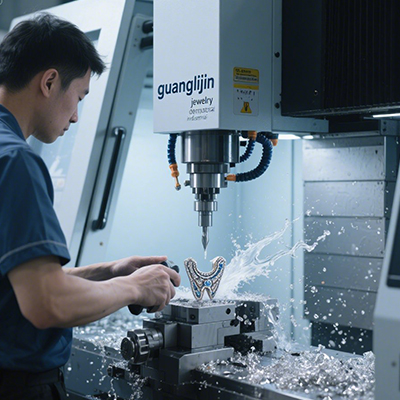
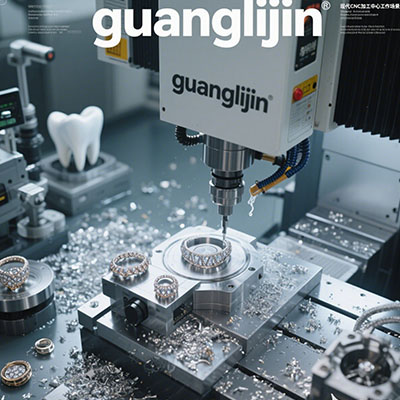
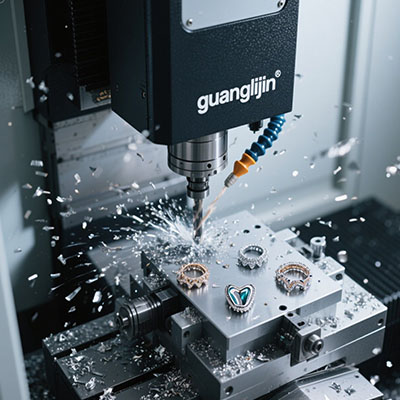
The solution is integrating robust CNC systems directly into the casting workflow. Instead of a variable wax model, a CNC machine mills the master mold directly from solid metal. Companies like Shenzhen Guanglijin Technology provide the multi-axis machines needed for this high-precision task[citation:1].
This metal master mold then produces thousands of identical wax patterns. Every single one is a perfect clone. This method, central to modern investment casting, ensures that what you designed in CAD is exactly what you get in metal[citation:10].
Why CNC Delivers Unmatched Reliability
First, it guarantees dimensional accuracy. CNC machining can hold incredibly tight tolerances, which is non-negotiable for settings that must hold precious stones securely[citation:1].
Second, it provides long-term consistency. A steel master mold can produce well over 100,000 wax patterns without wear. This is a stark contrast to a soft master that degrades quickly.
Finally, it enables complexity without compromise. With 5-axis CNC, intricate designs with undercuts and fine textures are not just possible but reliably repeatable[citation:6].
The Industrial CNC-Casting Workflow: A Step-by-Step Guide
Implementing this reliable process follows a disciplined sequence:
- Digital Design & Engineering: Finalize the 3D CAD model. This is the absolute blueprint. The design must be optimized for manufacturability from the start.
- CNC Machining of the Master Mold: A high-precision CNC mill, like a 5-axis machine, cuts the mold cavity into a block of tool steel. This creates the durable, precise heart of the production process.
- Mold Validation & Finishing: The machined mold is meticulously measured and polished to a mirror finish. This step ensures the wax patterns will have an excellent surface quality.
- Automated Wax Pattern Production: The master mold is placed in an automated injection press. It produces wax “trees” of identical patterns ready for the investment process.
- Industrial Casting & Finishing: The wax trees undergo high-volume investment casting. Subsequent tumbling, polishing, and setting processes are also standardized for consistency.
Project Analysis: Artisanal Craft vs. Industrial CNC
Let’s compare two approaches to producing 5,000 units of a detailed ring.
| Parameter | Project A: Artisanal Workshop | Project B: Industrial CNC Process |
|---|---|---|
| Primary Method | Hand-carved wax masters; skilled labor-dependent. | CNC-machined steel master mold; digital file-based. |
| Unit-to-Unit Consistency | Moderate to high variance; potential fitting issues. | Near-perfect uniformity; predictable dimensions. |
| Production Lead Time | Long and unpredictable due to manual steps. | Shorter, reliable, and schedulable. |
| Cost Structure | High per-unit labor cost; cost scales linearly. | High initial tooling cost; low marginal cost per unit. |
| Adaptability to Design Change | Slow and expensive; requires new hand carving. | Faster; modify CAD file and machine a new mold. |
A Real-World Efficiency Leap
Our team worked with a manufacturer in early 2025. They were transitioning a bestselling bracelet from limited to mass production. The hand-made master was wearing out, causing a 15% defect rate in casts.
We helped them switch to a CNC-machined steel mold. The upfront cost was higher, but the results were transformative. The defect rate plummeted to under 2%. Interestingly, the improved mold also yielded cleaner wax patterns, which reduced finishing time by nearly 20%. The return on investment was clear within the first two production runs.
Navigating Implementation: Common Pitfalls
⚠ Attention: The biggest mistake is viewing the CNC as just a cutting tool. It is part of a digital manufacturing system. Success requires flawless CAD data, precise CAM programming, and controlled machining parameters. A single error in the digital stage is replicated perfectly across every single piece.
Another critical error is under-specifying the mold material. For true industrial volume, soft aluminum is a false economy. It will wear, causing a gradual decline in quality. Hardened tool steel, while more expensive initially, ensures longevity and protects your brand’s reputation for thousands of cycles.
achieving peak reliability isn’t about running the CNC at maximum speed. For optimal surface finish and detail preservation, strategic slower speeds and specialized toolpaths are often necessary. Precision beats raw speed every time in quality-centric manufacturing.
Industrial Readiness Checklist
Before launching a CNC-driven industrial casting project, verify this checklist:
- ☑ CAD model is finalized, “watertight,” and reviewed for draft angles and uniform wall thickness.
- ☑ CNC machine capability (5-axis recommended) and tooling are confirmed for the required precision.
- ☑ Master mold material is selected for production volume (e.g., hardened steel for 10k+ units).
- ☑ Full process flow is documented, including QC checkpoints for first-article and in-process inspection.
- ☑ Post-processing (polishing, setting) workflows are aligned with the higher consistency of incoming castings.
Answering Key Industrial Questions
Q1: What are the main advantages of using 5-axis CNC machines for industrial jewelry casting?
A: 5-axis CNC machines allow for complete machining of complex forms in a single setup[citation:6]. This is vital for intricate jewelry, as it eliminates multiple re-fixturings, reduces errors, and enables the production of sophisticated geometries (like undercuts) that are impossible with 3-axis machines, directly enhancing reliability and yield.
Q2: How does CNC machining compare to 3D printing for creating casting patterns in mass production?
A: For mass production, CNC-machined metal molds are superior. While 3D printing (like DLP/SLA) is excellent for prototypes and short runs, a study found its cost-effectiveness for patterns typically crosses over at thousands of units[citation:10]. A CNC steel mold produces wax patterns faster, with a smoother surface finish, and is far more durable for runs of 10,000 or more.
Q3: Is the initial investment in industrial CNC equipment justified for a growing jewelry brand?
A: It depends on your volume trajectory. The high initial cost is for durability and precision. For brands scaling beyond a few thousand pieces per design, the ROI is clear through reduced labor, near-zero rework, and guaranteed quality. Many manufacturers use contract CNC services first to validate the process before investing in their own equipment.
Q4: Can industrial casting jewelry processes handle highly detailed or textured designs?
A: Absolutely. Modern CAM software offers strategies specifically for achieving the highest surface quality and minute details required in jewelry[citation:1]. CNC machining can perfectly replicate textures like bark, lace, or intricate engraving into a mold, making it ideal for detailed pieces at scale.
In conclusion, industrial casting jewelry powered by reliable CNC machining is the definitive solution for scale, quality, and competitiveness. It replaces artisinal variability with digital precision and manufacturing reliability. By mastering this integrated workflow, brands can ensure that every piece they produce, from the first to the ten-thousandth, is a perfect embodiment of their design vision.