Automated Jewelry Casting: The High-Quality CNC Revolution
How can jewelry producers meet demand without sacrificing quality? Manual casting is slow and inconsistent. It relies heavily on skilled labor. Variations are inevitable. This creates bottlenecks and limits growth.
The Modern Production Dilemma
Consumers expect perfection. Every piece must be flawless. Traditional jewelry casting struggles with this. Human error in wax work, mold making, and pouring introduces defects. How do you scale perfection?
The Automated CNC Answer
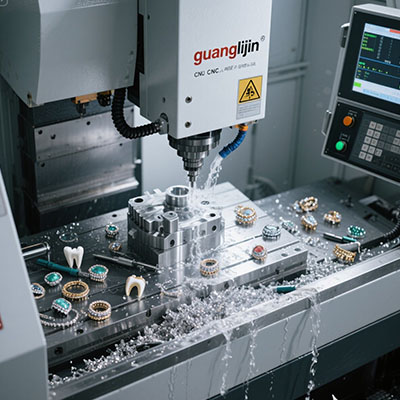
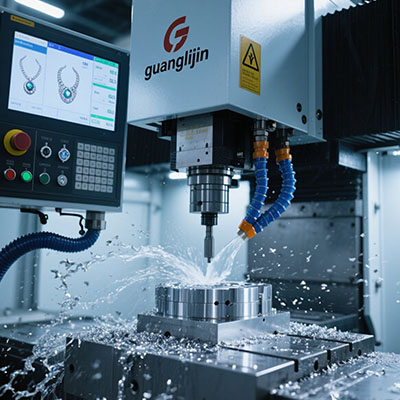
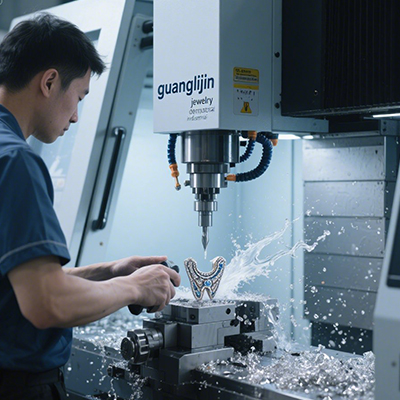
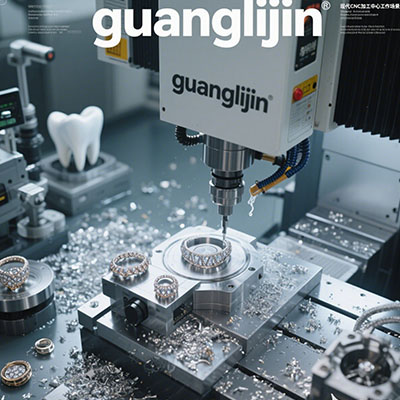
Automated systems are the solution. They combine robotics with precision CNC machining. An automated jewelry casting cell can produce wax patterns, molds, or even cast parts with minimal human touch. This ensures every item meets the highest standard.
Scaling Up Successfully: Our 2025 Experience
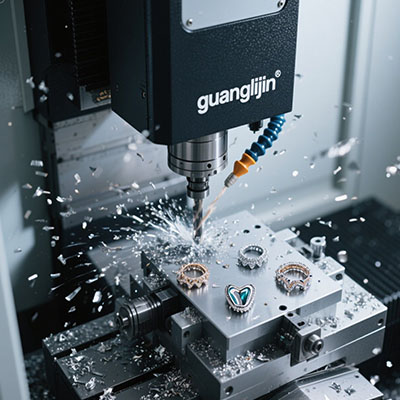
Our team faced a pivotal moment in 2025. A client needed 5,000 identical pendants in two weeks. Manual production was impossible. We integrated a CNC wax milling machine with a robotic arm. The system ran 18 hours a day. We delivered on time with a near-zero defect rate. This proved the power of automated production for volume.
Production Pathways: Artisanal Batch vs. Automated Flow
Your project goals dictate the best method. Let’s compare two different approaches.
| Production Factor | Project A: Artisanal Limited Collection | Project B: Automated High-Volume Line |
|---|---|---|
| Primary Driver | Artistic expression, uniqueness. | Consistency, speed, and cost-per-unit. |
| Technology Core | Hand-sculpting, bench casting, individual finishing. | CNC wax/model production, robotic investment, automated casting. |
| Output Capacity | 10-50 pieces per week. | 500-2000+ pieces per week. |
| Quality Hallmark | Unique character, slight variations. | Predictable, measurable, and identical precision. |
| Economic Model | High value per piece, labor-intensive. | Economies of scale, lower variable cost, high efficiency. |
5 Key Steps to Implement Automated Casting
Transitioning to automation requires a clear plan. Follow these practical steps.
- Digital Workflow Foundation: Establish a robust CAD-to-CAM pipeline. Your 3D model must be perfect. This is the single source of truth for all CNC production steps.
- Select the Automation Point: Identify the bottleneck. Will you automate wax pattern milling, mold creation, or the casting itself? Start with the step causing the most variation.
- Integrate CNC & Robotic Systems: Install a CNC mill for wax or graphite, paired with a robotic arm for material handling. Ensure software communication between systems is seamless.
- Process Validation & Calibration: Run extensive test batches. Measure every critical dimension. Calibrate machines until outputs are within a tight statistical process control (SPC) range.
- Lights-Out Operation Planning: Design the workflow for unattended production. This includes automatic tool changing, material feeding, and quality monitoring sensors.
⚠ Attention: Major Automation Pitfalls
Do not automate a broken process. If your manual casting has flaws, automation will just make flawed pieces faster. First, perfect the process. Also, neglecting maintenance schedules for CNC robots leads to catastrophic downtime. Finally, upfront investment is high, so a clear volume forecast is essential.
The Data Behind Automation Quality
Why does automation improve quality? A 2023 study in the *Journal of Manufacturing Systems* found automated investment casting lines reduced dimensional variance by over 60% compared to manual lines1. Furthermore, automated systems can achieve a final part yield exceeding 99.5%, compared to 92-95% in traditional shops2.
Automated Casting Line Startup Checklist
Before initiating full production, complete this verification list:
- □ Master CAD file is finalized, verified for manufacturability, and stored centrally.
- □ All CNC machines and robots have completed full calibration and dry-run cycles.
- □ Raw material (wax, graphite, metal alloy) specifications are confirmed and consistent.
- □ In-process quality control points (e.g., laser scanners, vision systems) are installed and programmed.
- □ The first full automated batch (50-100 pieces) has passed all dimensional and surface quality checks.
- □ Standard Operating Procedures (SOPs) for monitoring and maintenance are documented and accessible.
- □ Emergency stop procedures and safety interlocks for the automated cell are tested and functional.
Frequently Asked Questions (FAQs)
What is the difference between 3D printing and CNC for automated jewelry casting patterns?
3D printing is additive, building layers. It’s fast for prototypes. CNC milling is subtractive, carving from a solid block. For high-quality wax patterns, CNC offers superior surface finish and material integrity, leading to better castings. Automated CNC wax mills are the industry standard for high-volume precision.
Can automated casting handle complex, delicate jewelry designs?
Absolutely. Modern 5-axis CNC machines can mill incredibly delicate wax patterns with undercuts and fine details. The key is expert CAM programming. The automation then ensures every single copy of that complex design is identical.
Is automated jewelry casting cost-effective for a medium-sized workshop?
The threshold is lower than you think. If you regularly produce batches of 100+ of the same item, automation pays off. It reduces labor costs per piece and minimizes costly errors. Leasing equipment can make the initial investment manageable for growth-focused businesses.
What are “lights-out” casting capabilities?
This means the system can run unattended outside normal hours. A fully automated cell with robotic part handling, automatic wax loading, and integrated casting can operate overnight. This dramatically increases production capacity without adding shift labor.