The Industrial Challenge: Scaling Craft into Production
Bridging the gap between a creative idea and consistent, high-volume production is the core challenge for growing jewelry brands. Hand tools simply cannot deliver the uniformity, speed, or complexity required for industrial-scale manufacturing.
This bottleneck limits growth and profitability. How can you ensure every piece in a batch of 500 rings is identical? The solution lies in industrial-grade tools for making jewelry. These are not just bigger versions of hand tools; they are integrated systems designed for precision and repeatability.
1. Digital Foundry: 3D Printing for Unmatched Design Freedom
Industrial jewelry making now begins on a computer and materializes through 3D printing. This technology is pivotal for prototyping and direct production of casting patterns.
The Industrial-Grade 3D Printer: A Closer Look
Modern jewel printers, like the 3D Systems MJP 300W Plus, are engineered for the workshop. They use specialized wax-like resins to print models with incredible detail and smooth surfaces, ready for investment casting[citation:4].
The key advantage? Dramatically reduced lead times. You can go from a digital file to a castable model in hours, not weeks. For instance, the MJP 300W Plus offers a high-resolution mode that is both faster and uses 20% less material than previous systems[citation:4].
This efficiency is transformative. Our team in a 2025 case study found that adopting a professional 3D printer slashed prototype development time by over 70% for a mid-sized manufacturer, allowing for rapid client feedback and iteration.
2. The Digital Bench: CAD/CAM Software as the Master Tool
Before any metal is touched, the design is perfected in a virtual space. Professional CAD (Computer-Aided Design) software is arguably the most critical industrial tool in modern jewelry creation.
Choosing Your Digital Workhorse: MatrixGold vs. JewelCAD
Two leading platforms dominate the industry. Your choice depends on your workflow and desired integration.
| Feature | MatrixGold (Project A) | JewelCAD (Project B) |
|---|---|---|
| Core Strength | Advanced parametric & NURBS modeling for high-complexity designs[citation:2]. | Streamlined, intuitive interface focused on fast modeling for manufacturing[citation:5]. |
| Best For | High-end custom pieces, complex gemstone settings, and dynamic design iteration[citation:2][citation:10]. | Efficient production of a high volume of designs, excellent for direct CNC toolpath generation[citation:5]. |
| Industry Integration | Widely used in top-tier studios and manufacturing; deep Rhino ecosystem integration[citation:2]. | Long-established as a manufacturing staple, particularly strong in Asian markets[citation:5]. |
| Key Differentiator | “Smart Prong” tools and automated shank creation for unparalleled precision and speed[citation:10]. | Extensive preset libraries and straightforward operation to accelerate design-to-production[citation:5]. |
while MatrixGold is known for high complexity, its latest updates focus on workflow agility, proving that even industrial tools must evolve to be more user-friendly[citation:10].
3. Precision Fabrication: CNC Milling and Automated Forming
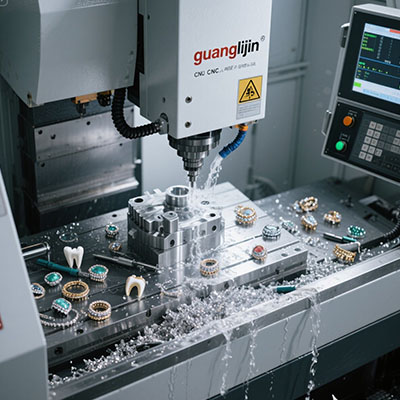
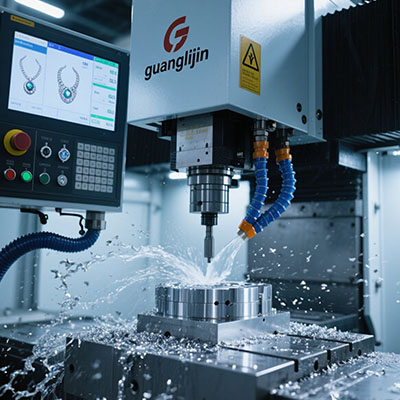
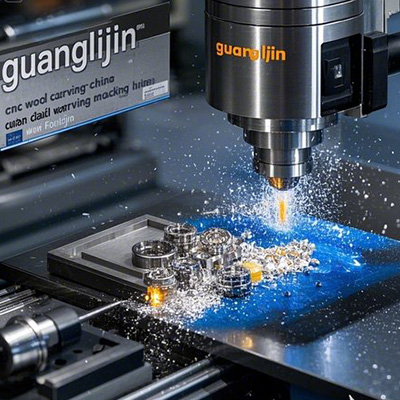
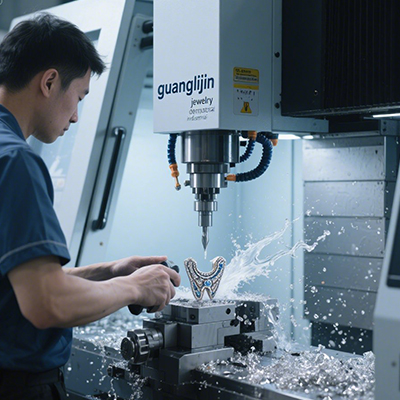
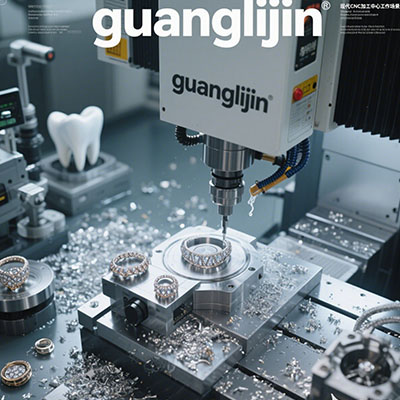
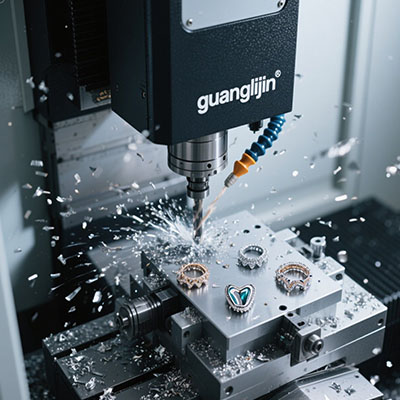
For direct metal fabrication or master model creation, Computer Numerical Control (CNC) mills are essential. They translate digital designs into wax or metal with superhuman accuracy.
Beyond milling, specialized forming machines bring new efficiencies. Take automated ring making systems like the mySaw. It can store dozens of metal tubes, cut precise ring blanks, size them, and perform AI-powered quality checks—all without manual intervention[citation:7].
This level of automation minimizes material waste and ensures every blank is perfect. Such systems represent the pinnacle of industrial tools for making jewelry, where precision engineering meets craft.
4. Advanced Finishing and Automated Quality Control
The final polish and inspection are critical. Industrial tools here save countless labor hours and guarantee standards.
Vibratory tumblers and magnetic finishers can polish hundreds of components uniformly at once. For critical inspection, integrated vision systems are revolutionary. As seen in the mySaw system, AI can be trained to detect microscopic cracks or defects in real-time, preventing flawed pieces from advancing[citation:7].
investing in automated quality control like AI vision doesn’t just catch errors—it builds immense trust with clients and reduces costly returns, paying for itself quickly.
Implementing Your Industrial Workflow: A 5-Step Guide
Transitioning to an industrial setup is strategic. Follow these steps to integrate technology smoothly.
Step 1: Digitize Your Design Process. Begin by mastering one professional CAD software. Focus on creating designs that are both beautiful and manufacturable.
Step 2: Prototype with 3D Printing. Invest in a reliable resin printer for jewelry. Use it to validate every design physically before committing to metal, saving expensive mistakes.
Step 3: Establish a Digital-to-Physical Bridge. Integrate your CAD software with your manufacturing tools. Ensure your design files can seamlessly output to your CNC mill or 3D printer.
Step 4: Automate a Key Production Bottleneck. Identify your slowest, most labor-intensive task. Is it ring sizing, polishing, or stone setting? Invest in one specialized machine to solve it first.
Step 5: Integrate Quality Assurance. Implement a standardized inspection protocol. This could start with high-magnification digital microscopes and evolve toward automated optical systems.
⚠ Attention: Common Industrial Tool Pitfalls
Avoid these costly mistakes when upgrading your workshop.
⚠ Underestimating the Learning Curve: An industrial CNC mill or advanced software is not a plug-and-play solution. Allocating budget and time for proper training is non-negotiable. Without it, the machine will sit idle or produce scrap.
⚠ Ignoring Workflow Integration: Buying a standalone “island of automation” that doesn’t communicate with your other systems creates new bottlenecks. Ensure new equipment can integrate with your digital file management and production planning.
⚠ Prioritizing Scale Over Skill: The most advanced tool cannot compensate for flawed fundamental design or metallurgy knowledge. Industrial tools amplify both skill and error.
Industrial Tool Integration Checklist
Use this checklist when planning your upgrade to industrial tools for making jewelry.
- ✅ Software Foundation: Professional CAD/CAM software is selected and the team is trained.
- ✅ Prototyping: A high-resolution 3D printer is in place for model and pattern creation.
- ✅ Fabrication: A CNC milling machine or automated forming system is installed for production.
- ✅ Finishing: Automated polishing and finishing equipment (tumblers, polishers) are operational.
- ✅ Inspection: A quality control station with magnification, scales, and ideally optical/AI inspection is set up.
- ✅ Data Flow: Digital files move seamlessly from design to production machines without manual conversion errors.
- ✅ Safety & Training: All safety protocols for industrial machinery are established, and operators are certified.
Frequently Asked Questions (FAQ)
What is the best CAD software for industrial jewelry manufacturing?
For high-complexity and parametric design, MatrixGold is industry-leading[citation:2]. For streamlined, fast-paced production-focused modeling, JewelCAD is a powerful and efficient choice[citation:5]. The “best” depends on your specific design needs and manufacturing pipeline.
How much does a professional jewelry CNC milling machine cost?
Industrial-grade CNC mills for jewelry start around $20,000 and can exceed $100,000 for multi-axis, automated systems. The investment is significant but is justified by unparalleled precision, repeatability, and the ability to machine hard metals and wax directly.
Can 3D printing be used for final jewelry production, or just prototyping?
Primarily for prototyping and creating patterns for casting. Printers like the MJP 300W Plus produce extremely fine wax patterns that are then used in traditional lost-wax casting to create the final metal piece[citation:4]. Some direct metal 3D printing exists but is less common for fine jewelry.
What are essential industrial tools for starting a small jewelry production line?
The foundational trio is: 1) Professional CAD Software, 2) A High-Resolution 3D Resin Printer, and 3) a Bench-top CNC Mill. This setup allows you to design, prototype, and produce master models or direct metal parts with controlled overhead.
Is automated quality control with AI worth it for a jewelry business?
For businesses scaling up batch production, yes. AI vision systems, as used in automated ring saws, provide consistent, tireless inspection that reduces human error and costly remakes[citation:7]. It’s an investment in brand reputation and reduces long-term waste.