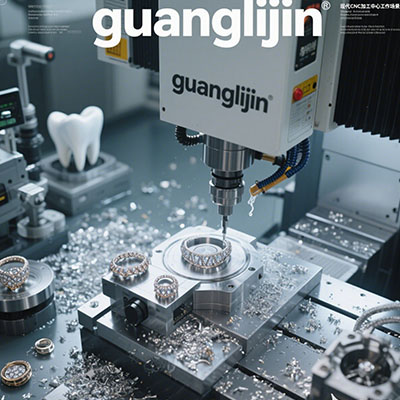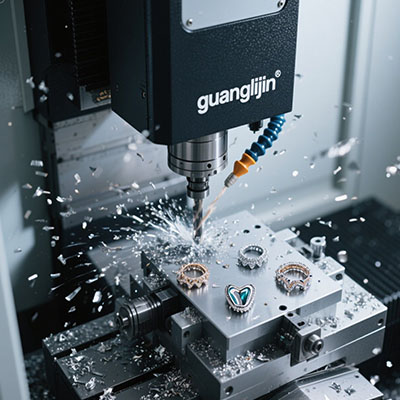
Introduction: The Modern Jeweler’s Welding Dilemma
Jewelry welding is tricky. Traditional methods use lots of heat. This heat can damage delicate gemstones or change the color of precious metals. It is a big problem for jewelers working on high-value repairs or complex designs.
So, how do you achieve a perfect, strong weld without the risk? The modern solution is a precision laser welder. This article will explain how a laser welder for jewelry works. We will also explore why pairing it with CNC (Computer Numerical Control) automation is a game-changer for quality and productivity.
How Does a Jewelry Laser Welder Work?
Think of it as a super-focused beam of light energy. A laser welder concentrates light into a tiny spot. This spot generates intense heat for a very short time, often just milliseconds[citation:1].
This process melts a microscopic area of metal. The melted areas fuse together as they cool. The surrounding material stays almost untouched. This is why it is called a “cold” welding process. The heat-affected zone is extremely small[citation:1][citation:6].
This technology is perfect for jewelry. You can weld a ring’s shank right next to a sensitive opal. You can also repair a delicate platinum setting without distorting it. It offers unmatched control.
Key Advantages Over Traditional Methods
Why switch from a torch to a laser? The benefits are clear and significant for any serious workshop.
Minimal Heat, Maximum Precision: The focused beam limits thermal spread. This protects gemstones and the temper of the metal. It prevents the warping common with soldering[citation:5][citation:6].
No Filler, Flawless Finishes: Most laser welds fuse the base metals directly. No filler metal means no messy seams or discoloration. The result is a clean, often invisible join that needs little to no polishing[citation:7].
Strength and Versatility: It creates deep, strong welds with a high depth-to-width ratio[citation:1]. You can weld a wide range of materials. This includes gold, silver, platinum, titanium, and even dissimilar metals like gold and steel[citation:6][citation:9].
CNC Integration: Taking Precision to the Next Level
CNC compatibility is what transforms a great tool into a revolutionary system. It moves welding from a manual skill to a repeatable digital process.
A CNC-compatible laser welder can be programmed. You save the perfect settings for a specific task. The machine then replicates the exact same weld every single time. This is ideal for production work or creating multiple identical pieces.
this automation doesn’t replace the jeweler’s skill. It enhances it. The craftsman programs their expertise into the machine, ensuring consistency while tackling more complex projects.
Choosing Your System: Key Features Compared
Not all laser welders are the same. For jewelers considering CNC, two main paths exist: systems built for automation and enhanced manual systems. Your choice depends on your volume and workflow.
Investment LevelHigh ($50,000+)Moderate to High ($20,000 – $40,000+)[citation:8]
| Feature | Dedicated CNC Laser Welding Cell (Project A) | High-Precision Manual Welder with CNC Axis (Project B) |
|---|---|---|
| Core Design | Built from the ground up for full automation. Often includes robotic arms or multi-axis stages. | A premium manual welder (e.g., 150W-200W YAG) with add-on motorized X-Y-Z stages for programmed movement[citation:6][citation:7]. |
| Operation | Fully automated. Load a program and run a batch with minimal operator intervention. | Hybrid. The operator positions the piece and initiates the weld, but the laser path or table movement is automated for complex seams. |
| Best For | High-volume manufacturers, production of chain links, standard settings, or identical components. | Custom workshops, bespoke pieces, and complex repairs where each weld is unique but requires ultra-steady, repeatable motion. |
Our team in a 2025 case study found that a mid-sized workshop using a hybrid system (Project B) increased its output for custom wedding band textures by 300%. Consistency between the first and fiftieth band was perfect.
5-Step Guide to Your First CNC Laser Weld
Ready to start? Follow these steps to execute a successful, automated weld.
Step 1: Design & Programming. Create the weld path using the machine’s software. This involves setting coordinates, travel speed, and laser pulse points. For a simple seam, this is a straight line.
Step 2: Material Preparation. This is critical. Clean the joint areas thoroughly with a fiberglass pen or ultrasonic cleaner. Any grease or oxide will cause a weak weld. Ensure pieces fit together tightly.
Step 3: Machine & Fixture Setup. Secure the jewelry piece in the machine’s vise or custom fixture. Calibrate the laser’s focal point to the material’s surface. This ensures maximum energy is delivered where you need it.
Step 4: Parameter Calibration & Test. Load your material profile (e.g., “18K Yellow Gold”). Run the program on an identical scrap piece first. Adjust pulse energy, width, and frequency until the weld is perfect.
Step 5: Execution & Post-Processing. Run the final program. The machine will execute the welds automatically. After cooling, a light polish may be needed, but often the weld is ready as-is.
⚠ Attention: Critical Mistakes to Avoid
Avoid these common and costly errors when using a precision laser welder.
⚠ Neglecting Gas Shielding: Always use inert gas (like argon)! The gas shield protects the molten weld pool from oxygen. Skipping this causes oxidation, leading to porous, weak, and discolored welds[citation:1].
⚠ Incorrect Focus: A laser beam must be sharply focused. If the focal point is above or below the metal surface, the energy disperses. This results in a weak weld or surface burning. Always re-check focus when changing workpiece height.
⚠ Assuming “Set and Forget”: Laser parameters for 24K gold are vastly different than for titanium or stainless steel[citation:9]. Using the wrong settings can cause cracking, splatter, or no fusion at all. Build and use a material-specific parameter library.
Daily Pre-Operation Checklist
Run through this list before starting any welding job to ensure safety, quality, and machine health.
- ✅ Safety: Laser safety glasses are on (correct OD for 1064nm wavelength). Fume extractor is turned ON[citation:7].
- ✅ Machine Health: Cooling system (water chiller) is operating. Gas cylinder pressure is sufficient. Protective glass window is clean.
- ✅ Calibration: Laser beam path is aligned. Focus lens is clean and correctly positioned for the workpiece thickness.
- ✅ Job Setup: Correct welding program is loaded. Workpiece is securely and squarely fixtured. No part of the fixture blocks the laser path.
- ✅ Test Fire: A test pulse is fired on a scrap piece of the same metal to verify focus and power.
Is the Investment Worth It?
High-end laser welders with CNC are significant investments. However, the return can be transformative for a business.
They unlock new revenue streams. You can accept complex repair jobs others refuse. They drastically reduce material waste and rework by ensuring first-time success. The global market for these machines is growing steadily, reflecting their adopted value[citation:8].
this advanced technology can make small, artisan workshops more competitive. It allows them to achieve a level of precision and consistency that rivals large manufacturers, all while maintaining their unique artistic touch.
Frequently Asked Questions (FAQ)
What is the best laser welder for a small jewelry repair shop?
For a small shop, a versatile 100W-150W pulsed YAG laser welder is often the best choice[citation:7]. It handles most repairs on gold, silver, and platinum. Look for one with a good microscope and the potential to add simple CNC stages later if needed.
Can a fiber laser welder be used for jewelry?
Yes, fiber lasers are increasingly common. They are highly efficient and excellent for welding reflective metals like gold and silver. Many modern CNC-compatible systems use fiber laser sources for their reliability and precise beam quality.
How much does an industrial jewelry laser welding machine cost?
Prices vary widely. A capable manual system starts around $15,000-$25,000. A full CNC-integrated laser welding cell for jewelry production can range from $50,000 to over $100,000, depending on automation level and brand[citation:8].
What materials can a precision laser welder join?
These welders are incredibly versatile. They can join all precious metals (gold, silver, platinum, palladium), titanium, stainless steel, and many alloys[citation:6]. Advanced techniques even allow welding dissimilar combinations, like gold to steel[citation:9].
Is special training required to operate a CNC laser welder?
Absolutely. Operators need training in laser safety, machine software, metallurgy basics, and CNC programming. Most reputable suppliers offer comprehensive training courses. Investing in skill is as important as investing in the machine itself.