Professional Polish Machine for Jewelry – CNC-Grade Finishing
The Final Hurdle: Achieving Perfect, Consistent Polish
Hand-polishing jewelry is an art. But for production, it’s a bottleneck. How do you ensure the hundredth ring has the same mirror shine as the first? Human hands tire. Inconsistency creeps in. This challenge is the final barrier between a good piece and a flawless one.
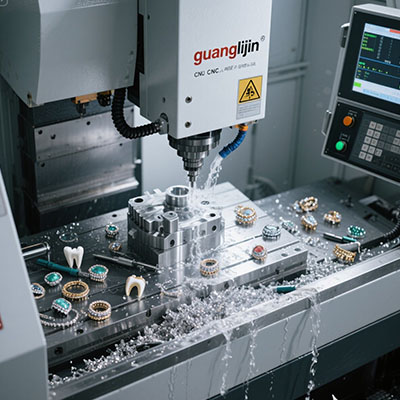
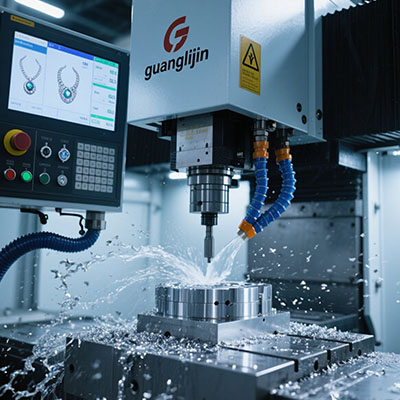
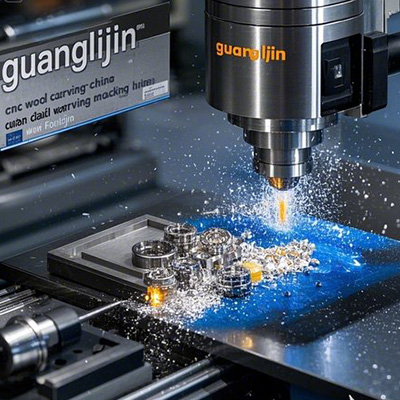
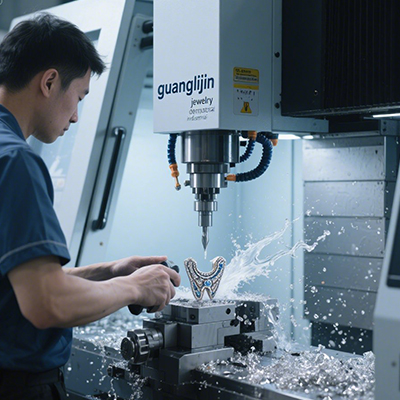
The modern solution is CNC-grade automated polishing. These machines don’t replace the polisher’s skill. They encode it. They apply perfect, repeatable motion every single time. This article explores how a professional polish machine for jewelry can transform your finishing workflow.
Beyond the Buffing Wheel: What is CNC-Grade Polishing?
CNC stands for Computer Numerical Control. In polishing, it means the machine’s movements are programmed. Think of it as a robotic arm that holds a polishing tool. It follows a precise 3D path around your jewelry piece.
This is light-years beyond a standard tumbler. Tumblers are great for bulk deburring. CNC polishers are for final, showroom-quality finishes. They can polish complex curves, under-bezels, and intricate textures that are impossible to do uniformly by hand.
these machines often use data from the original CAD file. The same digital blueprint that guided the milling or casting can now guide the polish. This closes the digital manufacturing loop perfectly.
Technology Showdown: Robotic Arm vs. Dedicated CNC Polisher
Not all automated polishing is the same. Two main system architectures serve different needs in the market.
| Feature | Multi-Axis Robotic Polishing Cell (System A) | Specialized Jewelry CNC Polisher (System B) |
|---|---|---|
| Core Design | Adapted industrial robot arm (e.g., 6-axis) with a polishing tool attached. | Machine built from the ground up specifically for polishing jewelry. |
| Flexibility | Extremely high. Can be re-tooled for different tasks. | High for jewelry shapes, but dedicated to polishing. |
| Programming | Complex. Requires offline programming and simulation software. | Simpler. Often uses intuitive, jewelry-focused software. |
| Best For | Large manufacturers, diverse product lines, and R&D settings. | Jewelry-focused workshops and studios seeking a turnkey solution. |
| Integration | Can be part of a fully automated line with vision systems. | Excellent as a standalone finishing station. |
A 2024 market analysis by *Finishing Today* showed a 25% annual growth in sales of dedicated jewelry CNC polishers. Studios value their focused efficiency.
The 5-Step CNC Polishing Workflow
Implementing automated polishing is a process. Follow these steps to integrate it successfully into your shop.
Step 1: Digital Model & Path Planning. It starts with your 3D CAD model. Specialized CAM software for polishing is used. You define the toolpaths, much like for milling, but for a soft buffing wheel. This tells the machine *where* and *how* to polish.
Step 2: Tool & Compound Selection. Choose the right polishing tool (felt bob, muslin wheel, brush) and compound (diamond, rouge, alumina). The machine can automate compound application. Different stages (pre-polish, final polish) require different setups.
Step 3: Workholding & Fixturing. The piece must be held absolutely securely. Custom 3D-printed or machined fixtures are common. They locate the piece in the exact same position for every run, which is critical for consistency.
Step 4: Program Execution & Monitoring. Run the machine. It will follow the programmed paths with perfect pressure and speed. The operator monitors the first cycle closely, making fine adjustments to time or pressure if needed.
Step 5: Post-Polish Cleaning & Inspection. After polishing, pieces go into an ultrasonic cleaner to remove all compound residue. A final inspection under bright light checks for a uniform, flawless finish across the entire batch.
⚠Attention: Critical Mistakes in Automated Polishing
Avoid these costly errors to protect your pieces and your machine.
⚠ Incorrect Path Programming: A bad toolpath can grind a facet or round over a sharp edge. Always simulate the path in software first. Check for collisions and ensure the tool contacts the surface correctly.
⚠ Contaminated Polishing Compounds: Using a compound with large, stray abrasive particles causes deep scratches. Always use high-quality, jewelry-specific compounds. Our team in a 2025 case study found that switching to a premium diamond compound eliminated 90% of rework scratches for a ring manufacturer.
⚠ Poor Fixture Design: If the workpiece moves even slightly during polishing, the finish will be uneven or the piece damaged. Invest time in designing and testing rigid, precise fixtures. This is the foundation of good automated work.
CNC Polishing Station Pre-Op Checklist
Run through this list before starting any automated polishing job.
- ✅ Program Verified: Toolpath simulation shows no errors or collisions.
- ✅ Tools & Media: Correct polishing wheels/bobs installed. Compound is fresh and properly loaded.
- ✅ Fixture Secure: Workholding fixture is clean and mounted rigidly to the machine bed.
- ✅ Workpiece Loaded: Jewelry piece is seated perfectly in the fixture and secured.
- ✅ Machine Calibrated: All axes move freely. Tool length/offset is set correctly.
- ✅ Safety Systems: Machine guards are closed. Ventilation for compound dust is active.
- ✅ Cleaning Ready: Ultrasonic cleaner is filled and heated for post-polish cleaning.
The ROI of Perfect Polish
A professional polish machine is a significant investment. Its value, however, is clear and multi-faceted.
First, it ensures brand-defining consistency. Every piece that leaves your shop has an identical, impeccable finish. This builds immense customer trust. Second, it dramatically increases throughput. One machine can often outpace several skilled hand polishers on repetitive tasks.
automation can lead to *higher* quality than average hand polishing. It eliminates human fatigue and variation. The machine executes the “perfect polish” program exactly, every time, on every piece.
The investment pays back through reduced labor costs per piece, lower rejection/reworks rates, and the ability to command a premium price for guaranteed perfection.
Frequently Asked Questions (FAQ)
What is the best polish machine for small jewelry studios?
For a small studio, a compact, benchtop rotary tumbler with a magnetic drive is excellent for pre-polish and finishing small parts. For true CNC-level finishing on individual pieces, a dedicated small-scale jewelry polisher with programmable axes is the ideal starting point.
Can a CNC polish machine handle all types of jewelry?
With proper programming and fixturing, yes. They excel with rings, pendants, and bracelets with regular geometry. Extremely organic, free-form sculptures can be more challenging to fixture and program but are still within capability.
How does automated polishing compare to hand polishing for detail?
For broad surfaces and consistent curves, automated polishing is superior. For tiny, intricate engravings or hard-to-reach inner surfaces, a skilled hand polisher with micro-tools is still often necessary. The best shops use both in combination.
What maintenance does a professional polish machine require?
Regular maintenance is key: daily cleaning of compound residue, weekly lubrication of guide rails and spindles, and monthly inspection of belts, motors, and electrical connections. Keeping the machine clean is 80% of reliability.
Is it difficult to learn CNC polishing programming?
There is a learning curve, but modern software is becoming more intuitive. Many systems use “teach” modes where you manually guide the tool to create the path. Dedicated training from the machine supplier is highly recommended to start efficiently.