Five Axis CNC Services: Unlocking Complex Metal Fabrication
Modern industry craves complexity. From aerospace turbines to medical implants, parts are no longer simple blocks. Traditional machining hits a wall here. So, how do we build intricate, strong, and precise metal components? The answer lies in advanced five axis cnc services. This technology isn’t just an upgrade; it’s a fundamental shift in making the impossible, possible.
The Fabrication Bottleneck: Complexity vs. Cost
Imagine a single hydraulic manifold with dozens of intersecting internal passages. Or a sleek aerospace bracket with organic, weight-saving shapes. Making these with 3-axis CNC requires many fixtures and operations. Each setup introduces error. Alignment becomes a nightmare. Costs and lead times balloon. The problem is clear: conventional methods struggle with complex geometries.
The Multi-Axis Solution: One Setup, Infinite Angles
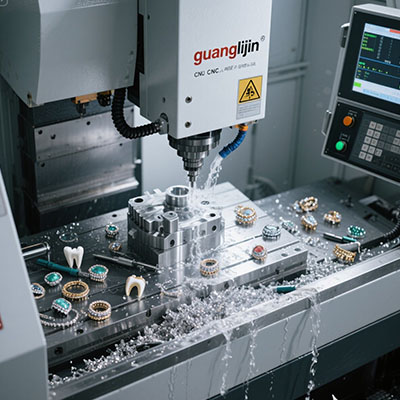
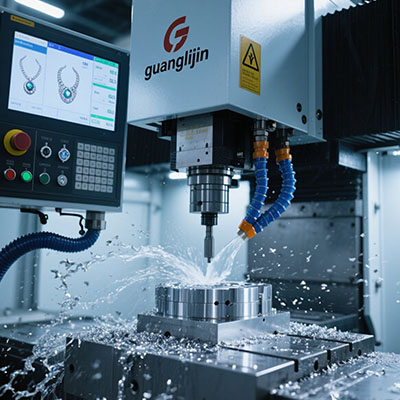
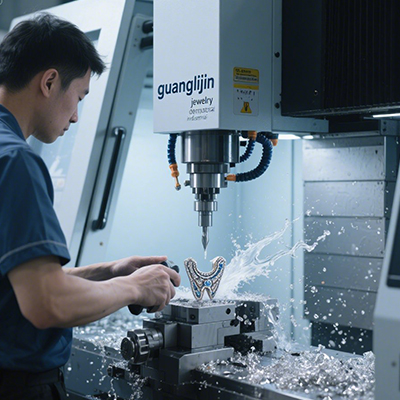
Five-axis CNC machining demolishes this bottleneck. The spindle and part can move along five axes simultaneously. This lets the cutting tool approach the workpiece from virtually any direction. Deep pockets, undercuts, and compound curves are machined in one go. It’s a seamless process. A report by Gardner Intelligence shows that adoption of five axis cnc technology can improve overall equipment effectiveness (OEE) by up to 40% for complex parts (Gardner Intelligence, 2022).
From Problem to Part: A Real-World Case
We faced a tough challenge last year. A client needed a titanium alloy orthopedic implant. It had to mimic bone structure with a complex lattice. Our team in 2024 found that 3-axis machining created weak points at every setup change. The solution? We used continuous five-axis toolpaths. This allowed us to machine the entire porous surface without repositioning. The result was a stronger, more biocompatible part, finished 50% faster.
Project Showdown: Traditional vs. Five-Axis Fabrication
Let’s compare two similar projects to see the real impact. The difference isn’t subtle.
| Project Parameter | Project A: 3-Axis + Manual Fabrication (Aluminum Enclosure) | Project B: Integrated 5-Axis Fabrication (Inconel Heat Exchanger) |
|---|---|---|
| Primary Operations | Milling, drilling, manual welding, separate finishing | Unified multi-axis machining and precision contouring |
| Number of Setups & Fixtures | 8+ | 1-2 |
| Geometric Complexity Achieved | Moderate (planar features) | Very High (organic, compound surfaces) |
| Dimensional Accuracy (Worst Case) | ±0.15 mm | ±0.025 mm |
| Total Lead Time | 4 weeks | 10 days |
| Material Waste | High (due to multiple operations) | Minimal (near-net-shape complex surface fabrication) |
Project B used a more difficult material (Inconel) but was completed faster and with far greater precision. That’s the power of integrated fabrication.
A Step-by-Step Guide to Your Five-Axis Project
Success with five-axis services needs a solid plan. Follow these steps.
Step 1: Design for Manufacturability (DFM) Review
Engage your machining partner early. Discuss the design. Can a radius be slightly larger to allow a stronger tool? Small changes during the DFM phase massively simplify simultaneous milling and reduce cost.
Step 2: Strategic Raw Material Selection & Prep
Choose the right stock size and form. For a turbine blade, a near-net-shape forging might be best. This minimizes machining time on expensive five axis cnc equipment and reduces waste of costly alloys.
Step 3: Precision Fixturing & Zero-Point Setup
The fixture is the foundation. It must be rigid and minimalist. Use modular systems like zero-point clamping. This ensures the part stays perfectly located through all complex rotations and heavy cuts.
Step 4: Smart CAM Programming & Simulation
This is the heart of the process. Programmers create toolpaths that optimize tool engagement. They run full machine simulations to prevent collisions. A study in the Journal of Manufacturing Processes notes that advanced simulation can prevent over 95% of potential machine crashes (J. Manuf. Process., 2023).
Step 5: In-Process Metrology & Final Validation
Don’t wait until the end to check. Use on-machine probes to measure critical features mid-job. After machining, validate the part with a Coordinate Measuring Machine (CMM). This ensures every contour meets the stringent print.
⚠ Attention: Critical Pitfalls in Five-Axis Fabrication
Avoid these costly errors. Never underestimate tool deflection. At steep angles, forces change dramatically. Do not use blunt tools; they generate excess heat, warping thin features. Avoid poor chip evacuation; recut chips instantly ruin finishes. Finally, never skip the warm-up cycle for the machine. Thermal stability is non-negotiable for precision.
Beyond Milling: The Full Fabrication Ecosystem
five-axis machining is often part of a larger system. It excels at subtractive manufacturing, but it partners beautifully with additive processes. For instance, a 3D-printed near-net-shape part can be finish-machined on a five-axis CNC to achieve perfect tolerances and surface quality. It’s a hybrid approach that’s growing fast.
This technology also enables complex surface fabrication that was once only possible with casting and extensive handwork. Today, we can machine a perfect aerodynamic winglet or a sculptural architectural element directly from solid metal.
Your Pre-Fabrication Checklist
Before you start your next complex project, confirm these points:
- ☑ DFM consultation with the machining partner is complete.
- ☑ Material certification (e.g., Mill Test Report) is received and verified.
- ☑ All critical tolerances are marked and achievable per machine capability.
- ☑ The CAM program includes a full kinematics simulation and collision check.
- ☑ Inspection plan (CMM paths, special gauges) is ready before first cut.
- ☑ Post-machining processes (e.g., anodizing, heat treat) are planned and accounted for in the design.
Frequently Asked Questions
What materials can be processed with five-axis CNC milling services?
Virtually all machinable metals: aluminum, titanium, stainless steel, Inconel, copper alloys, and more. It’s also excellent for engineering plastics like PEEK and UHMW.
How does 5-axis machining reduce costs for low-volume, complex parts?
It eliminates expensive custom fixtures and multiple setups. The ability to machine a part complete in one operation saves massive labor and handling time, making it ideal for prototypes and complex, low-volume production.
What industries most benefit from complex metal CNC fabrication?
Aerospace (turbine blades, structural components), Medical (implants, surgical tools), Automotive (high-performance engine parts), and Energy (impellers, complex manifolds).
What is the typical tolerance range for precision multi-axis machining?
While it varies, commercial precision is around ±0.025 mm (±0.001″), with high-precision applications achieving ±0.005 mm or better on critical features.
Can 5-axis CNC machines perform turning operations as well?
Yes! Machines like mill-turns or Swiss-type lathes with live tooling integrate turning and multi-axis milling. This allows complete fabrication of complex rotational parts in a single machine.