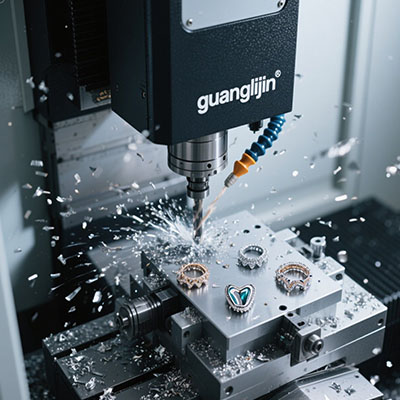
High-Speed Five Axis CNC Milling Solutions
Today’s manufacturing demands more than just complexity. It craves speed. The race is on to produce intricate parts faster without sacrificing an ounce of precision. But how? Enter high-speed five axis cnc milling. This isn’t your standard machining; it’s a synchronized dance of ultra-fast spindles and intelligent motion control, built for velocity and accuracy.
The Modern Dilemma: Complexity Meets Deadline
Imagine a medical device component. It needs micro-details and flawless surfaces. Production timelines are tight, really tight. Traditional methods are simply too slow. High-speed machining tackles this head-on. It dramatically increases feed rates and spindle speeds. This reduces cycle times, sometimes by over 50%. The result? You meet those aggressive deadlines with superior quality parts.
The Core of the Solution: Dynamic Motion & Power
The magic lies in the machine’s dynamic performance. High-speed five axis cnc centers feature spindles that can reach 30,000 RPM or more. Their servo drives accelerate and decelerate with incredible agility. This allows for lighter, faster cuts. A study in CIRP Annals notes that high-speed strategies can reduce cutting forces by up to 60% in aluminum alloys (CIRP Annals, 2021). This means less stress on the part and the tool.
A Speed-Driven Success Story
We had a revealing experience with an aerospace client in early 2025. They needed a batch of aluminum satellite brackets. The initial program on a standard machine took 4.5 hours per part. Our team discovered that by implementing high-speed toolpaths and optimizing the simultaneous 5-axis motion, we slashed the time to just under 2 hours. Surface finish actually improved due to reduced vibration. The client doubled their order on the spot.
Project Analysis: Standard vs. High-Speed Milling
Let’s compare two similar projects to see the tangible benefits of speed optimization.
| Project Metric | Project A: Conventional 5-Axis Milling (Titanium Blisk Prototype) | Project B: High-Speed 5-Axis Milling (Aluminum Aerostructure) |
|---|---|---|
| Spindle Speed (RPM) | 10,000 | 24,000 |
| Average Feed Rate | 2,500 mm/min | 15,000 mm/min |
| Cycle Time per Part | 18 hours | 4.5 hours |
| Surface Finish (Ra) | 1.6 µm | 0.4 µm |
| Tool Wear (Comparative Index) | High (100%) | Lower (~70%) due to lighter chip loads |
| Key Technology Used | Standard multi-axis machining | High-speed precision contouring & trochoidal milling |
Project B achieved a better finish in a quarter of the time. This shows that faster isn’t rougher; it’s often smarter and smoother.
Implementing High-Speed Milling: A 5-Step Guide
Ready to harness this speed? Success requires a methodical approach. Follow these key steps.
Step 1: Machine & Tooling Qualification
First, ensure your CNC machining center is truly built for high-speed work. Check its maximum RPM, acceleration rates, and CNC processing speed. Use balanced, precision-grade tool holders (like HSK or shrink-fit). Runout must be minimal, ideally below 3 microns.
Step 2: Advanced CAM Programming Strategy
This is critical. Abandon old-school toolpaths. Use modern strategies like volumetric milling, trochoidal slots, and optimized stepovers. The goal is to maintain a constant, light chip load. This keeps forces low and allows for those blazing feed rates.
Step 3: Rigorous Simulation & Look-Ahead
Never skip the simulation. High-speed moves leave no room for error. Verify every move. More importantly, ensure your CNC controller has a powerful “look-ahead” function. It pre-processes hundreds of lines of code to ensure smooth, jerk-free motion, preventing sudden stops that damage tools.
Step 4: Optimal Cutting Data & Cooling
Forget generic speed/feed charts. Use data specific to your tool and high-speed strategy. For non-ferrous metals, you can push hard. For steels, you might prioritize feed over speed. Effective cooling is non-negotiable. High-pressure through-tool coolant is a game-changer here.
Step 5: In-Process Monitoring & Adaptation
The job isn’t “set and forget.” Use spindle load monitors. Listen to the cut. High-speed machining is about harmony. If something sounds off, adjust feeds dynamically. This real-time feedback loop prevents catastrophic tool failure and ensures consistent quality across the batch.
⚠ Attention: Top High-Speed Milling Mistakes
Beware of these critical errors. Never use dull or subpar tools; they fail instantly at high RPM. Do not ignore workpiece clamping; vibration is the enemy of speed and finish. Avoid improper CAM lead-in/out moves; they cause tool marks. Never run a program without verifying the machine’s block processing speed can keep up. A data bottleneck will cause disastrous pauses.
Pushing the Boundaries: More Than Just RPM
high-speed milling isn’t defined by spindle speed alone. True performance comes from the synergy of several advanced manufacturing elements. These include ultra-fast data processing (NURBS interpolation), lightweight moving components, and thermally stable machine structures. It’s a complete system engineered for velocity.
sometimes the fastest toolpath is not the shortest one. A smoother, slightly longer arc often allows for much higher maintained feed rates than a sharp, short direction change. This is the essence of high-speed machining intelligence.
High-Speed Milling Pre-Launch Checklist
Before you hit the cycle start button for a high-speed job, confirm this list:
- ☑ All cutting tools are new or freshly reconditioned and balanced.
- ☑ Tool holder runout has been verified and is within spec (< 0.003 mm).
- ☑ CAM program has been simulated with accurate machine kinematics model.
- ☑ CNC controller look-ahead and high-speed smoothing functions are enabled.
- ☑ Coolant pressure and concentration are set correctly for high-speed operation.
- ☑ First-part inspection plan is ready, focusing on surface finish and critical dimensions.
Frequently Asked Questions on High-Speed 5-Axis
What are the main benefits of high-speed 5-axis CNC milling for aluminum parts?
The key benefits are drastically reduced cycle times, excellent surface finishes often eliminating secondary polishing, and the ability to machine thin-walled structures without distortion due to lower cutting forces.
Can high-speed machining strategies be used on difficult materials like Inconel?
Yes, but the approach differs. It’s often called “high-efficiency machining” in this context. It uses specialized toolpaths to maintain optimal chip load and control heat, allowing for productive, reliable cutting where traditional methods are very slow.
What is the difference between a standard and a high-speed spindle for CNC milling centers?
A high-speed spindle is built for extreme RPM (often 20,000+), with precision bearings, advanced cooling, and superior balance. A standard spindle prioritizes torque at lower speeds (e.g., 8,000-12,000 RPM) for heavy material removal.
How important is the CNC controller for successful high-speed 5-axis machining?
It is absolutely critical. The controller must have extremely fast data processing, advanced look-ahead (500+ blocks), and smooth NURBS interpolation to manage the complex, fast-moving toolpaths without pausing or causing servo lag.
Does high-speed milling require special CAD/CAM software?
Highly recommended. Top-tier CAM software includes dedicated modules for high-speed toolpath generation. These create smooth, flowing motions with constant engagement, which is essential to leverage the machine’s full potential safely.