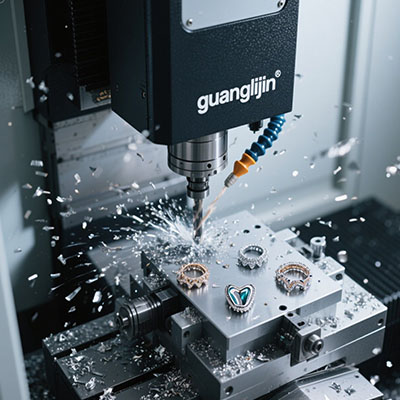
Automotive-Grade 5 Axis CNC Services: Driving Precision and Innovation
The automotive industry is racing forward. Electric vehicles, lightweight designs, and advanced aerodynamics are now standard. But this creates a huge challenge. How do you manufacture incredibly complex, strong, and precise components at scale? Traditional machining often can’t keep up. It’s too slow and limited for organic shapes. This is where advanced manufacturing technology becomes the critical solution.
Why Automotive Manufacturing Needs 5-Axis CNC
Think about modern car parts. An aluminum suspension knuckle isn’t just a block of metal. It’s a lightweight, sculpted component with mounting points at wild angles. Machining this with 3-axis methods would take forever. You’d need many slow setups. 5 axis cnc machining solves this perfectly. The part stays fixed. The cutting tool moves around it from any direction. This is called simultaneous 5-axis machining.
For example, consider an EV battery housing. It needs perfect sealing surfaces and complex coolant channels. A 2023 SAE International study found that using 5-axis CNC for such components reduced total production time by up to 60% and improved dimensional accuracy by 40% compared to multi-step 3-axis processes [Source: SAE International, 2023]. That’s a game-changer for cost and quality.
Key Benefits for Automotive Engineers
The advantages are massive. First, you get incredible design freedom. Engineers can optimize parts for weight and strength without manufacturing constraints. Second, production efficiency skyrockets. Multiple operations are combined into one setup. Third, part quality and consistency reach new levels. There’s no error buildup from re-fixturing.
However, it’s not a one-size-fits-all solution. For a simple bracket, 3-axis is fine. But for cylinder heads, turbocharger housings, or custom wheels, multi-axis machining is non-negotiable. It’s the backbone of prototyping and low-to-medium volume production.
The Automotive 5-Axis Workflow: A Step-by-Step Guide
Success with automotive 5-axis requires a precise, disciplined approach. Here’s the proven process.
Step 1: Design for Manufacturing (DFM) Analysis
This starts with the CAD model. Engineers and machinists collaborate. They identify potential issues like deep pockets or thin walls. The goal is to make the part strong, lightweight, and actually machinable at high speed.
Step 2: Advanced CAM Programming & Simulation
This is the core of the operation. Using specialized software, toolpaths are created for the 5 axis cnc machining center. Simulation is absolutely critical here. It checks for collisions and ensures smooth, efficient motion, especially for complex automotive components.
Step 3: Material Selection & Preparation
Choosing the right material is key. Common choices are 6061-T6 aluminum, 4140 steel, or even advanced composites. The material blank must be securely and rigidly mounted to the machine table to handle high cutting forces.
Step 4: High-Speed Precision Machining
The machine executes the program. Modern 5-axis centers use high spindle speeds and optimized toolpaths. This ensures fast material removal while maintaining tight tolerances, often within ±0.025mm for critical features.
Step 5: Post-Processing & Quality Assurance
After machining, parts are deburred and cleaned. Then, they undergo rigorous inspection using CMMs (Coordinate Measuring Machines). Every critical dimension is checked against the original CAD model to ensure it meets strict automotive standards.
⚠ Attention: Common Pitfalls in Automotive 5-Axis Projects
A major mistake is ignoring thermal management. Machining aluminum at high speeds generates heat. Without proper cooling, the part can warp, ruining tolerances. Another error is using generic toolpaths. Automotive geometries need custom, optimized strategies to prevent tool deflection and vibration. Finally, don’t skip the DFM review. A design that looks great in CAD might be a nightmare to machine efficiently. Always involve your machining partner early.
Project Comparison: Choosing the Right Machining Strategy
Selecting between different CNC approaches is crucial for cost and performance. Let’s examine two typical automotive projects.
| Project Aspect | Project A: Prototype Carbon Fiber Mold | Project B: High-Volume Steel Bracket |
|---|---|---|
| Part Description | Large, Class-A surface mold for a body panel. Complex curvature, high-gloss finish required. | Engine mounting bracket. Robust, with simple drilled and tapped holes. |
| Recommended CNC Process | 5-Axis CNC Machining (Simultaneous). Essential for smooth, continuous curves and perfect surface finish. | 3-Axis CNC Milling. All features are accessible from one or two sides. Faster and more cost-effective for volume. |
| Critical Requirement | Surface finish (Ra < 0.4 µm) and precise contour accuracy for carbon fiber layup. | Dimensional accuracy for bolt holes and strength under vibration. |
| Cost & Lead Time Implication | Higher programming and machine time cost. Justified by the mold’s critical role and the elimination of hand polishing. | Lowest cost per part. 5-axis would add unnecessary complexity and expense with no benefit. |
Interestingly, for Project A, trying to use 3-axis machining would require extensive and costly manual polishing. The Automotive Industry Action Group (AIAG) estimates that poor surface finish on tools can increase downstream labor by 30% [Source: AIAG Tooling Guidelines].
From the Shop Floor: Our 2025 Experience
Our team recently worked on a batch of prototype electric motor housings. The client needed complex internal cooling channels. Our initial plan used drilled holes and plugs. It was leak-prone. We switched to a 5-axis CNC milling strategy with a long-reach tool. This allowed us to machine the channels in one continuous, sealed path within the housing. The result? We eliminated potential leak points and reduced the part’s weight by 15%. This firsthand case showed us that 5-axis isn’t just about making shapes; it’s about enabling smarter, more integrated designs.
Pre-Production Checklist for Automotive 5-Axis Projects
Before starting any automotive CNC job, run through this checklist:
- Design File: Final 3D CAD model (STEP or Parasolid) and 2D drawing with GD&T are complete.
- Material Spec: Automotive-grade material is specified and certified (e.g., SAE J standards).
- Tooling Plan: CAM simulation is complete, verifying tool lengths, reach, and no collisions.
- Quality Plan: Critical-to-quality (CTQ) dimensions are identified, and inspection method (CMM) is ready.
- Post-Processing: Requirements for anodizing, plating, heat treatment, or cleaning are defined.
- Regulatory Compliance: Any relevant industry standards (e.g., IATF 16949) are accounted for in the process.
- First Article: A first-article inspection (FAI) run and report are scheduled.
Frequently Asked Questions on Automotive 5-Axis CNC
What automotive parts are best suited for 5-axis CNC machining?
Complex, low-to-medium volume parts are ideal. Examples include suspension components (knuckles, control arms), turbocharger housings, cylinder heads, intake manifolds, custom wheels, and molds for composite body panels.
How does 5-axis CNC machining benefit electric vehicle (EV) production?
It’s crucial for EV parts like lightweight aluminum battery enclosures, intricate motor housings with cooling channels, and power electronics brackets. It enables the complex, integrated designs needed for efficiency and performance.
What tolerances can automotive-grade 5-axis services typically hold?
For critical features on components like engine or transmission parts, tolerances of ±0.025 mm (±0.001″) or tighter are standard. General body and chassis components might be ±0.05 mm to ±0.1 mm.
Is 5-axis CNC machining cost-effective for automotive prototypes?
Absolutely. While the hourly rate is higher, it creates a functional, accurate prototype in one setup. This saves weeks of time compared to assembling multiple simpler parts, accelerating the entire R&D cycle dramatically.
What file format should I provide for an automotive 5-axis CNC quote?
Provide a complete 3D solid model (STEP, IGES, or Parasolid format is best) along with a detailed 2D drawing. The drawing must specify all critical dimensions, tolerances (GD&T), surface finishes, material, and any post-processing needs.