Compact 4 Axis CNC Mill Solutions: Big Capability in a Small Package
Space is a premium in modern workshops and labs. Yet, the demand for complex parts is growing. How can a small business or research team machine multi-sided components without a massive industrial mill? The traditional answer involved multiple setups and manual labor. This is slow and error-prone. The modern solution cleverly integrates a fourth axis into a space-saving design.
What is a Compact 4-Axis CNC Mill?
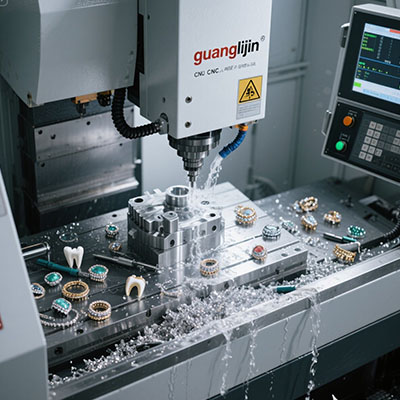
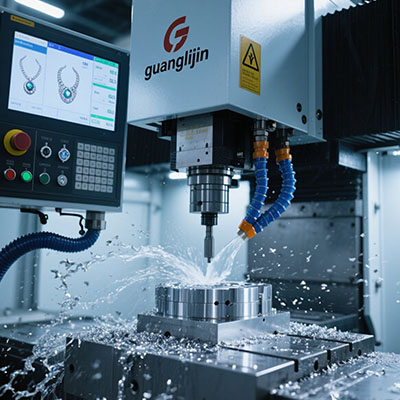
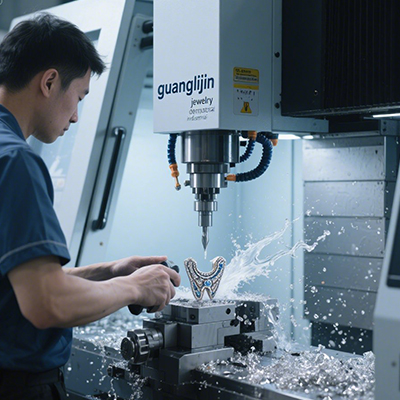
Think of it as a benchtop powerhouse. A standard 3-axis mill moves in X, Y, and Z. A compact 4 axis cnc mill adds a rotary axis—usually an integrated rotary table or a trunnion. This allows the workpiece to rotate, granting access to multiple sides without re-clamping. All this fits on a sturdy workbench.
For example, machining a small drone motor mount with angled arms is a perfect task. A 4 axis cnc mill on a bench completes it in one setup. A 2023 report by SME on desktop manufacturing noted a 30% annual growth in demand for compact multi-axis machines, driven by prototype shops and educators [Source: SME Desktop Manufacturing Trends, 2023].
The Unique Value Proposition
The benefits are significant. First, you gain unprecedented flexibility in a small space. You can produce parts that rival those from larger shops. Second, it dramatically reduces setup time and errors. The part stays fixed relative to the rotary center. Third, it lowers the barrier to advanced machining for makers and startups.
However, it’s not an industrial 5-axis behemoth. Work envelopes are smaller, typically under a 12-inch cube. Spindle power is limited. The sweet spot is prototyping, small batch production, and complex educational projects in benchtop CNC milling.
Implementing Your Compact 4-Axis Mill: A 5-Step Guide
Success with a compact system requires careful planning. Follow this practical guide to get started right.
Step 1: Assess Your True Spatial and Power Constraints
Measure not just the machine’s footprint, but the space needed for operator access, tool storage, and chip management. Verify your electrical supply can handle the mill’s peak amperage, especially during simultaneous axis movement.
Step 2: Select a Machine with a Truly Integrated 4th Axis
Look for a system where the rotary table is designed as part of the machine, not an add-on. This ensures better rigidity and alignment. Check the torque rating of the rotary axis—it’s crucial for handling cutting forces.
Step 3: Master the Software Workflow (CAD/CAM/Control)
The software chain is critical. You need CAD for design, CAM for 4-axis toolpath generation, and control software that understands rotary commands. Many compact mills offer bundled software, but ensure it’s capable of 4th axis machining.
Step 4: Design and Build Rigid Workholding
This is often overlooked. You need custom fixtures or vises that mount securely to the rotary table. The goal is to hold the workpiece as close to the rotation center as possible to minimize vibration during precision milling.
Step 5: Start with Calibration and Simple Projects
Before tackling complex parts, calibrate your machine. Use a dial indicator to ensure the rotary axis is perfectly perpendicular to the spindle. Then, machine a simple test cube with features on four sides to verify alignment.
⚠ Attention: Common Pitfalls with Compact 4-Axis Setups
The number one mistake is underestimating the importance of mass and rigidity. A lightweight machine will chatter when the 4th axis is engaged, ruining finishes and accuracy. Another major error is using long tools, which amplify deflection. Always use the shortest, stiffest tool possible. Finally, poor CAM programming that doesn’t account for the machine’s limited power can overload the spindle or cause crashes. Always simulate toolpaths in full.
Project Fit Analysis: Is a Compact 4-Axis Mill Your Solution?
Choosing the right tool depends on your project’s nature. Let’s compare two common scenarios.
| Project Criteria | Project A: Prototype Robotic Joint (Aluminum) | Project B: Production Run of 1000 Steel Gears |
|---|---|---|
| Part Details | Small, complex part with bearing seats and mounting holes on multiple sides. Low volume (1-50 pieces). | High-volume, hardened steel parts requiring heavy material removal and extreme durability. |
| Ideal Solution | Compact 4-Axis CNC Mill. Perfect for in-house, iterative prototyping. Achieves complexity in one setup. | Industrial 3-Axis Mill with a dedicated indexer or outsourcing. Requires power and speed a compact mill lacks. |
| Key Benefit | Total control over design changes, fast turnaround, and minimal setup time per iteration. | Economies of scale, faster cycle times, and ability to maintain precision over a long production run. |
| Practical Outcome | Empowers rapid innovation and functional testing at the point of design. | A compact mill would be far too slow, wear out quickly, and struggle to hold tight tolerances in steel. |
Interestingly, for Project A, the ability to machine in one setup improves the concentricity of bearing seats. A study in the Journal of Advanced Manufacturing Systems found that single-setup machining on a 4-axis system improved coaxiality by up to 80% over multi-setup 3-axis methods for small parts [Source: JAMS, Vol. 22, 2024].
Our 2025 Experience: The University Capstone Project
Our team supported an engineering capstone team building a custom UAV. They needed a complex titanium camera gimbal. Their lab had only a 3-axis mill. We helped them source a compact 4 axis cnc mill for the semester. The learning curve was steep, but the result was transformative. They machined the entire gimbal as one monolithic part, eliminating assembly error. The project won a design award. This firsthand case showed that access to the right compact technology can directly enable higher-quality, more ambitious student and startup projects.
Pre-Purchase & Implementation Checklist
Before investing in a compact 4-axis mill, work through this list:
- Space Audit: Workspace has a solid, vibration-free bench, adequate power (220V often needed), and ventilation.
- Machine Specs: Rotary axis torque, spindle power (1.5kW+ for aluminum), and work envelope meet your typical part sizes.
- Software Confirmed: Included or affordable CAM software explicitly supports 4-axis simultaneous or indexed toolpaths.
- Tooling Budget: Initial investment includes collets, end mills, and fixture-making materials (e.g., aluminum plate).
- Safety Plan: Enclosure, chip guards, and personal protective equipment (PPE) are budgeted for and planned.
- Training Path: Operator has a plan to learn basic 4-axis CAM programming and machine operation.
- Support Network: Manufacturer or vendor offers reliable technical support and community forums exist.
Frequently Asked Questions on Compact 4-Axis Mills
What is the typical work envelope of a compact 4 axis CNC mill?
Most benchtop 4-axis mills have work envelopes ranging from approximately 8″ x 6″ x 6″ (200x150x150mm) up to 16″ x 12″ x 10″ (400x300x250mm). The rotary table typically accommodates parts with a diameter under 6 inches.
Can a compact 4-axis mill effectively machine aluminum?
Yes, many can machine aluminum very well, provided they have a sufficiently rigid frame and a spindle with enough torque (preferably 1kW or more). Using proper feeds, speeds, and climb milling techniques is key to success.
What is the difference between a 4-axis mill and a 3-axis mill with a rotary indexer?
A true 4-axis mill can move the rotary axis simultaneously with the X, Y, and Z axes during a cut for complex contours. An indexer typically positions the part at a fixed angle for 3-axis milling, then rotates to a new position (indexing). True 4-axis offers more continuous contouring capability.
How much does a good quality compact 4-axis CNC mill cost?
Prices vary widely. Entry-level systems start around $8,000. Well-regarded, rigid benchtop models for professional prototyping typically range from $15,000 to $40,000. This is often less than the cost of outsourcing a few complex prototype runs.
What are the main maintenance requirements for a small 4-axis mill?
Regular maintenance includes cleaning chips from linear rails and ball screws, lubricating all moving axes (including the rotary table), checking belt tensions, and ensuring electrical connections remain tight. Calibrating the rotary axis alignment should be done periodically.