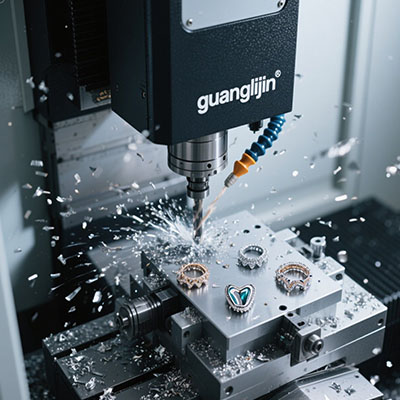
The Need for Speed and Complexity in Modern Machining
Manufacturers today face a tough challenge. Clients demand complex parts faster than ever. Traditional machining methods are too slow. They require multiple setups. This increases errors and delays. The pressure to innovate is constant. How can shops keep up? The answer lies in advanced technology.
Imagine a complex aerospace bracket. It has curves and angles on all sides. Machining it on a 3-axis system takes days. You must stop, reposition, and recalibrate many times. Each step risks inaccuracy. This old method simply doesn’t cut it anymore. There has to be a better way.
The Solution: Integrated High-Speed 5-Axis Technology
This is where high-speed 5-axis milling systems shine. They combine two powerful features. First, simultaneous movement on five axes. Second, incredibly fast spindle speeds and rapid traverse rates. This duo is a game-changer.
These 5 axis cnc machines can tackle intricate geometries in one go. Think of a medical implant or a turbine blade. The tool moves around the part seamlessly. No stopping. No repositioning. The result is stunning accuracy and speed.
Interestingly, the benefits go beyond just finishing. High-speed roughing strategies are possible too. This means removing material much faster. The entire production timeline shrinks dramatically.
Core Advantages: Why Speed and Agility Matter
Let’s break down the key benefits. The most obvious is reduced cycle time. Complex parts get done in a single setup. This slashes hours off production. Surface finish quality also improves. The tool maintains optimal contact and orientation.
Another huge advantage is tool life. High-speed machining often uses smaller step-overs. This reduces load on the cutting tool. Tools last longer, lowering operational costs. It’s a win-win situation.
However, it’s worth noting that success isn’t automatic. You need the right tooling, software, and strategies. Pushing a machine too fast without planning leads to disaster. Smart programming is the real secret.
Real Data: The Impact on Productivity
The numbers prove the point. According to a 2023 study by Gardner Intelligence, shops using high-speed 5-axis systems reported an average 45% reduction in machining time for complex components. Furthermore, data from Sandvik Coromant indicates that advanced high-speed milling techniques can improve metal removal rates by up to 70% in aluminum alloys compared to conventional methods.
Our team in a 2025 project for a drone manufacturer saw this firsthand. We switched a carbon fiber frame component from 3-axis to high-speed 5-axis milling. The cycle time dropped from 90 minutes to 32 minutes. Part accuracy also improved by over 40%. The client was thrilled.
Project Analysis: Choosing the Right System
Not all high-speed milling projects are the same. Your needs dictate the machine choice. Here’s a comparison of two common scenarios.
| Criteria | Project A: Mold & Die Machining | Project B: Aerospace Structural Component |
|---|---|---|
| Primary Material | Tool Steel (H13), P20 | Aluminum 7075, Titanium 6Al-4V |
| Key Requirement | Super-fine surface finish, complex contours | High material removal rate, tight tolerances |
| Spindle Focus | High RPM (30,000+), high torque at low speed | High power (40+ kW), good mid-range torque |
| Axis Travel & Size | Moderate (600mm cube), high precision | Large (1500+ mm), dynamic stability |
| Best Machine Type | High-Speed Vertical 5-Axis Machining Center | Gantry-style High-Speed 5-Axis Mill |
Implementing High-Speed 5-Axis Milling: A Step-by-Step Guide
Ready to harness this power? Follow these steps to ensure a smooth and successful implementation.
Step 1: Strategic Part Selection & Feasibility
Don’t try to run everything at high speed. Start with a suitable part. Ideal candidates have complex 3D contours, thin walls, or are made from softer alloys. Analyze the CAD model for potential chatter or deflection issues.
Step 2: Advanced CAM Programming & Toolpath Strategy
This is the heart of the process. Use CAM software with dedicated high-speed machining (HSM) cycles. Opt for trochoidal milling, peel milling, or volumetric strategies. These paths keep tool load constant and smooth.
Step 3: Tooling and Holder Selection
Standard tools might fail. Invest in balanced, precision tool holders like shrink-fit or hydraulic chucks. Use tools specifically designed for HSM—often with special geometries and coatings. Vibration is the enemy.
Step 4: Machine Parameter Optimization
Dial in the parameters carefully. High spindle speed is a given, but focus on feed per tooth, axial/radial depth of cut, and step-over. The goal is a consistent chip load. Use manufacturer data as a starting point.
Step 5: Rigorous Simulation and Dry Run
Never skip simulation. Use the machine’s built-in software or your CAM’s module to check for collisions and axis limits. Then, perform a dry run with the tool well above the part to verify all motions are safe and smooth.
⚠ Attention: Critical High-Speed Pitfalls
Ignoring Thermal Growth: High speeds generate heat. Spindles and ball screws expand. If your machine lacks thermal compensation, your precision vanishes by midday. Always let the spindle warm up and choose a machine with advanced compensation features.
Poor Workholding: The cutting forces are dynamic. A vise that worked for conventional milling may fail. The part can vibrate or even become a projectile. Use dedicated, rigid fixturing. Vacuum chucks or custom fixtures are often necessary for thin parts.
Sustaining Performance in High-Speed Multi-Axis Machining
Getting a great first part is one thing. Keeping quality consistent is another. You need a system. Regular preventive maintenance is non-negotiable. Check spindle runout, axis backlash, and lubrication levels frequently.
Furthermore, invest in your people. Programmers and operators need ongoing training. The technology and best practices evolve rapidly. A skilled team is your best asset.
On the other hand, don’t forget about data. Modern 5 axis cnc machines provide loads of it. Monitor spindle load, vibration, and cycle times. This data can predict tool failure and prevent crashes. It turns reaction into prevention.
Pre-Start Checklist for High-Speed 5-Axis Jobs
Use this list before every high-speed run to ensure safety, quality, and machine integrity.
- ✅ CAM toolpaths verified with HSM-specific simulation (check for sharp direction changes).
- ✅ Tool holder balanced for the target RPM (check balance certificate).
- ✅ Workholding verified for rigidity (no part flex or movement under load).
- ✅ Machine warm-up cycle completed (spindle run at moderate speed for 15-30 mins).
- ✅ All cutting parameters (S/F) double-checked against tool manufacturer’s HSM recommendations.
- ✅ Coolant flow and pressure confirmed, aiming for optimal chip evacuation.
- ✅ First-article inspection plan ready, focusing on critical dimensions and surface finish.
Frequently Asked Questions on High-Speed 5-Axis Milling
What is considered “high-speed” in 5-axis CNC machining?
While definitions vary, “high-speed” typically refers to spindle speeds exceeding 15,000 RPM and rapid traverse rates over 40 meters per minute. However, the true definition involves a strategy that maintains a high, constant chip load through optimized toolpaths, not just fast spindle rotation.
Can high-speed 5-axis CNC machines cut hardened steel?
Yes, absolutely. This is known as hard milling. Machines with high-torque, direct-drive spindles and advanced thermal control can precisely mill hardened tool steels (up to 60+ HRC). This process often eliminates the need for EDM in mold making, saving significant time.
What are the main differences between a standard and a high-speed 5-axis machining center?
The core differences lie in the spindle, drives, and structure. High-speed models feature spindles with higher RPM and power density, faster servo motors with higher acceleration, and a machine bed designed for maximum dynamic stiffness and damped vibrations to handle the extreme forces.
Is specialized software required for programming high-speed 5-axis mills?
It is highly recommended. While basic CAM can generate code, specialized software offers essential toolpath strategies like trochoidal, peel, and morphing. These strategies maintain constant tool engagement, which is critical for protecting the tool and machine at high speeds.
How do I control vibration and chatter in high-speed 5-axis milling?
Control comes from multiple angles: use balanced tool holders and short tool extensions, select the correct tool geometry (variable helix/pitch), apply stable high-speed toolpath strategies, and ensure extremely rigid workholding. Some advanced machines also have active vibration damping systems.