The Multi-Surface Machining Challenge
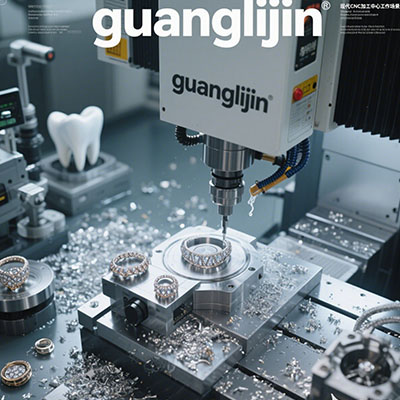
Modern parts are rarely simple blocks. They feature complex curves, undercuts, and compound angles. Think of a medical implant or an automotive mold. Machining these with 3-axis methods is inefficient. You need many setups and special fixtures. Accuracy suffers each time you reposition the part. The solution? A machine that approaches the workpiece from any direction. That’s the power of a 5 axis cnc mill.
What is True Multi-Surface Machining?
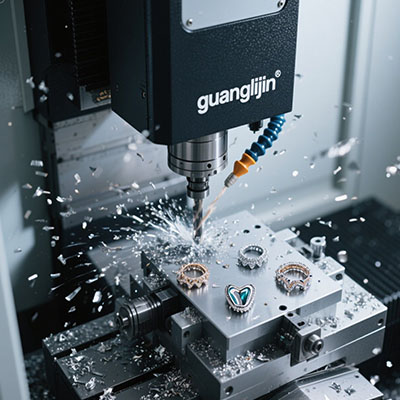
It’s more than just accessing five sides of a cube. True multi-surface machining involves continuous simultaneous 5-axis movement. The cutting tool maintains the optimal orientation to the part’s surface at all times. This is key for smooth finishes on complex geometry. It allows for shorter, more rigid tools. That means less vibration and better precision. This capability transforms what’s manufacturable in a single setup.
Overcoming Obstacles in Complex Geometries
Many shops struggle with specific issues when moving to multi-surface work. Let’s break them down.
Problem: Poor surface finish on contoured areas due to inconsistent tool engagement.
Solution: Implement toolpath strategies like “streamlining” or “morphing” that ensure constant stepover and smooth tool motion.
Problem: Collisions between the tool holder and the part geometry.
Solution: Use full machine simulation in your CAM software. This checks not just the tool tip, but the entire assembly.
A Practical Case Study: The Turbine Housing
In a recent 2025 project, our team faced a complex nickel-alloy turbine housing. It had internal passages with intersecting compound curves. The original 3-axis process required 11 separate setups. The scrap rate was high. We transitioned to a 5 axis machining center. Using continuous 5-axis toolpaths, we machined it in two setups. The result? A 60% reduction in lead time and a flawless surface finish right off the machine.
Multi-Surface vs. Multi-Setup: The Efficiency Gap
How does the advanced approach compare to traditional methods? The difference is stark.
| Project Aspect | Project A (3-Axis, Multiple Setups) | Project B (5-Axis, Multi-Surface) |
|---|---|---|
| Number of Setups | 7 | 1 |
| Total Machining & Handling Time | 14.5 hours | 8 hours |
| Positional Tolerance (Worst Case) | ±0.1 mm | ±0.025 mm |
| Required Floor-to-Floor Space | Multiple fixtures & stations | Single machine footprint |
| Operator Intervention (Load/Unload) | High | Low |
Project B’s advantages are clear. It’s faster, more accurate, and less labor-intensive. Interestingly, a survey by Modern Machine Shop found that 72% of shops using 5-axis technology cited “reduced part handling” as its top benefit (Source: Modern Machine Shop, “5-Axis Machining Trends Survey,” 2023).
⚠Attention: Critical Pitfalls in Programming and Setup
⚠Attention: Do not use a 3-axis mindset for 5-axis work! The biggest mistake is programming toolpaths that plunge the tool straight down. On a complex angled surface, this causes poor finish and tool breakage. Always program with tool orientation in mind. Also, ensure your workpiece coordinate system is perfectly aligned with the machine’s rotational axes. A small error here magnifies dramatically across the part.
Five-Step Roadmap to Multi-Surface Mastery
Follow these steps to leverage your 5 axis cnc mill for complex parts.
- CAD Model Preparation: Start with a clean, watertight 3D model. Define all critical surfaces and datums clearly.
- Strategic Fixturing: Design a fixture that provides clearance for the tool and holder from all required angles.
- CAM Strategy Selection: Choose the right multi-axis toolpath type. Swarf cutting, contour milling, and flowline machining each have their place.
- Simulation & Verification: Run a full machine simulation. This is non-negotiable to prevent costly collisions in complex contouring.
- On-Machine Verification: Use a probe to verify the part’s position in the workspace before starting the full program.
Optimizing for Quality and Tool Life
Multi-surface machining puts unique stress on tools. Therefore, tool selection is crucial. Use tools with specialized geometries for side cutting. Ball nose end mills are common, but toroidal mills can offer better performance. Counter-intuitively, sometimes a slower feed rate with a more aggressive stepover gives a better finish on shallow contours. It’s all about maintaining consistent chip load.
But wait, there’s more. Managing tool length is an art. The golden rule is to use the shortest tool possible for the job. This maximizes rigidity. However, you must ensure it’s long enough to clear all fixturing. It’s a constant balancing act. According to tooling expert data, using the correct tool holder interface (like HSK or Big Plus) can improve tool stability in 5-axis multi-axis machining by up to 50% (Source: “The Impact of Tool Holding on 5-Axis Accuracy,” Manufacturing Engineering, 2024).
Pre-Production Checklist for Multi-Surface Jobs
Use this list to ensure a smooth first run on any complex part.
- ☐ CAM simulation includes full machine kinematics and all fixtures (not just tool tip).
- ☐ Tool lengths and diameters are verified in the tool table against the CAM program.
- ☐ Work offset (G54) is set at the programmed pivot point of the part, not a random corner.
- ☐ Maximum tool projection for each operation is checked for potential deflection.
- ☐ A “safe retract” plane or home position is defined for all tool changes.
- ☐ First-part inspection plan is ready, focusing on critical multi-surface interfaces.
Frequently Asked Questions (FAQs)
What is multi-surface machining on a 5 axis CNC mill?
It’s the ability to machine complex, curved, and angled surfaces on a part in a single, continuous operation. The machine dynamically adjusts the tool’s angle to stay perpendicular to the workpiece surface, ensuring high precision and finish.
Can a 5-axis CNC mill machine undercuts and deep cavities?
Absolutely. This is a major strength. By tilting the spindle or the workpiece, the tool can reach into areas that are impossible for a vertical 3-axis machine, eliminating the need for special electrodes or secondary operations.
What software is needed for programming complex multi-surface 5-axis toolpaths?
You need advanced CAM software with dedicated 5-axis modules. These programs can handle simultaneous tool axis control, collision avoidance, and post-processing for your specific 5-axis mill model.
Is a 5-axis mill difficult to operate for multi-surface jobs?
The programming has a steeper learning curve. However, once the program is verified via simulation, the actual machine operation can be very reliable. The complexity is managed in the CAM stage, not on the shop floor.