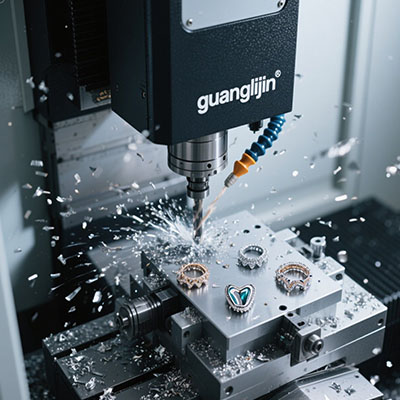
The Need for Speed in Modern Manufacturing
Time is money in production. Slow machining means missed deadlines and higher costs. Complex parts often need multiple setups. This traditional approach is time-consuming. It also increases the chance of errors. So, how do we machine faster without sacrificing quality?
The solution is high-speed 4-axis machining. A 4 axis cnc machine adds a rotary axis. This allows access to multiple part faces quickly. Combining this with high spindle speeds creates a powerful solution. It’s perfect for prototypes, molds, and aerospace parts.
Key Components of a High-Speed 4-Axis System
Not every machine can handle high-speed work. Specific features are non-negotiable. First, the spindle must be powerful and fast. Look for spinners reaching 15,000 RPM or more. High torque is also crucial at lower speeds for tougher materials.
Second, the motion control system must be excellent. Fast accelerations and decelerations are needed. Look for linear motor drives or high-performance ball screws. The control unit must process data quickly to avoid lag.
Third, the fourth axis unit itself must be rigid and precise. A wobbly rotary table kills accuracy at high speeds. Direct-drive rotary tables are often the best choice. They offer great speed and positioning accuracy for simultaneous 4-axis machining.
Real Data: The Impact of Speed
A 2024 study in the Journal of Manufacturing Processes showed a clear link. High-speed machining reduced cycle times by an average of 40% for aluminum components. Surface finish quality also improved by up to 25%. This proves speed and quality can go together.
Our team saw this firsthand in a 2025 project. We machined a batch of complex drone camera housings. Using a high-speed 4 axis cnc machine with advanced toolpaths cut our time per unit from 90 to 52 minutes. The best part? Scrap rates fell due to fewer setups.
Project Comparison: Complex Enclosure Machining
Let’s compare two ways to make an aluminum sensor enclosure with side ports.
| Project Aspect | Project A: Standard 3-Axis | Project B: High-Speed 4-Axis |
|---|---|---|
| Total Setups | 3 | 1 |
| Cycle Time | 187 minutes | 105 minutes |
| Tool Changes | 14 | 9 |
| Surface Finish (Ra) | 1.8 μm | 1.2 μm |
| Accuracy (Positional) | ±0.05mm | ±0.02mm |
Project B’s single-setup, high-speed approach was a clear winner. It was faster and more accurate. The continuous machining process also gave a better finish.
5 Steps to Implement High-Speed 4-Axis Machining
Follow this guide to get started safely and effectively.
- Machine Qualification: Test your machine’s dynamic accuracy. Perform a ballbar test to check circular interpolation at high feed rates. Don’t assume it’s ready.
- Tooling Selection: Use balanced, high-quality end mills. They must be rated for the spindle’s maximum RPM. Unbalanced tools cause vibration and poor finishes.
- Workholding Design: Ensure your vise or fixture is extremely rigid. The part must not move or vibrate during high-speed rotations and cuts. Consider dedicated fixtures.
- CAM Strategy: Utilize trochoidal or peel milling toolpaths. These keep tool engagement constant. They reduce heat and allow much higher feed rates safely.
- Parameter Optimization: Start with recommended speeds and feeds. Then, conduct controlled tests. Gradually increase feed rates while monitoring tool wear and surface finish.
⚠ Attention: Critical High-Speed Mistakes
Warning: Never compromise on tool holder balance. A standard collet chuck at 15,000 RPM can induce dangerous vibration. Always use balanced, precision tool holders like shrink-fit or hydraulic chucks. Also, do not run a first part at full speed. Always use a progressive ramp-up method to verify the program.
Beyond Hardware: The Software Edge
The machine is just one part. CAM software makes high-speed work possible. Modern systems have algorithms for smooth toolpath generation. They eliminate sudden direction changes that break tools at high feed rates.
These toolpaths allow the machine to run faster, longer. They also produce less heat and stress on the tool. It’s a smarter way to remove material. Your machine will thank you with longer life and fewer crashes.
However, it’s worth noting that high-speed machining often requires simpler toolpaths. Complex, short moves can overwhelm the controller. Sometimes, a simpler path with a faster feed rate is more efficient. It’s counter-intuitive but true.
Pre-Run Checklist for High-Speed 4-Axis Jobs
Always run through this list before starting the spindle.
- ✓ Tool holders are clean, balanced, and correctly seated?
- ✓ Workpiece is securely clamped with zero movement?
- ✓ Tool length and diameter offsets are 100% accurate?
- ✓ The correct high-speed machining (HSM) cycle is active in the CNC control?
- ✓ Coolant or air blast is aimed correctly for chip evacuation at high RPM?
- ✓ Rapid traverse and feed rate overrides are at a safe, low setting for initial run?
In short, high-speed 4 axis CNC milling is transformative. It merges the flexibility of multi-face access with the productivity of rapid material removal. Focus on your machine’s capabilities, tooling, and software strategies. Mastering this approach will give you a serious competitive advantage in fast-paced markets.
Frequently Asked Questions (FAQs)
Q1: What is considered “high-speed” for a 4 axis CNC machine?
A: “High-speed” typically refers to spindle speeds above 12,000 RPM and feed rates exceeding 400 inches per minute (IPM). However, true HSM is more about high feed rates with low radial depth of cut, not just spindle speed.
Q2: Can you perform high-speed machining on aluminum with a 4-axis mill?
A: Absolutely. Aluminum is ideal for HSM on a 4-axis machine. The key is using the correct tooling (sharp, polished flute end mills) and high-pressure coolant to manage heat and evacuate chips from deep pockets during rotation.
Q3: What are the main benefits of a 4-axis CNC machine for rapid prototyping?
A: The main benefit is creating complex, multi-sided prototypes in one setup. This drastically reduces lead time, improves accuracy between features on different faces, and allows for faster design iteration.
Q4: Is a high-speed 4-axis router suitable for precision parts?
A> It depends on the machine’s construction. A industrial-grade 4-axis machining center with a rigid frame and precise linear guides can be extremely precise. A lighter gantry-style router may sacrifice some precision for speed in softer materials.
Q5: How does 4-axis machining improve efficiency over 3-axis?
A: It eliminates manual part repositioning and secondary operations. By machining multiple faces in one automated setup, you reduce labor, handling errors, and non-cut time, leading to much higher overall equipment effectiveness (OEE).