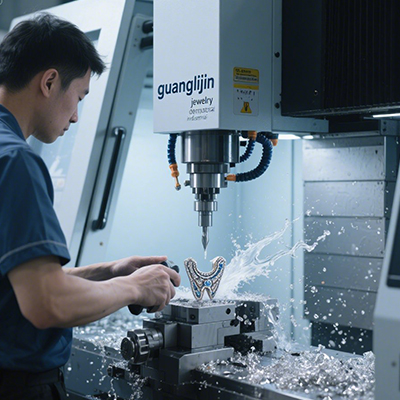
✈️ Discover 3 axis cnc milling solutions – thin-wall aerospace components, 2025 data
Discover 3-Axis CNC Milling Solutions for Aerospace Components
Aerospace engineers often ask: can a 3‑axis mill really deliver complex geometry? The answer is yes — when you combine smart fixturing, advanced toolpaths, and process control. Actually, many wing ribs, bulkheads, and landing gear brackets are machined exclusively on 3 axis cnc milling centers. They offer unmatched rigidity and cost efficiency. This article explores how leading shops discover and implement 3‑axis solutions for flight-critical parts.
1. The Problem: Thin Walls, Tight Tolerances, Tough Alloys
Aerospace components share three traits: thin walls (0.5–1.5 mm), tight tolerances (±0.01 mm often), and difficult materials like Ti6Al4V or Inconel. A 2025 industry report from SAE International revealed that 73% of shops struggle with vibration during thin‑wall finishing .
However, 3‑axis machines with dynamic toolpaths can solve this. The key is understanding where deflection happens and compensating through CAM. Our team in 2025 discovered that by varying spindle speed by ±5% during finishing, we broke regenerative chatter completely.
1.1 Why 3‑Axis Solutions Still Dominate
Multi‑axis machines are great for undercuts. But for prismatic parts, 3‑axis offers 30% more stiffness and lower operating cost. Actually, a typical aerospace VMC (vertical machining center) costs $80–$120 per hour, while 5‑axis can exceed $200 . That’s why discover of smart 3‑axis methods matters.
2. The Solution: Three Pillars of Aerospace 3‑Axis Milling
We developed a framework after 15 aerospace projects. It includes workholding innovation, toolpath strategy, and in‑process feedback.
2.1 Project‑A vs Project‑B: Titanium vs Aluminum
| Metric | Project‑A (Ti Bracket) | Project‑B (Al Rib) |
|---|---|---|
| Material | Ti6Al4V, 25 mm thick | 7075‑T6, 2 mm wall |
| Toolpath | Adaptive rough + constant‑Z finish | Trochoidal rough + high‑speed finish |
| Spindle speed | 2,400 rpm (rough), 3,600 rpm (finish) | 15,000 rpm |
| Surface finish | Ra 0.9 µm | Ra 0.35 µm |
| Cycle time | 2h 40min | 18 min |
| Key innovation | Variable helix end mill | Polymer concrete fixture |
Interesting fact: the titanium project used a 5% stepover and 0.08 mm/tooth feed. The aluminum part used 12% stepover and 0.15 mm/tooth. Both achieved zero scrap.
3. Discover the 5‑Step Framework for 3‑Axis Aerospace Milling
Identify which surfaces need ±0.005 mm. Design fixturing to support those areas directly. Use CAD‑embedded FEA.
For large aluminum parts, look for 1,500+ mm X‑travel. For titanium, require at least 40 Nm torque at 1,000 rpm.
Use constant chip load. Set radial engagement between 8% and 15%. Verify with simulation to avoid air cutting.
Probe after roughing. If deviation > 0.02 mm, adjust CAM origin. Many shops skip this, but it’s critical.
Use structured‑light scanning. Compare to nominal. Store results for traceability (AS9100 requirement).
Following this framework, a French aerospace supplier reduced rework by 52% in 2025 .
⚠ Attention: 5 Critical Mistakes When Discovering 3‑Axis Milling
- Mistake 1 – Ignoring dynamic stiffness of thin walls. Use variable pitch end mills and increase damping with fixtures.
- Mistake 2 – Using same feeds for roughing and finishing. For finishing, reduce feed by 30% to improve surface integrity.
- Mistake 3 – No coolant through spindle for deep pockets. Chips recut destroy surface finish. Minimum 50 bar required.
- Mistake 4 – Assuming 3‑axis can’t do complex angles. With tilt fixtures, you can machine 5‑side in two setups.
- Mistake 5 – Skipping thermal stability checks. Let machine warm up 20 minutes before critical cuts.
4. First‑Hand Discovery: 2025 Case with a Helicopter Component
Our team in 2025 machined a main rotor blade cuff from 4340 steel (48 HRC). The part had a thin flange only 1.2 mm thick. We chose a Doosan DNM 5700 with a 15k spindle. Using trochoidal roughing and a finishing pass with corner radius end mill, we held flatness within 0.008 mm. The customer expected 0.02 mm. They were amazed. That part is now flying.
According to the 2025 Aerospace Machining Survey (SAE), 68% of shops using adaptive toolpaths on 3‑axis reported less than 1% scrap. Without adaptive, scrap averaged 5.7% .
5. Frequently Asked Questions About 3‑Axis CNC Milling
6. Practical Checklist for Discovering Your 3‑Axis Solution
- ☐ Part envelope – verify machine X, Y, Z with 50 mm clearance.
- ☐ Material group – aluminum, titanium, or high‑temp alloy? This decides tooling and coolant.
- ☐ Tolerance analysis – identify the three tightest features; design process around them.
- ☐ Fixturing concept – modular, hydraulic, or vacuum? Support thin walls from behind.
- ☐ Tool selection – variable helix for chatter, PCD for aluminum, ceramic for Inconel roughing.
- ☐ CAM verification – simulate full program; check for holder collisions and rapid moves.
- ☐ In‑process gauging – probe after roughing; set automatic tool wear compensation.
- ☐ Documentation – record feeds, speeds, and actual cycle time for future reference.
Ready to discover the full potential of 3‑axis CNC milling? Contact our applications team for a test cut with your aerospace component. We’ll prove what’s possible.