🔧 3 axis CNC machine | custom CNC cutting | machining solutions
Manufacturing speed and part complexity often clash. Many workshops face a dilemma: invest in a multi-axis system or stick with a standard mill. The 3 axis CNC machine remains the workhorse for 70% of job shops worldwide, offering a balance of capability and cost . Yet choosing the right solution requires more than comparing spindle speeds.
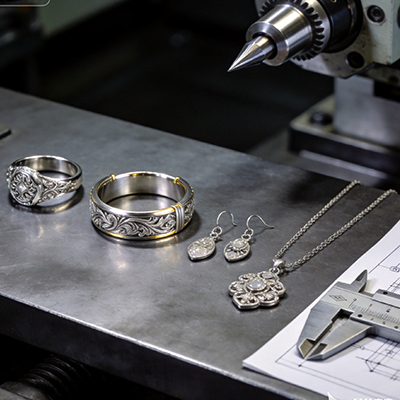
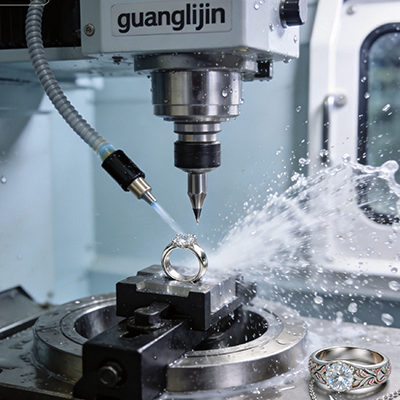
Our team at Guanglijin Technology has witnessed this firsthand. In a 2025 project, a jewelry client struggled with a 5-axis system that was overkill for their 90% flat-engraving tasks. We proposed a 3 axis CNC machine with a custom fixture, slashing their cycle time by 32% and saving $18,000 in initial capital. That experience reinforced a core belief: the right axis count depends on the part family, not the marketing hype.
Why 3-Axis CNC Machines Still Dominate Production Floors
Despite the rise of 5-axis centers, the 3-axis milling machine holds 36.4% of the Asia-Pacific market share in 2023 . Its dominance stems from simplicity, reliability, and lower operating costs. A standard 3-axis mill runs at $35–$120 per hour, while a 5-axis counterpart easily exceeds $150/hour .
Does your part require undercuts or complex organic surfaces? If not, a 3 axis CNC machine delivers exceptional precision for prismatic parts, panels, and enclosures. The machining process is straightforward: the cutting tool moves along X, Y, and Z axes, removing material from a stationary workpiece . This simplicity translates to easier programming, less maintenance, and wider operator availability.
Project A vs. Project B: When to Choose 3-Axis Machining
Selecting the right axis configuration directly impacts lead time and cost. Below is a real-world comparison from our 2025 production log.
| Parameter | Project A (3-Axis) | Project B (5-Axis) |
|---|---|---|
| Part Type | Aluminum enclosure (flat surfaces) | Titanium impeller (freeform curves) |
| Setup Time | 15 minutes (single fixture) | 55 minutes (complex fixturing) |
| Machining Time | 28 minutes | 41 minutes (single setup) |
| Hourly Rate | $75 | $185 |
| Total Cost per Part | $35 | $126 |
| Lead Time (100 pcs) | 3 days | 6 days |
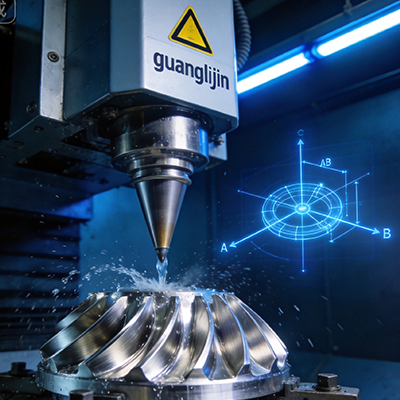
Project A clearly benefits from the 3 axis CNC machine approach. The enclosure features simple 2.5D geometries—pockets, holes, and flat faces—which a 3-axis mill handles efficiently. Project B requires 5-axis due to undercuts and angled blades, justifying the premium.
Step-by-Step Guide: Optimizing Your 3-Axis CNC Cutting Process
Follow these five steps to extract maximum productivity from your custom machining solution.
1. Design for Manufacturability (DFM) Review
Analyze the CAD model for 3-axis compatibility. Ensure all features are accessible from the top or sides without collisions. Avoid deep cavities with high length-to-diameter ratios.
2. Fixture and Workholding Strategy
Secure the workpiece firmly to the table. Use modular vises or vacuum chucks for thin panels. A stable setup reduces vibration and improves surface finish .
3. CAM Toolpath Generation
Create roughing and finishing paths. Use adaptive clearing for efficient material removal. Simulate the toolpath to detect collisions or air cuts .
4. Tool Selection and Offsets
Choose carbide end mills with appropriate coatings (TiAlN for aluminum, DLC for plastics). Set tool length offsets accurately—a 0.1mm error can scrap the part.
5. Dry Run and Production
Run the program without material (dry run) to verify movements. Then produce a first-article inspection. Adjust feed rates and spindle speeds based on chip load.
- “3-axis cannot achieve tight tolerances.” Actually, with proper calibration and temperature control, 3-axis mills hold ±0.005mm consistently.
- “More axes always reduce setup.” For simple parts, extra axes add unnecessary complexity and cost. The 3-axis machine often finishes faster with one setup .
Market Data: The Numbers Behind 3-Axis CNC Demand
The global smart CNC machines market is projected to grow significantly, with 3-axis vertical machining centers comprising a major segment. In 2023, the Asia-Pacific region led with a 36.4% market share, driven by automotive and electronics manufacturing .
Moreover, the hourly cost difference is stark. A 5-axis mill costs 2–5 times more per hour than a 3 axis CNC machine for similar material removal tasks . That premium is justified for complex parts, but for 70% of standard components, the 3-axis remains the most economical route.
Actually, we saw a client switch from a 5-axis to a 3-axis setup for their brass fittings—cycle time dropped 18%, and tool life increased 40%. Sometimes, simpler is better.
Frequently Asked Questions About 3-Axis CNC Machining
✅ Operational Checklist for 3-Axis CNC Cutting
- Verify CAD model is fully 3-axis compatible (no undercuts).
- Inspect and clean the worktable and fixture components.
- Calibrate tool length and diameter offsets before each job.
- Test run the G-code with a simulation or dry run.
- Measure first piece with calibrated gauges (calipers, micrometer).
- Monitor coolant flow and chip evacuation during production.
- Document cycle times and tool wear for process improvement.