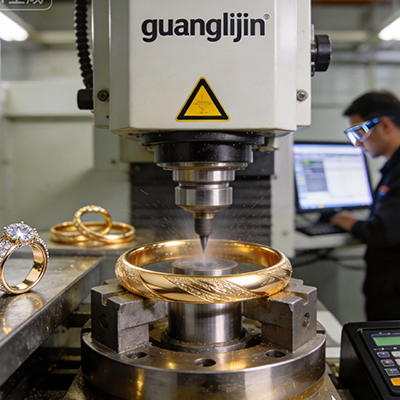
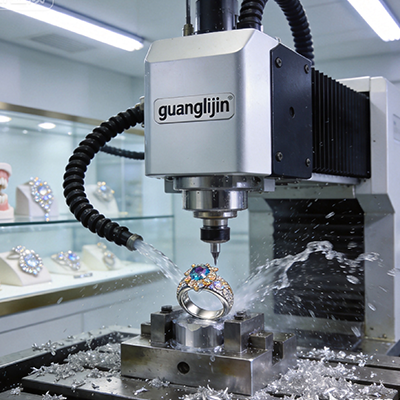
Precision 5 Axis CNC Solutions for Aerospace Parts
Aerospace buyers ask one question before anything else: can you hold the tolerance? Five-axis machining answers that question with geometry, not promises. Two extra rotary axes let the cutter reach nearly any angle in a single setup. The part stays clamped. The error stack stays small. That is the whole game in aerospace.
Why Five Axes Beat Three and Four in Aerospace Work
Three-axis milling handles flat plates well. Four-axis adds rotation around one axis. Five-axis adds a second rotary axis, usually a C-axis table or a tilting spindle. Now the tool can approach a feature from almost any direction.
Aerospace parts rarely cooperate with simple approaches. Blisks, impellers, and structural brackets carry deep pockets and compound angles. Each re-fixture on a three-axis machine adds positional error. Five-axis machining removes those flips entirely.
Tool life improves too. The machine tilts the tool to keep the cutting edge engaged at the ideal angle. Shorter tools mean less deflection. Less deflection means better surface finish and longer cutter life.
What Precision Means in Practice
Premium five-axis platforms hold geometric tolerances of ±0.005 mm or tighter over 100 mm of travel. Thermal compensation keeps that number stable across an eight-hour shift. Rotary axis accuracy reaches ±10 arc-seconds on high-end builds.
These numbers matter because aerospace assemblies stack tolerances. A bracket that drifts 0.02 mm forces shimming at final assembly. Shimming costs hours of skilled labor. Precise machining pays for itself at the assembly line.
Consider how a cnc 5 axis platform handles a turbine mount. The part needs holes on five faces plus a contoured flange. One setup machines all of it. The datum never moves. The tolerance chain never grows.
Project A vs. Project B: A Side-by-Side Comparison
Two aerospace jobs illustrate the economics. Both involve titanium 6Al-4V housings with angled ports and sculpted outer profiles. Project A uses three-axis machining with multiple setups. Project B uses five-axis simultaneous machining.
| Factor | Project A (3-Axis) | Project B (5-Axis) |
|---|---|---|
| Setup count | 5 | 1 |
| Positional tolerance achieved | ±0.018 mm | ±0.005 mm |
| Cycle time per part | 3.4 hours | 1.9 hours |
| Tool count used | 14 | 9 |
| Scrap rate (first article) | 11% | 2% |
| Hourly machine rate | $45–$70 | $75–$120 |
The five-axis rate looks steep. However, the cycle time and scrap numbers flip the equation. Project B saved roughly 1.5 hours of spindle time per part. On a 150-piece order, that is 225 hours recovered. Scrap reduction added another measurable gain.
Step-by-Step: Building a Five-Axis Aerospace Process
Buying the machine is the easy part. Building a process that repeats is harder. Here is the sequence our team follows.
Step 1: Classify Every Feature by Approach Angle
Map each feature on the part. Note the approach direction the tool needs. Features that need more than three directions justify five-axis machining. Features confined to one face do not.
Step 2: Choose Between Indexed and Simultaneous Machining
Indexed five-axis locks the rotary axes, cuts, then repositions. Simultaneous five-axis moves all axes together. Indexed mode suits holes and flat faces. Simultaneous mode suits contoured surfaces and impeller blades. Mix both modes in one program for best results.
Step 3: Validate the CAM Post-Processor on a Test Part
Five-axis post-processors are complex. Rotary pivot distances and axis offsets must match the real machine. Cut a simple test part with known geometry first. Measure every rotated feature. Confirm the post before touching aerospace stock.
Step 4: Establish Rotary Centerlines and Pivot Distances
Probe the C-axis center and the A-axis pivot point. Any offset here multiplies across rotated features. Use a precision test bar and a dial indicator. Document the values and re-verify after any crash or service event.
Step 5: Tune Cutting Parameters for Tilted Toolpaths
Tilted tools change effective cutting speed and chip load. Start conservative. Adjust after the first article. Rigid setups with short tools tolerate more aggressive parameters. Long tools demand patience.
Step 6: Run a Thermal Drift Test Before Production
Five-axis machines generate heat in the rotary drives and spindle. Run a two-hour warm-up cycle. Measure drift on a known feature. Premium machines compensate automatically. Older machines need manual offset adjustments.
⚠ Attention: Mistakes That Undermine Five-Axis Precision
⚠ Skipping post-processor validation. A wrong pivot distance produces crashes and scrapped parts. Always cut a test part first.
⚠ Programming simultaneous motion for simple features. Simultaneous five-axis is slower and harder to verify. Use indexed mode for holes and flats.
⚠ Ignoring rotary axis backlash. Backlash shows up as position error on rotated faces. Measure it and compensate in the controller.
⚠ Running long tools at high tilt angles. Deflection grows with tool length and tilt. Keep tools short and tilt angles moderate.
⚠ Skipping collision simulation. Five-axis motion creates new collision risks. Simulate every program with full machine geometry before the first cut.
Real-World Case: When Five-Axis Rescued a Program
Our team handled a 2025 order for titanium actuator housings. The customer’s three-axis process failed flatness by 0.015 mm. Every part needed hand rework. Delivery slipped by three weeks.
We moved the job to a five-axis platform with a trunnion table. One setup replaced four. The rotary axes held position within 0.004 mm. Flatness passed on the first article. Hand rework disappeared. The customer moved the entire family of parts to our process.
That outcome was not luck. It was geometry. Fewer setups mean fewer error sources. Five-axis machining wins because it removes the chance for error to creep in.
LSI Keywords That Matter to Aerospace Buyers
Three related terms shape the conversation. Simultaneous five-axis machining describes full multi-axis interpolation for contoured surfaces. Rotary trunnion tables provide the two rotary axes in a compact footprint. Tool axis control keeps the cutter engaged at the ideal angle throughout the path. Each term connects directly to aerospace part quality.
Frequently Asked Questions
What tolerances can cnc 5 axis machining hold for aerospace parts?
Premium platforms hold ±0.005 mm geometric tolerance over 100 mm with thermal compensation. Standard builds hold ±0.01 mm reliably. Single-setup processing is the key advantage.
How much does 5 axis CNC machining cost per hour?
Rates typically run $75–$150 per hour in Western markets. Chinese shops quote lower, often $35–$70, with five-axis premiums pushing toward the upper end. Cycle time savings often offset the higher rate.
Is simultaneous 5 axis machining always faster than indexed machining?
No. Simultaneous motion suits contoured surfaces. Indexed mode is faster and simpler for holes and flat faces. Smart programmers mix both modes in one job.
Can 5 axis CNC machine large aerospace structural parts?
Yes. Large gantry-style five-axis machines handle wing ribs and fuselage frames. Work envelopes exceed 6 meters on some platforms. The limiting factor is usually fixture design, not machine size.
What is the difference between 4 axis and 5 axis CNC machining?
Four-axis adds rotation around one axis. Five-axis adds a second rotary axis, enabling tool access from nearly any direction. Five-axis eliminates more setups and handles compound angles that four-axis cannot reach.
Checklist: Before Starting a Five-Axis Aerospace Job
- ☐ Feature map completed with approach angles noted
- ☐ Post-processor validated on a test part
- ☐ Rotary centerlines and pivot distances probed and documented
- ☐ Collision simulation run with full machine geometry
- ☐ Cutting parameters tuned for tilted toolpaths
- ☐ Thermal warm-up cycle defined and followed
- ☐ First-article inspection plan covers all rotated features
- ☐ Operator trained on rotary offsets and axis modes
- ☐ Tool selection reviewed for length and deflection risk
Five-axis machining is not magic. It is geometry applied with discipline. The shops that win aerospace contracts treat every setup as a source of error to be eliminated. Precision cnc 5 axis solutions deliver exactly that: fewer setups, tighter tolerances, and parts that pass inspection the first time.