Custom 5 Axis CNC Machining Provider: How to Choose the Right Partner
Finding a machining partner feels simple until the first part fails inspection. Quotes look similar. Websites all promise precision. Then a critical bore drifts out of tolerance, and the schedule slips.
What actually separates a reliable custom 5 axis CNC machining provider from a shop that merely owns a 5-axis machine? Capability, process discipline, and honest communication. This guide covers how to tell them apart before you commit.
What “Custom” Really Means in 5 Axis Work
Off-the-shelf machining covers standard geometries. Custom work means your part defines the process, not the other way around. Fixtures get designed around your geometry. Toolpaths get built for your material. Inspection plans match your drawing’s critical features.
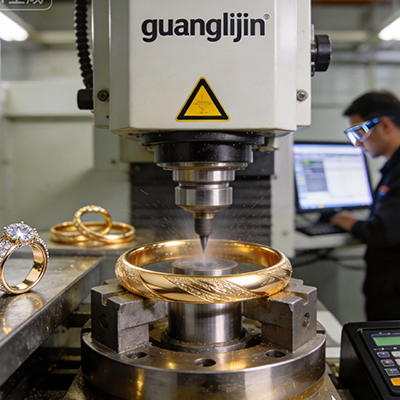
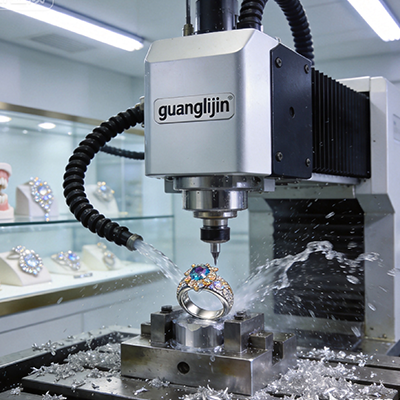
That flexibility is the whole point of a cnc 5 axis platform. A single setup handles five-sided features, compound angles, and deep pockets that would otherwise require multiple re-clamps. Fewer setups mean fewer error sources.
However, custom capability varies widely. Some providers program everything as 3+2 and call it five-axis. Others run true simultaneous motion on sculpted surfaces. The difference matters for impellers, medical implants, and aerospace ducting.
Project A vs Project B: When Custom 5 Axis Pays Off
Two jobs land on the same desk. One suits standard machining. The other demands custom five-axis strategy. Understanding the split protects your budget.
| Factor | Project A: Standard Job | Project B: Custom 5 Axis Job |
|---|---|---|
| Part | Steel fixture base | Inconel turbine housing |
| Geometry | Prismatic, 3 sides | Contoured, 5-sided, thin walls |
| Setups | 3 (standard vises) | 1 (custom fixture) |
| Tolerance target | ±0.025 mm | ±0.008 mm |
| CAM strategy | 2.5D pocketing | Simultaneous 5-axis swarf and ball finishing |
| Inspection | Calipers plus pin gauges | Full CMM report with GD&T |
| Result | 3-axis shop wins on price | Custom 5-axis provider wins on total cost |
Project A belongs on a 3-axis mill. Forcing it onto five axes raises the hourly rate without adding value. Project B fails on 3-axis. Tolerance stack-up across three setups in Inconel invites scrap, and scrap in nickel alloys is expensive.
Five Steps to Vet a Custom 5 Axis Provider
Due diligence takes an afternoon. Skipping it costs weeks. Follow these steps in order.
Step 1: Request a comparable case study
Ask for a part similar to yours in material, size, and tolerance. Review the inspection data, not just photos. Look at the spread of measurements across the run, not a single best reading.
Step 2: Confirm fixture design ownership
Custom work requires custom workholding. Ask who designs and builds fixtures. A provider that outsources fixture design adds coordination risk and hidden cost. In-house fixture capability signals real process control.
Step 3: Verify simulation and collision checking
Five-axis crashes destroy tools, spindles, and schedules. Serious providers simulate every program before cutting metal. Ask what software they use and whether simulation is mandatory or optional.
Step 4: Review material and finishing handling
Does the provider machine, finish, and inspect in-house? Or does your part travel between three vendors? Every handoff adds lead time and tolerance risk. Single-source providers simplify accountability.
Step 5: Agree on first-article inspection terms
For any production order, lock in a first-article inspection with a full dimensional report. Define critical characteristics upfront. This protects both sides and prevents disputes at delivery.
⚠ Attention: Do not accept a provider’s self-reported accuracy figure without evidence. Brochure tolerances describe best-case conditions on ideal geometry. Real accuracy depends on machine calibration, thermal stability, tool condition, and operator skill. Request dimensional data from a recent job with comparable complexity.
Common Mistakes When Hiring a Machining Provider
Choosing on hourly rate alone. A lower rate with three setups often costs more than a higher rate with one. Total part cost includes fixtures, handling, inspection, and scrap. Compare landed cost per accepted part.
Skipping the drawing review. Vague tolerances invite interpretation. A good provider flags ambiguous callouts before quoting. A weak one quotes anyway and argues later. Drawing review is a free signal of process maturity.
Assuming capability from equipment lists. Owning a five-axis machine proves capital investment. It does not prove programming skill, fixture design, or inspection discipline. Equipment lists are the starting point, not the answer.
Case Notes from a 2025 Project
Our team worked on a stainless manifold with intersecting angled ports in early 2025. Two suppliers quoted it. The first proposed four setups on a 3-axis mill. The second proposed a custom fixture and single-setup five-axis machining.
The second quote carried a higher hourly rate. Total cost landed 22% lower because handling and re-clamp operations vanished. First-article inspection passed all critical bores on the first attempt. That outcome came from fixture design, not machine brand.
Specific numbers help. The setup count dropped from four to one. Inspection time fell by half because every feature referenced a single datum. Scrap risk dropped to near zero for the port concentricity callout.
Frequently Asked Questions
Q: How much does custom 5 axis CNC machining cost per hour?
Rates vary by region and complexity. Precision shops in North America typically charge $85 to $150 per hour for five-axis work. Complex setups and exotic materials push rates higher. Always compare total part cost, not hourly rate alone.
Q: Can a custom 5 axis provider handle small batch production?
Yes. Most custom shops serve prototyping and low-volume runs from one to a few hundred parts. Setup cost spreads across the batch, so ask for a per-part price at your expected quantity and at double that quantity.
Q: What is the difference between 3+2 and simultaneous 5 axis machining?
3+2 locks the rotary axes in position and machines with three axes moving. Simultaneous five-axis moves all axes together for sculpted surfaces. Most prismatic work uses 3+2. Contoured surfaces need simultaneous motion.
Q: Which materials work best with cnc 5 axis machining?
Aluminum, titanium, stainless steel, Inconel, and engineering plastics all machine well on five-axis platforms. Titanium and nickel alloys require slower cutting speeds and more tool wear allowance, which affects both cost and tolerance consistency.
Q: How long does a typical custom 5 axis machining project take?
Quoting takes two to five days. Programming and fixture design add three to ten days. Machining runs one to five days depending on complexity. Total lead time for a first article typically lands at two to four weeks.
Final Checklist Before You Sign
Run through this list before releasing a purchase order.
- ☐ Provider supplied inspection data from a comparable part
- ☐ Fixture design and build confirmed as in-house
- ☐ CAM simulation verified as mandatory in their workflow
- ☐ Single-source capability for machining, finishing, and inspection confirmed
- ☐ First-article inspection plan agreed with named critical characteristics
- ☐ Drawing ambiguities flagged and resolved before quote acceptance
- ☐ Total landed cost compared, not hourly rate alone
- ☐ Lead time and delivery milestones written into the PO
Custom five-axis machining rewards buyers who ask hard questions early. The right provider welcomes that scrutiny. The wrong one avoids it. Use the checklist, request the data, and let evidence decide.