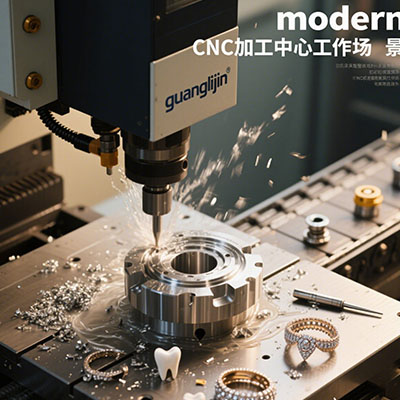
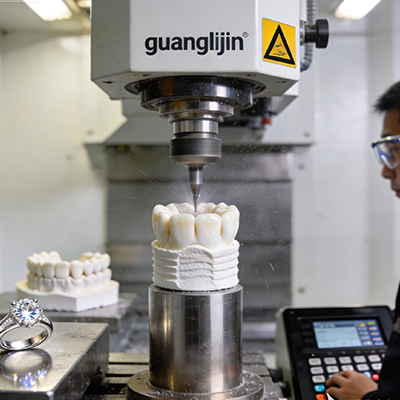
Stability is the hardest thing to guarantee in a small machine. A mini 5-axis mill has less mass, shorter travel, and tighter thermal margins than a full-size machining center. Getting stable cuts from that platform takes deliberate engineering.
Why Stability Matters More on a Mini 5-Axis
A full-size machining center absorbs vibration through sheer mass. A mini machine cannot rely on weight. It must manage vibration through structural design, short force loops, and careful component selection. The cnc mill axis kinematics on a compact platform amplify any weakness. A flex in the trunnion shows up as chatter at the tool tip.
Precision work on small parts leaves no room for error. A 0.02 mm deviation is negligible on a large weldment. On a medical implant or a watch component, it is a scrap part. Therefore, stability defines the useful capability of a mini 5-axis machine far more than its work envelope or spindle speed.
What Makes a Mini 5-Axis Machine Stable
Three engineering factors separate a stable mini machine from a shaky one. Each affects the others.
Structural damping and mass distribution. Cast iron bases outperform welded steel frames for vibration absorption. The YORNEW V3 uses a full cast iron table and HT250 grey cast iron bed to damp vibration during cutting [citation:3][citation:9]. That material choice matters more on a small machine because there is less mass to dissipate energy.
Short force loop geometry. The distance from the tool tip through the frame to the workpiece determines how much deflection occurs under cutting load. A patent filing on compact 5-axis design specifies a force loop under 1,000 mm and vibration frequencies above 250 Hz as stability targets [citation:1]. A shorter loop means less bending and faster thermal recovery.
Spindle and bearing quality. The spindle is the largest heat source and vibration generator on any machine. On a mini 5-axis, the spindle’s bearing preload and cooling system determine whether the machine holds tolerance after an hour of cutting. Water-cooled spindles with consistent thermal behavior reduce warm-up drift [citation:9].
Project A vs. Project B: Stability in Two Precision Scenarios
Two buyers, same budget range, different stability demands.
| Factor | Project A: Jewelry Wax Patterns | Project B: Small Titanium Brackets |
|---|---|---|
| Machine | YORNEW V3 | InfiMaker K1 |
| Structure | Cast iron bed, HT250 | Compact frame, 1,500W spindle |
| Material | Wax, acrylic, soft plastics | Titanium grade 5, stainless |
| Tolerance Need | ±0.05 mm | ±0.02 mm |
| Stability Challenge | Surface finish on delicate features | Chatter during slotting and pocketing |
| Repeatability (listed) | 0.02 mm [citation:3] | 0.01 mm [citation:10] |
| Key Stability Feature | Cast iron damping | Adaptive toolpath control |
Project A cuts soft materials where vibration is less destructive. The cast iron bed absorbs the light cutting forces and delivers clean wax surfaces. Stability here means finish quality, not load capacity.
Project B pushes into titanium with a 1,500W spindle. That combination demands conservative parameters and a toolpath strategy that avoids full-slot cuts. The K1’s stability comes from software-driven adaptive control as much as from its frame [citation:4]. A rigid frame alone cannot compensate for a lightweight spindle under heavy load.
Step-by-Step: Evaluating Stability in a Mini 5-Axis Machine
Five tests to run before you buy
- Request a cutting test at your intended material and toolpath. Do not accept a demo on foam or wax. Send a toolpath file that includes a pocket and a contour cut in aluminum or steel. Measure the surface finish and check for chatter marks.
- Verify the structural material and damping design. Ask for the bed material specification. Cast iron or mineral casting indicates vibration absorption. A welded steel frame on a small machine is a warning sign for chatter at higher loads.
- Run a thermal drift test. Start the spindle at 80% of maximum rpm and cut a test feature every 15 minutes for one hour. Measure the feature after each cut. A stable machine holds tolerance; a thermally unstable one drifts noticeably within 30 minutes [citation:5].
- Check rotary axis backlash and rigidity. Mount a dial indicator against the trunnion table and apply hand pressure in the cutting direction. Any visible deflection suggests the bearing preload or brake system is inadequate for cutting loads.
- Confirm the control supports look-ahead and feed optimization. A stable machine needs software that adjusts feed rates through corners. Ask whether the control offers adaptive feed or jerk-limited motion. Without these features, the machine will chatter in corners regardless of frame rigidity.
⚠ Attention: Stability Mistakes That Cost Money
Q&A: Stable Mini 5-Axis Machines and Real-World Use
How stable is a mini 5-axis CNC machine compared to a full-size machining center?
A mini machine cannot match a 5-ton machining center for heavy cutting stability. Its advantage is accessibility and footprint. For light cuts in aluminum, brass, and plastics, a well-designed mini 5-axis holds tolerance reliably. For deep cuts in steel, expect slower feeds and more conservative parameters [citation:1][citation:9].
What is the best structure for a stable mini 5-axis mill?
Cast iron or mineral casting provides the best vibration damping for a compact frame. Polymer concrete and welded steel are alternatives, but cast iron remains the standard for small precision machines. The YORNEW V3 uses HT250 grey iron for its bed and table [citation:3].
Can a mini 5-axis machine hold ±0.01 mm in titanium?
Some can, within a narrow cutting envelope. The InfiMaker K1 lists 0.01 mm repeatability and supports titanium for light work [citation:10]. Achieving that tolerance requires sharp tooling, small radial engagements, and a rigid workholding setup. Production runs in titanium on a mini machine demand patience and conservative parameters.
How do I reduce chatter on a small 5-axis CNC?
Reduce radial engagement, increase spindle speed within the stable range, and use a variable helix cutter. On the software side, enable look-ahead feed optimization if available. A cast iron machine bed helps, but toolpath strategy and tool selection drive most chatter reduction on small platforms.
Does spindle cooling affect stability on a mini 5-axis?
Yes, significantly. A water-cooled spindle maintains consistent bearing temperature better than an air-cooled spindle. That consistency reduces thermal drift during long cuts. The YORNEW V3 uses water cooling for this reason, and the specification lists thermal deformation as a design consideration [citation:9].
The Bottom Line on Stable Mini 5-Axis Machines
A stable mini cnc mill axis machine is a system, not a specification. The frame material, spindle cooling, rotary axis design, and control software all contribute to whether the tool stays where it should under cutting load. Buyers who evaluate only the work envelope and spindle wattage miss the factor that determines real precision capability.
Test the machine under load. Check the thermal behavior over time. Match the workholding to the machine’s rigidity. Then decide whether the stable cutting envelope covers your parts. That discipline separates a productive small machine from a frustrating one.
Stable Mini 5-Axis Purchase Checklist
- Request a cutting test on your material with a representative toolpath
- Confirm the bed material is cast iron, mineral casting, or equivalent damping material
- Run a one-hour thermal drift test and measure part accuracy over time
- Check rotary axis backlash and deflection under hand pressure
- Verify the control offers feed optimization or look-ahead for corner stability
- Budget for rigid miniature workholding that matches machine capability
- Ask for spindle warm-up procedure and recommended warm-up duration
- Confirm water cooling or thermal compensation is included on the spindle