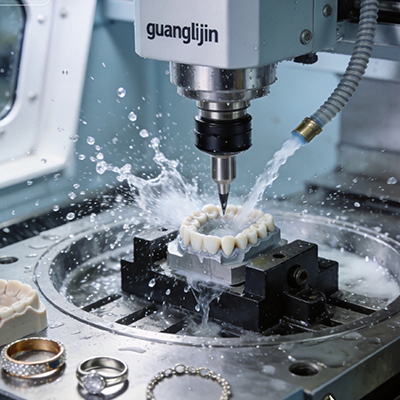
Industrial equipment decisions carry weight. A hobby-grade rotary table is not the same animal as production-floor 4-axis equipment. The difference shows up in rigidity, safety compliance, uptime, and the cost of a wrong choice. This guide focuses on the industrial side—what the specs actually mean, where the money goes, and how to avoid the mistakes that stall a production line.
What Separates Industrial 4-Axis Equipment from Shop-Grade Machines
Industrial 4-axis equipment is built for continuous operation. The frame is heavier. The rotary table is designed for clamping force, not just positioning. The safety systems meet formal standards.
ISO 16090-1 governs machining center safety, including 4-axis milling machines. The current draft covers protective measures, control system reliability, and monitoring of rotary movement limits [citation:4]. A machine without compliant guarding and emergency stop architecture is not industrial equipment. It is a liability.
The global CNC machine tools market was estimated at USD 92.6 billion in 2026, growing at 6.2% CAGR toward USD 168.4 billion by 2036 [citation:14]. Multi-axis adoption drives a meaningful share of that growth. Shops are buying capability, not just capacity.
We visited a supplier in 2025 who ran a “4-axis” retrofit on a light-frame VMC. The rotary table weighed more than the recommended load. Within six months, the Z-axis ballscrew showed measurable wear. The retrofit saved capital upfront. The repair cost more than a proper industrial-grade rotary table would have. That experience shaped how we evaluate equipment now.
Equipment A vs Equipment B: Standalone Rotary vs Integrated Trunnion
Two industrial configurations dominate. Each carries different tradeoffs for production environments.
| Factor | Equipment A: Standalone Rotary Table | Equipment B: Integrated Trunnion |
|---|---|---|
| Mounting | Bolted to existing machine table | Permanent machine structure |
| Rigidity under heavy cuts | Moderate (depends on table T-slot condition) | High (integrated casting) |
| Removal for 3-axis work | Possible, frees table space | Not removable |
| Load capacity range | 50–300 kg typical | 200–800+ kg |
| Best production fit | High-mix, low-volume job shop | Dedicated production cell |
| Safety integration | Requires adding guarding around rotating chuck | Factory-integrated perimeter protection |
Standalone tables suit job shops that switch between rotary and flat work. Integrated trunnions suit production cells running the same family of parts. The safety integration difference matters for ISO compliance. A standalone table bolted to an older VMC often lacks the perimeter protection that industrial standards expect [citation:4].
Where Industrial Buyers Get the Specification Wrong
⚠ Attention: Rotary table load capacity is rated for static clamping, not for cutting forces. A table rated at 300 kg may deflect under a heavy face mill cut if the part extends far from the chuck.
The load rating assumes the workpiece is centered and supported. An off-center part at maximum load creates a bending moment the table was not designed for. Industrial buyers must calculate the moment, not just the weight.
Positioning accuracy tells only half the story. A table with ±0.001° indexing accuracy sounds impressive [citation:10]. But indexing accuracy applies when the table locks at discrete positions. Continuous simultaneous machining depends on servo dynamic response and encoder feedback during motion. These are different specifications. A table optimized for indexing may not hold tolerance during simultaneous rotary cutting.
Safety compliance is another gap. Perimeter protection with photoelectric cells stops the machine when an operator enters the cutting zone [citation:1]. Industrial equipment needs this. A standalone rotary table retrofit often bypasses the original guarding design. That creates a compliance problem and a real injury risk.
Step-by-Step: Evaluating Industrial 4-Axis Equipment Before Purchase
- Calculate the cutting moment, not just the part weight. Multiply the part mass by the distance from the chuck face to the farthest cutting point. Compare that moment to the table’s rated moment capacity. If the manufacturer only publishes a load weight, request the moment rating.
- Verify the safety architecture meets ISO 16090-1. Request the machine’s risk assessment documentation. Confirm perimeter guarding, emergency stop category, and rotary axis monitoring are included [citation:4].
- Test simultaneous motion accuracy separately from indexing accuracy. Ask for a test cut that runs the A-axis continuously while X and Y interpolate. Measure the result. Indexing tests alone do not predict simultaneous performance.
- Confirm spare parts availability for the rotary drive and encoder. Industrial uptime depends on service response. A proprietary rotary encoder with a 12-week lead time is a production risk. Ask for the spare parts list and lead times before signing.
- Evaluate chip management around the rotary interface. Chips pack into chuck jaws and tailstock bores. Look for directed coolant or air blast at the rotary interface. This is a design feature, not an accessory.
- Run the machine under load for a full shift. Thermal drift appears over hours, not minutes. A short demo cut does not reveal it. Request a full-shift runoff with dimensional inspection before and after.
Applications That Justify Industrial 4-Axis Investment
Aerospace and defense lead the adoption curve. Structural brackets, actuator housings, and turbine blade roots combine flat faces with cylindrical features. Completing these in one or two setups instead of four or five reduces handling risk on flight-critical hardware [citation:2].
Medical devices follow closely. Orthopedic implants require tight tolerances on complex curved surfaces. Continuous 4-axis machining produces the smooth, burr-free finishes biocompatibility standards demand [citation:2].
Oil and gas downhole tools are long, cylindrical, and feature-dense. Drill collars and stabilizer blades benefit from continuous 4-axis turning and milling from bar stock [citation:2].
For a production shop, the 4 axis cnc milling machin pays back when part geometry includes features on three or more faces, or continuous rotary contours. Flat plate work does not justify the capital. The application audit comes before the purchase order.
Frequently Asked Questions
What safety standards apply to industrial 4 axis cnc milling machin equipment?
ISO 16090-1 is the primary standard for machining center safety, covering milling machines and machining centers including 4-axis configurations. It addresses guarding, control system reliability, emergency stop requirements, and monitoring of rotary movement limits. Industrial buyers should request the machine’s compliance documentation as part of the purchase evaluation.
How does rotary table load capacity differ from cutting moment capacity in industrial 4-axis milling?
Load capacity is the maximum workpiece weight the table can support statically. Cutting moment capacity is the maximum torque the table can resist during machining. A 300 kg load centered on the chuck creates a small moment. The same 300 kg extending 500 mm from the chuck creates a much larger moment that may exceed the table’s cutting capacity. Always request the moment rating for industrial applications.
Can a standalone rotary table retrofit meet industrial safety requirements on an older VMC?
It can, but only with additional guarding and safety system integration. The retrofit must include perimeter protection around the rotating chuck, emergency stop access at the rotary station, and rotary axis limit monitoring. Simply bolting a table to the machine table does not meet ISO 16090-1 requirements for industrial production use.
What is the typical payback period for industrial 4-axis equipment in a job shop?
Payback depends on part mix. Shops running multi-face parts with 12–18% scrap rates on 3-axis setups often see 18–30 month payback. The calculation includes reduced setups, lower scrap, and higher spindle utilization. Shops with mostly flat work rarely justify the investment on throughput alone. The geometry audit comes first.
Why does simultaneous 4-axis machining accuracy differ from indexing accuracy on industrial equipment?
Indexing accuracy measures how precisely the table locks at a commanded angle. Simultaneous accuracy measures how well the rotary axis tracks while moving in coordination with linear axes. The second depends on servo bandwidth, encoder resolution, and controller look-ahead. A table with excellent indexing specs can still perform poorly in continuous motion if the servo tuning is inadequate for the machine’s inertia.
Checklist: Industrial 4-Axis Equipment Readiness
- ☐ Part mix audited: at least 30% of production requires multi-face or rotary geometry.
- ☐ Cutting moment calculated for worst-case part and compared to table rating.
- ☐ ISO 16090-1 compliance documentation reviewed.
- ☐ Perimeter guarding and rotary zone protection specified.
- ☐ Simultaneous motion accuracy tested separately from indexing accuracy.
- ☐ Rotary drive and encoder spare parts lead times confirmed.
- ☐ Chip evacuation directed at chuck and tailstock interfaces.
- ☐ Full-shift thermal drift test completed with dimensional inspection.
- ☐ Operator training scheduled for rotary coordinate systems and safety procedures.