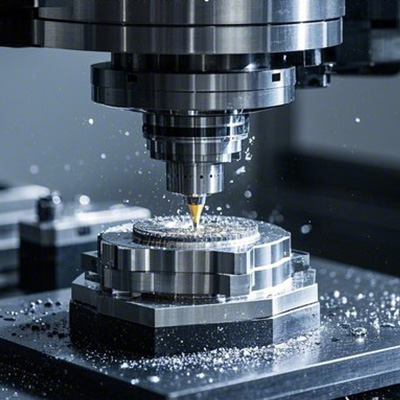
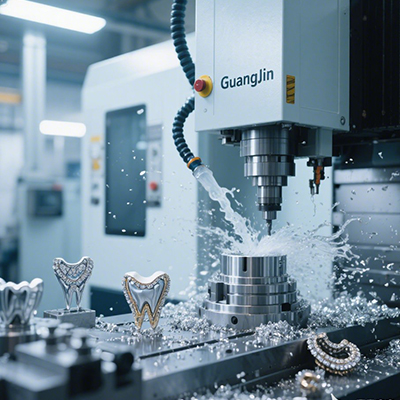
Fine ornament work is small, detailed, and unforgiving. A pendant with a 0.3 mm channel fails if the wall wobbles. A ring with a textured surface shows every chatter mark after polishing. Stability is the quality that makes a jewelry machine suitable for this work. This guide covers the stability factors that matter in fine ornament CNC milling.
The Stability Problem: Micro-Tools Amplify Vibration
Jewelry milling uses micro-tools. A 0.5 mm end mill is common. A 0.2 mm end mill is not unusual. At that size, the tool is fragile and the deflection is large relative to the cut.
Vibration shows up immediately. A stable machine cuts a clean channel. An unstable one leaves chatter marks that polishing cannot remove. The detail blurs.
Therefore, stability is the first requirement for a jewelry machine. Frame rigidity, spindle balance, and workholding stiffness all contribute. A weak link in any of them produces chatter at the tool tip.
Frame Rigidity for Fine Milling
A jewelry machine operates at small scale, but the vibration problem is the same as on a large machine. The frame must absorb vibration, not amplify it.
Cast iron bases and granite frames damp vibration well. A welded steel frame can ring if it is not stress-relieved. Polymer concrete fill adds damping.
Mass matters. A heavier frame resists vibration better than a light one. A desktop jewelry machine with a granite base outperforms a light aluminum frame on fine detail.
Our team tested two jewelry machines in 2025 on a 0.3 mm wall in brass. The granite-based machine cut a clean wall. The aluminum-frame machine produced visible chatter that polishing could not remove. The frame material made the difference.
Comparing Two Jewelry Machine Setups: Project A vs. Project B
| Parameter | Project A: Granite, Balanced Spindle | Project B: Aluminum Frame, Standard Spindle |
|---|---|---|
| Frame | Granite base, cast column | Welded aluminum frame |
| Spindle | Balanced, runout under 0.003 mm | Standard, runout 0.010 mm |
| Workholding | Precision vise with rigid base | Standard vise with overhang |
| Chatter on 0.3 mm wall | None | Visible marks |
| Surface finish after polish | Mirror | Tool marks remain |
| Scrap rate on detail work | 2.8% | 11.5% |
Project A invested in frame mass and spindle balance. Project B saved on hardware and lost it on scrap. Fine ornament work rewards the stable platform.
Spindle Balance and Runout
The spindle carries the micro-tool. Balance and runout decide whether the tool cuts cleanly. An unbalanced spindle vibrates at high speed. Runout shifts the cut line.
Measure runout inside the taper with a dial indicator. Target under 0.005 mm for jewelry milling. High-precision jewelry spindles hold under 0.002 mm.
Collet quality matters too. A worn collet adds runout even when the spindle is tight. Replace collets on a schedule. Check the collet bore for chips and wear.
Research on micro-milling shows that tool runout and vibration dominate error at small scales. Work published on micro-machining supports that finding. The jewelry machine must control both to cut clean detail.
Workholding for Fine Ornament Parts
Workholding must be rigid and compact. A small vise with a solid base holds better than a large vise with overhang. A fixture plate bolted to the table adds stiffness.
Jewelry parts are often small and irregular. A custom fixture with a machined pocket holds the part securely. Wax or low-melt alloy can support thin parts during cutting.
A zero-point clamping system speeds setup on repeat jobs. The fixture stays consistent between runs. That consistency reduces setup error, which is a large share of total error on small parts.
Step-by-Step: Setting Up a Stable Jewelry Milling Job
- Check the frame and bench. Bolt the machine to a rigid bench and level it.
- Measure spindle runout. Target under 0.005 mm. Replace worn collets.
- Mount the part rigidly. Use a precision vise or a custom fixture with a machined pocket.
- Keep tool overhang short. Match the tool length to the feature depth.
- Cut a test piece on scrap material. Inspect under magnification for chatter and line quality.
- Adjust speed and feed for stability. Lower speed if chatter appears.
- Cut the production piece and inspect. Check the first piece before running the batch.
Tooling and Cut Strategy
Jewelry milling uses small tools. A 0.5 mm ball end mill handles detail. A 0.2 mm flat end mill handles fine channels. Tool material matters. Carbide holds an edge longer than high-speed steel.
Cut strategy affects stability. Climb milling produces a cleaner edge. Conventional milling may reduce chatter on some materials. Test both and choose the one that cuts cleanly.
Depth of cut should be light. A micro-tool cannot remove large amounts of material. Light passes reduce deflection and vibration. The cycle time is longer, but the part quality is better.
The jewelry machine platform for fine ornament work is a system: frame, spindle, workholding, and tooling. Each layer supports the others. A shop that controls all four cuts clean detail that polishing can finish without damage.
Frequently Asked Questions
What makes a jewelry machine stable for fine ornament CNC milling?
A granite or cast iron frame, a balanced spindle with runout under 0.005 mm, rigid workholding, and short tool overhang. Stability at the tool tip decides the cut quality.
What spindle runout is needed for jewelry CNC milling?
Target under 0.005 mm inside the taper. High-precision jewelry spindles hold under 0.002 mm. Runout above 0.01 mm produces chatter and ragged detail.
Why does chatter matter so much in jewelry machining?
Jewelry features are tiny. Chatter marks on a 0.3 mm wall cannot be polished out without blurring the detail. A stable machine cuts clean, and polishing improves the finish.
What workholding is best for small jewelry parts?
A small precision vise with a solid base or a custom fixture with a machined pocket. Wax or low-melt alloy can support thin parts during cutting.
How do I reduce chatter on a jewelry CNC machine?
Bolt the machine to a rigid bench and level it. Check spindle runout and replace worn collets. Keep tool overhang short. Lower spindle speed if chatter appears.
Stable Jewelry Machine Checklist
- Bolt the machine to a rigid bench and level it.
- Confirm the frame material: granite, cast iron, or aluminum.
- Measure spindle runout and target under 0.005 mm.
- Inspect and replace worn collets.
- Mount the part in a precision vise or custom fixture.
- Keep tool overhang short for the feature depth.
- Cut a test piece on scrap and inspect under magnification.
- Adjust speed and feed for stability, not speed alone.
- Use light depth of cut with micro-tools.
- Check the first production piece before running the batch.