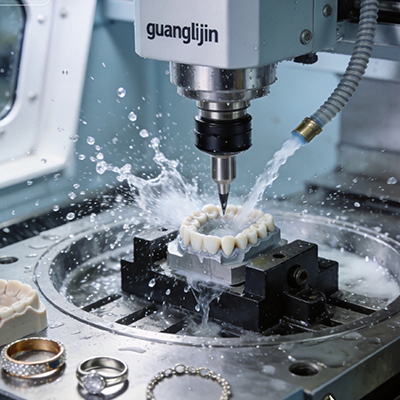
Every buyer searching for expert 5 axis CNC machine shops hits the same wall. Dozens of suppliers claim five-axis capability. Very few can prove it under production pressure. The difference costs money, time, and sometimes an entire program.
Why “Expert” Is the Hardest Word to Verify
A shop can own a five-axis machine and still lack five-axis expertise. Ownership is capital. Expertise is process discipline. Those are different things.
The gap shows up in simulation quality, post-processor accuracy, and thermal control during long cycles. A machine that cuts beautifully for twenty minutes can drift badly over four hours.
The Capability Illusion
Many shops list five-axis on their website after buying one used machine. The machine may be a 3+2 positional unit, not a simultaneous five-axis center. That distinction changes everything about surface quality and cycle time.
Therefore, the first job in supplier selection is not price comparison. It is capability verification. Everything else follows from that.
Project A vs Project B: Same Shops, Different Outcomes
| Factor | Project A: Aluminum Enclosure | Project B: Stainless Valve Body |
|---|---|---|
| Geometry | Compound-angle faces, shallow pockets | Deep bores, intersecting channels |
| Tolerance | ±0.05 mm | ±0.01 mm on bore alignment |
| Batch size | 150 units | 30 units |
| Typical shop fit | General five-axis job shop | Specialist precision shop |
| Dominant cost driver | Setup amortization | Programming + probing |
Project A rewards volume shops with fast setups. Project B demands shops that invest in in-process probing and kinematic validation. Sending Project B to a general job shop usually ends in scrap.
Chinese industrial data from 2026 shows five-axis hourly rates at 80–200 RMB for baseline equipment, versus 15–40 RMB for three-axis . The spread reflects real investment. A shop quoting below that range is not running true simultaneous five-axis.
How to Vet Expert Shops in Five Steps
Step 1: Ask for the Exact Machine and Control
Request make, model, control version, and rotary configuration in writing. A DMG Mori DMU with a Heidenhain control holds different capability than a generic imported five-axis center. Specificity is a proxy for honesty.
Step 2: Require a Simulation Report from a Real Job
Full machine simulation must cover tool holder, fixture, and spindle envelope. Ask for a report from a job with similar geometry. Shops that skip simulation are transferring kinematic risk to your purchase order.
Step 3: Check the Post-Processor Validation Record
A post-processor that mismatches the machine’s kinematic chain can misplace features by microns. That is enough to fail a bore alignment callout. Ask when the post was last validated against the actual machine.
Step 4: Confirm Thermal Strategy for Long Cycles
SolidCAM’s 2026 benchmark places practical five-axis tolerances at ±0.0004 to ±0.001 inches under normal conditions . Tighter numbers require thermal compensation and mid-cycle probing. Ask what happens to tolerance after three hours of cutting.
Step 5: Agree on Inspection Before Cutting
Freeform surfaces need CMM scanning. Prismatic features can use contact probing. The method must match the geometry. Lock the first article report format before the PO, not after.
What Our Team Found in 2025
We shortlisted three expert 5 axis CNC machine shops for a batch of 316L stainless manifolds with cross-drilled passages. The lowest quote came from a shop with a strong general machining reputation.
Half the first batch failed leak testing. Their post-processor misaligned the B-axis tilt by 0.03 degrees during simultaneous motion. Cross-hole intersections drifted 0.08 mm. Enough to break the seal path.
We moved to a shop that ran full simulation before quoting. Unit price rose 18%. Scrap dropped to zero. Total landed cost fell 31%. That result reshaped how we screen every 5 axis cnc machine shops candidate. Price without capability data is noise.
Mistake Patterns Buyers Keep Repeating
Equating machine count with expertise. Three five-axis machines run by weak programmers produce worse results than one machine run by a disciplined team. Programming depth matters more than machine inventory.
Accepting verbal tolerance promises. If the shop cannot show a documented inspection plan, the tolerance claim is fiction. Require the CMM report format as part of the quote.
Ignoring the 3+2 versus simultaneous distinction. Positional five-axis work is fine for prismatic parts. Curved surfaces and undercuts demand simultaneous motion. Mixing these up produces poor surface finish and longer cycles.
Search Questions Buyers Ask About 5 Axis CNC Machine Shops
How do I find expert 5 axis CNC machine shops near me?
Start with machine-specific capability statements, not directory listings. Ask for the exact machine model and control. Then request a simulation report from a comparable job. Local proximity matters less than verified kinematic capability.
What hourly rate should 5 axis CNC machine shops charge?
In China, baseline five-axis equipment runs 80–200 RMB per hour. Precision shops with thermal compensation and in-process probing charge more. Rates below 80 RMB usually indicate three-axis work with manual repositioning .
Can 5 axis CNC machine shops hold ±0.005 mm tolerances?
Yes, with thermal compensation, mid-cycle probing, and CMM verification. SolidCAM’s benchmark confirms ±0.0004 to ±0.001 inches is practical under normal conditions . Tighter calls require documented process control, not just a good machine.
What should I check before hiring a five-axis machining supplier?
Four things: exact machine configuration, post-processor validation record, simulation report from a similar job, and a written inspection protocol. Suppliers who provide all four are operators. Those who deflect are resellers.
Do expert 5 axis CNC machine shops handle both prototyping and production?
Most do, but the economics differ. Prototype work absorbs programming cost into low volume. Production work amortizes it across batches. Ask how the shop separates programming, fixturing, and machining in the quote.
Supplier Selection Checklist
- ☐ Machine make, model, control version, and rotary layout confirmed in writing
- ☐ Simultaneous vs 3+2 positional capability verified
- ☐ Simulation report provided from a job with comparable geometry
- ☐ Post-processor validation date and method disclosed
- ☐ Thermal compensation strategy documented for cycles over two hours
- ☐ Coating and plating allowance modeled into CAM geometry
- ☐ CMM inspection method matched to feature type (scan vs touch)
- ☐ First article report format agreed before cutting
- ☐ Quote splits programming, fixturing, machining, inspection, and finishing
- ☐ Scrap and rework responsibility written into the purchase order