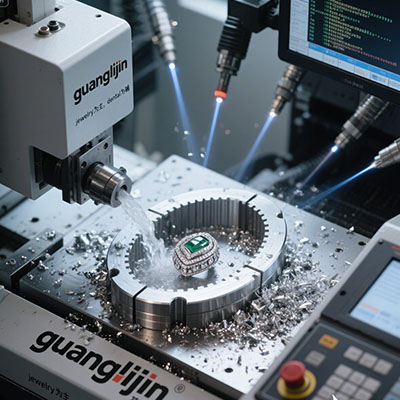
Industrial aerospace milling is unforgiving. The alloys are tough. The tolerances are tight. The parts are expensive. A machine that performs well in a showroom may struggle on the floor under continuous load. This guide addresses industrial-grade selection. We explain what an industrial cnc 5 axis mill must deliver for aerospace milling, which structural features separate a production platform from a light-duty unit, and how to validate one before purchase.
Why Industrial-Grade Matters for Aerospace Milling
Aerospace milling runs long cycles in hard alloys. Titanium and Inconel resist cutting. Heat builds. Tools wear. A light-duty machine cannot sustain the load without chatter or drift.
Industrial-grade construction addresses that reality. Heavier frames damp vibration. Larger guideways resist deflection. Spindle cooling maintains thermal stability. Those features cost more upfront. They also extend tool life and protect part quality.
Therefore buyers should evaluate the machine against their hardest alloy and longest cycle, not their average job. A platform that handles aluminum brackets may fail on a titanium structural part.
Our team reviewed an aerospace shop in 2025 that ran a light five-axis unit on titanium. Tool life fell by roughly half compared with a heavier platform running the same job. The machine was not defective. It was undersized for the alloy .
Project A vs Project B: Industrial Platform Comparison
Two aerospace suppliers bought five-axis mills for production milling. Project A chose a mid-weight platform. Project B specified an industrial-grade machine with thermal compensation. Their configured prices and uptime diverged.
| Factor | Project A — Mid-Weight Platform | Project B — Industrial Platform |
|---|---|---|
| Frame construction | Welded steel, moderate mass | Heavy cast or stress-relieved structure |
| Guideway size | Standard linear guides | Large roller guides or box ways |
| Spindle cooling | Basic | Through-spindle coolant and chiller |
| Thermal compensation | Limited | Active, multi-sensor |
| Typical alloy fit | Aluminum, light stainless | Titanium, Inconel, heavy stainless |
| Uptime outcome | More tool changes, more drift | Stable cycles, fewer interruptions |
Project A delivered acceptable results on aluminum and light stainless work. Project B held tolerance through sustained titanium milling with less tool wear. However, Project B cost significantly more and demanded a foundation upgrade. The comparison forces a practical question: what is the hardest alloy in your contract mix?
Five Steps to Validate an Industrial Five-Axis Mill
Do not accept a demo on aluminum scrap. Do not trust a calibration certificate alone. Run this sequence with your alloy and your longest cycle.
Step 1: Demand a Heavy Roughing Cut in Your Toughest Alloy
Provide a test block of titanium or Inconel. Ask for a roughing pass at production depth and feed. Watch the spindle load meter. Listen for chatter. Measure surface finish and tool wear afterward. An industrial machine holds load steadily. A light machine spikes and recovers, shortening tool life .
Step 2: Verify RTCP Under Continuous Motion
Ask for a test that tilts the head through a continuous arc while cutting. Without RTCP, the tool tip drifts and the feature fails. Request sample G-code. Look for simultaneous rotary and linear commands. Indexed output disguised as multi-axis will not hold aerospace surfaces .
Step 3: Measure Thermal Stability Over a Long Cycle
Run the machine at production load for four hours. Measure the same feature at the start and the end. Titanium expands about 8.6 microns per meter per degree Celsius . A drifting machine will fail tight callouts. Confirm active thermal compensation and spindle cooling before purchase.
Step 4: Inspect Frame Mass and Guideway Damping
Ask about frame construction and guideway type. Heavy cast or stress-relieved structures damp vibration better than thin welded frames. Large roller guides or box ways resist deflection under heavy radial load. Confirm the guideway size matches your alloy and depth of cut.
Step 5: Audit Coolant, Probing, and Service Access
Ask about coolant pressure and through-spindle capability. Deep-pocket titanium work demands high pressure to evacuate chips. Review the probing schedule. In-process verification catches drift before scrap. Then confirm service access and spare spindle lead time. An industrial machine without parts support is a liability.
Common Mistakes in Industrial Five-Axis Selection
⚠Attention: Do not buy a mid-weight machine for titanium production. The alloy demands rigidity and thermal control that light platforms cannot deliver. Match the machine class to your hardest material.
⚠Attention: Do not ignore the post-processor. A machine labeled five-axis still produces three-axis output if the CAM post cannot handle simultaneous motion. Test the post with your geometry before purchase .
⚠Attention: Never skip the foundation and power assessment. Industrial five-axis machines often require isolated foundations and substantial power drops. A machine that cannot be installed on schedule produces no revenue.
Another quiet error involves tooling. An industrial machine with the wrong tool geometry still produces poor results. Confirm the tooling package matches your alloy and feature sizes. Stable milling depends on the whole system, not just the platform.
Frequently Asked Questions
What is an industrial CNC 5 axis mill used for in aerospace?
Industrial five-axis mills handle complex aerospace components with compound angles, undercuts, and free-form surfaces. They suit titanium and Inconel work where rigidity and thermal control are critical .
What tolerance can an industrial 5 axis mill hold?
Industrial aerospace machines can hold ±0.001 inch or tighter under controlled conditions. Achievable results depend on thermal compensation, rotary repeatability, and probing discipline. Request a test cut on your alloy .
How much does an industrial CNC 5 axis mill cost?
Industrial five-axis mills for aerospace typically range from $250,000 to $500,000 or more. Large gantry and high-torque platforms exceed $700,000. Price tracks envelope, spindle power, thermal features, and control quality.
Why is through-spindle coolant important for aerospace milling?
Deep pockets in titanium and Inconel trap chips where flood coolant cannot reach. Through-spindle coolant at high pressure evacuates chips and prevents recutting, which extends tool life and protects surface finish .
Can an industrial 5 axis mill cut both aluminum and titanium?
Yes, with appropriate spindle torque, coolant strategy, and tooling. Aluminum runs at high RPM with sharp tools. Titanium demands lower speeds and higher torque. Confirm the machine’s torque curve spans your alloy mix .
Pre-Purchase Checklist
- ☐ Hardest alloy and longest cycle documented
- ☐ Tightest tolerance and feature alignment requirement defined
- ☐ Heavy roughing test cut observed in your toughest alloy
- ☐ RTCP verified under continuous motion
- ☐ Thermal stability measured over a four-hour run
- ☐ Frame mass and guideway damping reviewed
- ☐ Through-spindle coolant capability confirmed
- ☐ CAM post verified for simultaneous output
- ☐ Probing schedule and in-process verification planned
- ☐ Foundation and power infrastructure assessed
- ☐ Service access and spare spindle lead time confirmed
- ☐ Tooling package matched to alloy and feature sizes
Industrial five-axis milling is a system purchase: frame, control, coolant, and process discipline working together. Start with your hardest alloy, survive a heavy roughing test, and end with a checklist on the floor. Everything else is brochure noise.