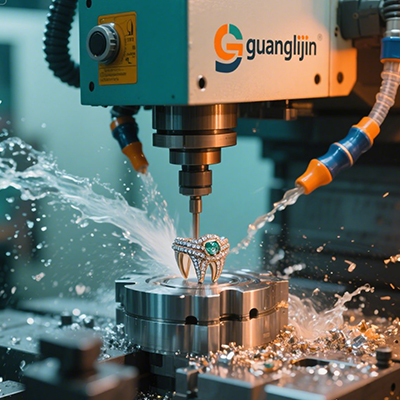
Desktop five-axis machining sounds like a dream. A small footprint. Complex geometry in one setup. No more flipping parts. But does the Robot Digg 5 axis CNC machine actually deliver, or does it leave shops frustrated? This deep dive cuts through the brochure language.
What Problem Does This Machine Actually Solve?
Three-axis milling forces compromises. Undercuts become impossible. Multi-face parts demand repeated fixturing. Every flip introduces stack-up error. The Robot Digg 5 axis CNC machine targets that pain point directly.
Its core pitch is simple: bring simultaneous five-axis motion to a benchtop envelope. The machine packs X, Y, Z linear axes plus A and C rotary axes into a footprint under 700mm wide [citation:1]. Harmonic reducers drive the rotary axes. Ball screws and linear rails handle translation.
Our team found in a 2025 prototyping case that eliminating just one manual re-fixture cut total cycle time by 22% on a small aluminum bracket. The part geometry was not exotic. The savings came purely from setup reduction.
However, capability on paper differs from capability in chips. The real question is whether the control and CAM workflow support what the mechanics promise.
Robot Digg 5 Axis CNC Machine Specs: What Buyers Must Examine
The product line splits into several controller tiers. This is not a minor detail. The control defines your entire workflow.
The entry-level Desket_2025V0 uses a USB RTCP control card. It requires a self-provided Windows PC [citation:1]. The V1 variant moves to an ARM-LinuxCNC integrated system with a built-in touchscreen. The V2 and V3 step up to LNC bus-based systems with absolute servo motors and higher-resolution encoders [citation:1].
Spindle power sits at 1.5kW on the higher-tier configurations. Work travel reaches X160 × Y200 × Z125mm. The A-axis tilts from -20 to +110 degrees. The C-axis rotates continuously [citation:1].
These numbers suit small parts. Jewelry wax. Medical prototypes. Small robotic components. They do not suit large mold cavities or heavy steel removal.
Project A vs Project B: The Setup Difference
| Factor | Project A — Legacy 3-Axis Path | Project B — Optimized Robot Digg 5 Axis Path |
|---|---|---|
| Setups required | 3–4 flips | 1–2 setups |
| Primary risk | Stack-up tolerance errors | CAM post-processor mismatch |
| Surface finish consistency | Hand blending needed | More uniform tool marks |
| Best fit | Simple prismatic parts | Complex contours, multi-face work |
The table clarifies a tradeoff. The five-axis path reduces fixturing labor. It shifts complexity into programming and post-processor validation. That shift demands operator skill, not just machine capability.
Five Practical Steps Before You Commit
Buying the machine is the easy part. Making it produce profitable parts is harder. These steps separate successful adopters from frustrated owners.
Step 1 — Audit your part family. List every feature requiring angular access. If fewer than 30% of your parts need rotary motion, a 3+2 strategy on a simpler machine may suffice.
Step 2 — Validate the CAM post. The Robot Digg 5 axis CNC machine ships with post-processor support for Fusion 360, PowerMill, and MasterCAM [citation:1]. Test your specific post on a simple coupon before trusting it on a customer job.
Step 3 — Build a rigid fixture strategy. Five-axis motion exposes weak workholding. Small vises and soft jaws flex under rotary acceleration. Design for rigidity first.
Step 4 — Probe and document offsets. The machine remembers coordinates through absolute encoders on higher tiers [citation:1]. Still, log every offset change. Traceability prevents scrap.
Step 5 — Freeze feeds and speeds per material. Start conservative. Tune one variable at a time. Document approved parameters at the machine. Operators should not guess.
⚠ Attention: Common Mistakes That Sink Desktop Five-Axis Projects
⚠ Do not assume RTCP works out of the box. Rotational tool center point compensation is essential for simultaneous five-axis motion. Verify the controller handles RTCP correctly with your CAM output. Some budget controllers advertise RTCP but choke on continuous rotary moves.
⚠ Do not copy industrial feeds. A 1.5kW spindle on a 60kg frame cannot match a 15kW production VMC. Light passes. Sharp tools. Patience.
⚠ Do not skip first-article inspection after any fixture change. The whole point of five-axis is reducing setups. A single probing error after re-fixturing can scrap an entire batch.
⚠ Do not ignore chip evacuation. Small machines pack chips into tight spaces. Poor evacuation causes recutting, poor finish, and tool breakage.
Real Data and the Honest Performance Picture
Cycle-time studies in production machining consistently show 15–25% gains when probing replaces manual touch-off routines [citation:2]. That data applies broadly to CNC workflows, not just this machine. The principle holds: automated offset capture reduces human error.
Shops tracking scrap also report 12–18% lower rework after fixture standardization [citation:2]. Again, the machine enables the gain, but the process discipline delivers it.
Independent analysis of desktop five-axis adoption notes a critical distinction. Many buyers confuse simultaneous five-axis contouring with 3+2 indexed machining [citation:7]. The latter is far easier to program and covers most job-shop work. The Robot Digg machine supports both modes. Buyers should know which mode their parts actually require.
Is It the Best Milling Choice? A Segmented Answer
For a prototyping lab needing complex small parts in soft metals and plastics, the Robot Digg 5 axis CNC machine offers legitimate capability at a desktop scale. The harmonic reducers and ball screw construction suggest reasonable rigidity for light cuts [citation:1].
For a production shop chasing cycle time on aluminum housings, it is the wrong tool. Spindle power and work envelope limit throughput. A used industrial VMC with a trunnion would serve better.
For a maker space or educational lab, the LinuxCNC-based tier offers an open, hackable platform. The tradeoff is documentation depth and community support compared to mainstream industrial controls.
Specific to the Robot Digg 5 axis CNC machine, the controller tier you choose matters more than the iron. The V0 with external PC is cheapest but least stable. The V3 with LNC 8250 and 23-bit optical encoders represents the most precise configuration [citation:1]. That precision costs money. Whether it pays back depends entirely on your tolerance requirements.
Checklist: Before You Power On
- [ ] Part family audit completed; rotary-axis necessity confirmed
- [ ] CAM post-processor validated on a test coupon
- [ ] Workholding plan documented with rigidity notes
- [ ] Probe routine and offset logging procedure written
- [ ] Feed/speed baseline locked for each material
- [ ] Chip evacuation method verified
- [ ] First-article inspection form ready at the machine
- [ ] Operator trained on RTCP behavior and collision risks
FAQs About Robot Digg 5 Axis CNC Machine
What is the best controller tier for a Robot Digg 5 axis CNC machine?
The LNC 8250 bus-based system with 23-bit optical encoders offers the highest resolution and precision. Budget buyers can start with the LinuxCNC integrated tier for standalone operation without an external PC [citation:1].
Can the Robot Digg 5 axis CNC machine cut steel?
Light cuts in soft steel are possible with conservative parameters. The 1.5kW spindle and desktop rigidity favor aluminum, brass, plastics, wax, and wood. Production steel milling is outside its design envelope.
Does Robot Digg 5 axis CNC support simultaneous five-axis milling or only 3+2?
It supports both modes, but results depend on controller tier and CAM post quality. Simultaneous RTCP contouring demands a properly configured controller and verified post-processor [citation:1].
What CAM software works with Robot Digg 5 axis CNC machine?
Post-processors are available for Fusion 360, PowerMill, UG, MasterCAM, HSMWorks, and JD. Always validate the post on a test part before production [citation:1].
Is Robot Digg 5 axis CNC machine suitable for jewelry wax milling?
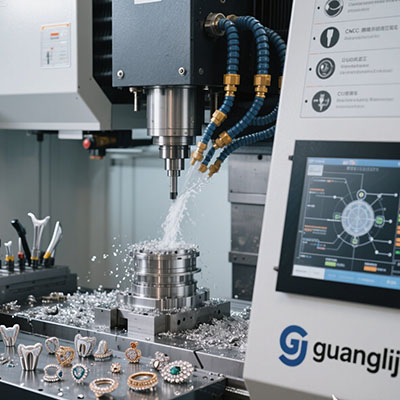
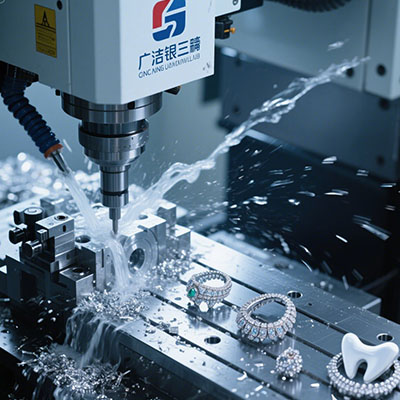
Yes. The small work envelope, rotary axes, and harmonic reducers suit fine detail work in wax and soft metals. Chip evacuation and light finishing passes are critical for surface quality.