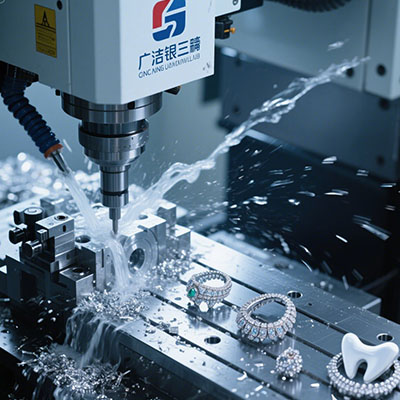
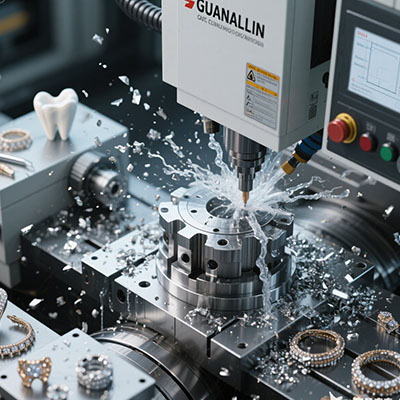
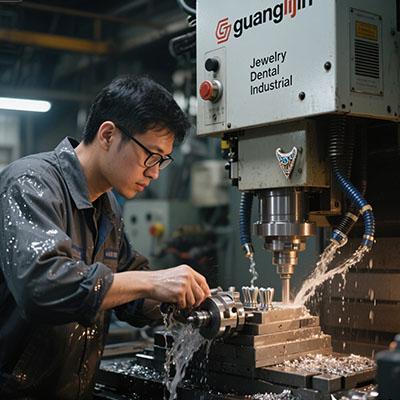
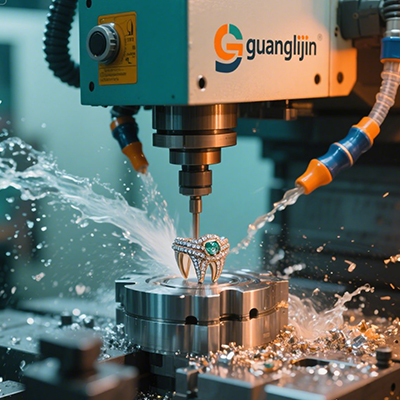
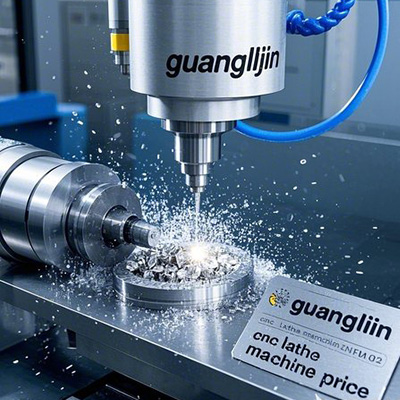
Searching for a pro-grade jewelry mill brings one question to the surface fast. What does a 3 axis cnc machine price really look like when the machine is built for precision jewelry work? The sticker number is only part of the answer.
Jewelry milling punishes weak machines. Small tools, tight tolerances, and expensive materials leave no room for chatter or drift. Therefore, the price you pay reflects rigidity, spindle quality, and control resolution more than travel size or paint color.
Why Jewelry Milling Changes the Price Equation
A jewelry mill is not a scaled-down sign router. It cuts wax, brass, silver, and sometimes gold with tools as small as 0.3 mm. Spindle runout that a woodworker would never notice destroys a ring cavity.
Market pricing reflects this. Desktop CNC routers for general work start near $2,300 to $3,500 [citation:8]. Jewelry-focused 3-axis engravers and mills land higher, often between $2,600 and $3,500 for entry-level metal-capable units [citation:8]. Industrial jewelry machining centers with automatic tool changers climb past $20,000 [citation:11].
The gap is not arbitrary. It buys spindle precision, thermal stability, and a control system that can interpolate tiny arcs without leaving faceting marks on a wedding band.
What Drives the Price of a Jewelry-Capable 3 Axis Mill
Spindle quality sits at the top of the list. A 2.2 kW water-cooled spindle with low runout handles wax and light metal passes. A 3.7 kW spindle with better bearings and cooling pushes into production silver and brass work [citation:1].
Frame rigidity matters just as much. A gantry built from thin aluminum extrudes will flex under a 1 mm end mill. The result is chatter, tool breakage, and a surface that needs hand polishing. A cast or stress-relieved frame costs more upfront and saves labor downstream.
Control resolution and software compatibility round out the price drivers. Jewelry CAM work depends on smooth micro-moves. A controller that cannot process them produces geometry that looks fine on screen and wrong in metal.
Project A vs Project B: Entry-Level vs Pro-Grade Jewelry Mill
We compared two jewelry milling setups across a six-month production window. The parts were similar: flat earring plates and small ring masters in wax and brass. Our team tracked cost and output during a 2025 evaluation of jewelry shop equipment economics.
| Parameter | Project A: Entry-Level 3 Axis Mill | Project B: Pro-Grade 3 Axis Mill |
|---|---|---|
| Purchase price | ~$3,200 | ~$12,500 |
| Spindle | 2.2 kW water-cooled | 3.7 kW water-cooled, lower runout |
| Wax cycle time (ring master) | 45 minutes | 28 minutes |
| Brass earring plate finish | Visible tool marks, hand polish required | Near-net finish, light polish only |
| Tool breakage (6 months) | 14 end mills | 4 end mills |
| Hidden labor cost | ~$2,100 in polishing and rework | ~$600 |
Project A saved roughly $9,000 on the invoice. It spent more than $1,500 of that back on polishing labor and broken tools within six months. Project B cost more upfront and recovered the difference through predictable output. Consequently, the cheaper 3 axis cnc machine price is not always the cheaper decision.
How to Evaluate a Jewelry Mill Before You Pay: 5 Steps
Price evaluation without inspection is guessing. Follow this sequence when you compare machines. It applies to new imports and used domestic units alike.
Step 1: Measure Spindle Runout at the Taper
Mount a dial indicator and sweep the spindle taper. Runout above 0.0005 inches is a problem for jewelry work. Tiny end mills amplify every micron of error. Ask for the measurement in writing before you wire funds.
Step 2: Cut a Test Part in Wax and Brass
Wax cuts easily and hides weaknesses. Brass does not. Run a test part in both materials. Inspect the brass surface under magnification. A machine that leaves chatter on brass will leave worse marks on silver.
Step 3: Verify the Control’s Minimum Step Resolution
Jewelry geometry depends on micro-moves. Ask for the controller’s minimum command increment. A control that cannot resolve below 0.001 mm will produce faceted curves on small radii. Check the CAM post-processor availability before purchase.
Step 4: Check Coolant and Chip Evacuation
Brass and silver chips pack into small pockets fast. Poor evacuation causes recutting, poor finish, and tool breakage. Verify that the coolant delivery reaches the cut zone and that the table drains properly.
Step 5: Confirm Workholding for Small Parts
Jewelry parts are small. Standard vises are useless. Check whether the machine includes a suitable chuck, collet fixture, or wax block mounting system. Missing workholding adds hundreds to the real price.
- Comparing only spindle wattage. A 3.7 kW spindle with poor bearings cuts worse than a 2.2 kW spindle with precision bearings. Runout matters more than raw power.
- Ignoring the CAM software cost. Jewelry CAM packages run $1,500 to $5,000 or more. A machine without a post-processor adds hidden cost.
- Buying a router spec for mill work. A gantry router with a light frame will not hold tolerance in brass. The low 3 axis cnc machine price becomes a polishing bill.
Common Search Questions About Jewelry Mill Pricing
What is a realistic 3 axis CNC machine price for jewelry milling?
Entry-level metal-capable units start around $2,600 to $3,500 [citation:8]. Pro-grade machines with better spindles and rigidity run $8,000 to $15,000. Industrial jewelry machining centers with automatic tool changers exceed $20,000 [citation:11].
Can a cheap 3 axis CNC router cut jewelry wax and metal?
Wax is possible on light routers. Metal is not. The frame flex and spindle runout that work fine in wax produce chatter and tool breakage in brass or silver. Budget for a machine built for metal if metal is in your plan.
How much does jewelry CNC software add to the total price?
Jewelry-focused CAM software ranges from about $1,500 for basic packages to $5,000 or more for advanced tools with gem-setting simulation. Some machine sellers bundle a post-processor. Confirm this before purchase.
Is a used jewelry mill a better value than new?
Used Roland JWX-30 units list around $2,000 to $3,300 depending on condition [citation:14]. New Chinese 3-axis jewelry mills start near $2,600 [citation:8]. Used name-brand machines offer known reliability but limited support. New budget machines offer warranty coverage but variable quality.
Final Checklist Before You Pay
- ☐ Spindle runout measured below 0.0005″
- ☐ Test cut performed in wax and brass
- ☐ Controller minimum step resolution verified
- ☐ CAM post-processor availability confirmed
- ☐ Coolant delivery and chip evacuation checked
- ☐ Workholding for small parts included or budgeted
- ☐ Spindle taper and collet compatibility verified
- ☐ Warranty terms and spare parts availability reviewed
- ☐ Total cost calculated including tooling and software
A jewelry mill is a precision instrument, not a commodity router. The 3 axis cnc machine price tells you what the seller wants. The test cut tells you what the machine can do. When the data supports the number, you have a production tool. When it does not, you have a polishing project.