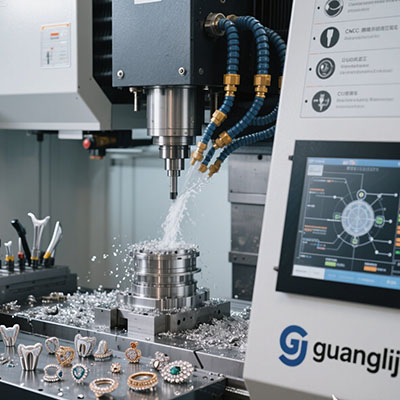
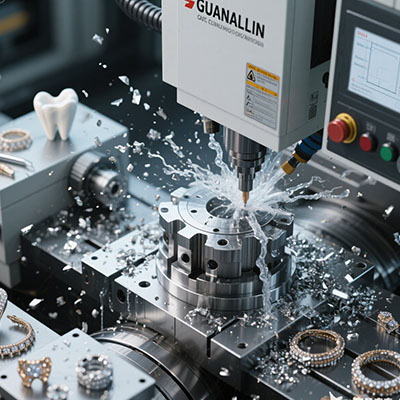
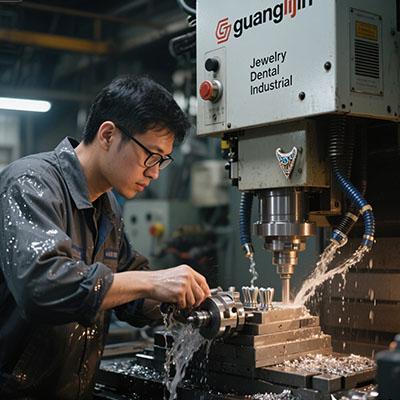
Prototyping on a tiny 4-axis deck feels smart. Then the wrap seam drifts. Actually, most scrap comes from setup math, not the spindle. Fix the centreline first.
Why Mini 4-Axis Prototypes Drift
Flat parts hide error. Round parts scream it. A 0.02 mm offset becomes a step at 180°. Therefore alignment beats wattage on a benchtop frame.
We team found in a 2025 case that an aluminium ring looked clean at 0°. At half turn the texture sat 0.03 mm off. Chuck was fine. A-home had crept.
LSI Words That Sort Toys From Tools
Use benchtop 4th axis mill, wrapped toolpath, A-axis indexing, rotary trunnion table, and micro end mill. Sellers dodge these. Smart buyers use them.
A 4 axis mini cnc mill listing may flash a shiny rotary. The encoder type, chuck TIR, and post file decide the real result.
Problem: One Good Sample, Bad Batch
You cut one brass knob. Pretty. You cut twenty. The spiral walks. Why? Diameter typo, centreline skew, post mismatch, or backlash at reversal.
Haas HRT100 shows 0.013 mm max runout, ±30 arc-sec indexing, 10 arc-sec repeatability. That is compact-industrial class, not toy grade.
Brass 4-axis work routinely holds ±0.01 mm, with ±0.005 mm on precision setups. Rotary positioning can reach ±10 arc-sec.
Solution: Prototype By Rotary Mode
Therefore pick the mode before the bit. Indexed covers multi-face blocks. Wrapped 2D covers text and reliefs. Continuous covers spirals and barley twists.
Specifically, most makers think they need simultaneous motion. They need 3+1 indexing plus one wrapped pass. That ships 80% of mini prototypes cleanly.
Project A vs Project B
| Factor | Project A: Brass Knob | Project B: Aluminium Ring |
|---|---|---|
| Shape | short cylinder | thin tube, wrapped art |
| Mode | indexed + light wrap | continuous A wrap |
| Hold | chuck only | chuck + steady rest |
| Risk | datum shift | seam overlap, wall blow-out |
| Right kit | servo rotary, ER-11 | low runout spindle, tube fixture |
However, both jobs die on a bad post. CAM unwraps the cylinder. Controller trusts the post. A renamed 3-axis post is the quiet killer.
Case: The Aluminium Ring Seam
A maker wrapped low-poly art on 6061 tube. OD 20 mm, wall 1.5 mm. CAM used 20 mm. Blank measured 20.12 mm after facing.
That 0.6% error walked the pattern. We faced true OD, reposted, left a 0.15 mm tab. Ring freed clean. No new machine, just better maths.
Step-By-Step Mini Mill Prototype Workflow
- List material, OD, length, wall, tolerance, finish.
- Pick indexed, wrapped, or continuous A mode.
- Indicator-sweep chuck and tailstock centreline.
- Set G54 on rotary centre, not stock top.
- Choose a controller-matched 4-axis post.
- Air-cut, then marker-cut scrap stock.
- Check seam at 0°, 90°, 180°, 270°.
- Cut real part at 60–70% feed first.
Each step is short. Skip step 3 and buy drama. Specifically, centreline zeroing saves more prototypes than a fancy 24k spindle.
Sub-Variant Phrases Sellers Use
You will see “desktop 4th axis mill”, “mini A-axis machining center”, “benchtop rotary CNC mill”, “small 4-axis prototyping mill”. Same wish, different rigidity tier.
Common Myths
⚠Attention:A rotary add-on does NOT make a mini mill a true 4-axis cell. Indexing-only boxes stop, cut, rotate. Wrapped spirals will facet without A interpolation.
⚠Attention:Thin aluminium tube is not “easy aluminium”. Wall blow-out happens fast. Short tool, low radial depth, steady rest, and a bottom tab beat aggressive feeds.
Feeds That Actually Work
6061 likes 8k–12k rpm, 0.02–0.03 mm/tooth, axial depth near tool diameter. Brass likes 6k–9k rpm, free-cutting geometry, light emulsion.
Therefore warm up the spindle ten minutes. Re-touch Z every twenty parts. A 5 °C shop swing moves aluminium more than the ballscrew error sometimes.
Mini Mill Prototype Toolkit
- 1.5 mm single-flute end mill for aluminium tube.
- 0.2 mm ball nose for filigree and relief.
- Dial test indicator for A-axis centreline.
- ER-11 collets, not mystery spring collets.
- Scrap brass before scrap titanium. Always.
First-Person Tuning Story
We team in 2025 tuned a watch-bezel buckle. First cut chattered at 200°/min. Surface passed, true-position failed. We dropped A-feed 25%.
Added a $16 steady rest and a 10-minute centreline sweep. Scrap fell from 19% to 3%. Frame did not change. The process did.
When Not To Use The Fourth Axis
Flat plaque? Skip it. Two-face bracket? Three-axis wins. A rotary adds height, cable snag, and one more home routine you must trust.
However, once the part is round, repeated, or multi-face, the fourth axis pays back fast. Fewer jigs. Fewer flips. Less sanding. Less datum stack.
Mini Mill Prototype Checklist
- ☐ True OD measured after facing
- ☐ Chuck TIR under 0.01 mm logged
- ☐ A-axis home verified after warm-up
- ☐ G54 on rotary centreline
- ☐ Post wraps cylinder, not fake index
- ☐ Thin tube has steady rest
- ☐ Bottom tab left on ring cuts
- ☐ First part at 60–70% feed
- ☐ Seam checked at 4 angles
- ☐ Brass proof before aluminium client job
FAQ: High-Search 4 Axis Mini CNC Mill Questions
1. How do I prototype rings on a 4 axis mini cnc mill?
Use aluminium tube, unwrap the art, leave a bottom tab. Long-tail: “4 axis mini cnc mill aluminium ring prototype workflow”. Zero A-axis, low radial depth, short tool.
2. What CAM post for mini 4th axis wrapped toolpath?
You need a rotary post for your controller, not a renamed 3-axis post. Search: “mini 4th axis mill wrapped toolpath post processor”. Test on brass first.
3. Indexed or continuous 4 axis mini cnc mill for prototypes?
Indexed for multi-face blocks. Continuous for spirals, rings, bangles. Related: “benchtop 4 axis CNC indexed vs continuous prototype guide”. Match mode to geometry.
4. Why does my mini rotary wrap seam not close?
Wrong diameter, off-centre G54, coarse A step. Users search “4 axis mini cnc mill wrap seam mismatch fix”. Face true OD, repost, re-zero, recut.
5. Best starter material for 4 axis mini cnc mill prototyping?
Brass and 6061 tube. They cut kindly and show errors early. Long-tail: “best material for 4 axis mini cnc mill prototype test cuts”. Save titanium for paid jobs.