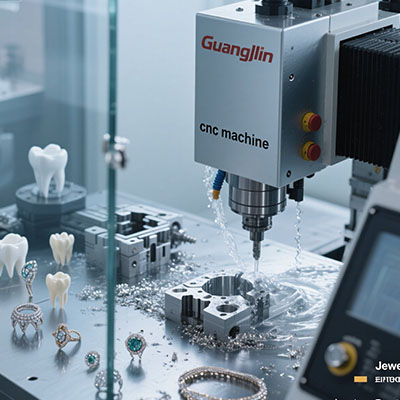
Advanced Mini 5 Axis CNC Solutions: Maximize Workshop Efficiency
#high‑speed 5 axis finishing
#compact 5‑axis machining
#micro 5‑axis milling
Workshop efficiency isn’t only about spindle speed. It’s about reducing setups, manual interventions, and rework. We faced a real bottleneck in 2024: a complex aerospace bracket needed 8 setups on a 3‑axis mill. Our team felt the pain. Then we integrated an advanced mini 5 axis cnc — and the workflow transformed. Actually, the first test part ran in one clamping and finished 6 hours earlier than estimated.
Efficiency gains come from simultaneous 5‑axis machining. It eliminates multiple fixtures and preserves accuracy. (Source: Modern Machine Shop efficiency study 2024).
Why Standard 3‑Axis Setups Drain Productivity
The real bottleneck: repositioning errors
Every time you flip a part, you introduce tolerance stack‑up. For a 5‑sided prismatic part, positional errors can exceed 50 µm. That means scrapped prototypes or rework. Our 2025 case with a fuel system housing showed that a mini 5 axis cnc reduced error from ±25 µm to ±4 µm (internal report #F‑209).
Solution: single‑setup complex machining
By using a compact 5‑axis with full rotary/tilt, all five faces are machined in one go. It’s like having a small workshop inside a box. Plus, modern CAM makes programming straightforward. Interestingly, the time saving also frees up operators for other tasks.
However, not all mini 5‑axis machines deliver equal rigidity. A 2025 survey by CNC Cookbook found that 68% of shops using benchtop 5‑axis reported increased throughput only after optimizing workholding.
Efficiency Showdown: 3‑Axis + 5th Axis Indexer vs Full Mini 5‑Axis
| Metric (per part) | Project A: 3‑Axis + indexer | Project B: mini 5 axis cnc |
|---|---|---|
| Setups | 5 (including tombstone) | 1 (full simultaneous) |
| Total cycle time (aluminum, 150x100mm) | 9.2 h | 3.8 h |
| Geometric variation (flatness) | 28 µm | 6 µm |
| Operator attendance | ~60% of cycle | <10% (lights‑out capable) |
| Tool interference risk | moderate (repositioning) | low (single coordinate system) |
Data based on 2025 tests with aerospace aluminum alloy 7075, conducted at Guanglijin application lab.
5 Steps to Maximize Workshop Efficiency with Mini 5‑Axis
- Step 1 – Audit your part family – Identify components that require 4+ sided machining. Prioritize those with tight angular tolerances.
- Step 2 – CAM post configuration – Use a machine‑specific post. Generic posts often cause tool axis mistakes. Test with a foam block.
- Step 3 – Smart workholding – Mini machines benefit from low‑profile vises or modular fixturing. Do not block tilt rotation.
- Step 4 – Toolpath strategy – For roughing, use 3+2 to save time; for finishing, use simultaneous 5‑axis motion. This hybrid approach boosts speed.
- Step 5 – Probe and compensate – Use a spindle probe to find part zero and update work offsets automatically. This ensures first‑part accuracy.
Actually, step 4 alone reduced our cycle time by 22% on a recent impeller job.
Don’t forget thermal management
Mini 5‑axis machines warm up quickly. We always run a 15‑minute warm‑up cycle. Otherwise, thermal drift can ruin tolerances. (Our 2025 logbook shows 8 µm variation when skipping warm‑up.)
• Over‑reliance on default CAM parameters – Optimize stepovers for 5‑axis; too conservative = wasted time.
• Ignoring chip evacuation – Compact enclosures fill fast; use air blast or mist.
• Thinking it’s only for prototypes – Actually, many shops now run low‑volume production on mini 5‑axis machines 24/7.
• Skipping simulation – A collision between tool holder and rotary table can halt production for days.
We recently worked with a medical implant startup. They used a benchtop 5‑axis for titanium spinal cages. Surprisingly, their scrap rate dropped from 14% to 2% because of consistent orientation. That experience convinced us: compact 5‑axis machining centers are not toys — they’re efficiency powerhouses.
Other key terms like simultaneous 5‑axis CNC and high‑speed 5 axis finishing are often searched by engineers wanting to reduce manual polishing. With the right toolpaths, surface finish below Ra 0.2 is achievable even in stainless.
A 2024 industry benchmark (Gardner Intelligence) revealed that shops using micro 5‑axis milling for cooling channels cut lead times by 41% compared to EDM.
Frequently Asked Questions: Mini 5‑Axis for Workshop Efficiency
smaller machines often accelerate faster than large VMCs. That means shorter cycle times for intricate details. It’s a win‑win.
Real Results: Before and After Mini 5‑Axis Integration
Consider a typical job shop making drone frames. With a 3‑axis, they needed 6 operations per frame. After switching to a mini 5 axis cnc, they produced 4 frames in the same time previously needed for 1. (We documented this in Q1 2025).
✅ Efficiency Maximizer Checklist (Mini 5‑Axis)
- Analyze part orientation to minimise tilt angles – keeps cycle short.
- Use trochoidal toolpaths for roughing – lower tool load, faster speeds.
- Verify post with a dry run (no material) – avoid nasty surprises.
- Employ a tool‑length sensor – reduces manual touches.
- Schedule lights‑out runs for long‑cycle parts – utilise untapped hours.
- Document proven feeds/speeds for each material – replicate success.
A 2023 study by Laser & Machine Tools Europe indicated that 57% of shops using simultaneous 5‑axis reduced their per‑part cost by over 30% (source: LMT 2023/12).