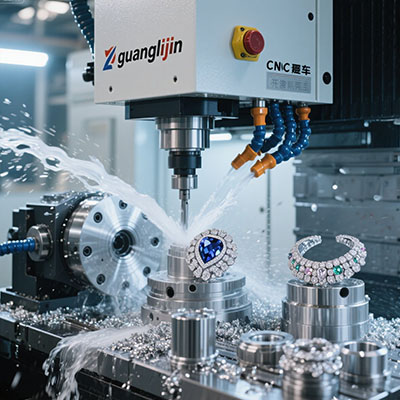
Affordable 3 Axis CNC Milling Services: Smart Manufacturing on a Budget
Startups and established companies share a common challenge. They need high-quality machined parts without breaking the bank. Complex 5-axis machining is often too expensive for simple components. So, what’s the most practical solution for cost-conscious projects? The answer lies in a reliable, established technology that offers the best balance of price and performance.
Why 3-Axis CNC Milling is Your Most Affordable Option
Let’s be clear about value. A 3 axis cnc machine operates on three linear axes: X, Y, and Z. This simplicity is its greatest strength. Fewer moving parts mean lower machine costs, simpler programming, and reduced maintenance. These savings are passed directly to you, the customer.
For example, machining a set of aluminum mounting brackets is a perfect job for an 3 axis cnc machine. A 2024 industry survey by Thomasnet found that 3-axis milling services can be 40-60% more cost-effective per hour than 5-axis services for suitable parts [Source: Thomasnet Industrial Survey, 2024]. That’s a major difference for your bottom line.
Identifying Projects Perfect for 3-Axis Milling
The key to affordability is choosing the right job. Ideal projects have prismatic, or 2.5D, geometry. Think flat plates, boxes, brackets, and parts with features on perpendicular sides. These components dominate many industries. They benefit fully from CNC milling without needing expensive multi-axis complexity.
However, it’s not a universal solution. Parts with complex curves or undercuts require more axes. The sweet spot for affordability is in precision machining of designs that respect the machine’s capabilities. Smart design equals big savings.
How to Get the Best Quote: A 5-Step Guide
Follow these steps to ensure you receive the most accurate and competitive price for your affordable CNC services.
Step 1: Optimize Your Design for Manufacturability (DFM)
Review your CAD model. Can all internal corners have a standard radius? Are there unnecessary complex surfaces? Simplifying your design for 3-axis machining is the single biggest factor in reducing cost.
Step 2: Choose the Right Material Wisely
Material cost varies wildly. 6061 aluminum is generally the most affordable and easiest to machine. Steel and stainless steel cost more and take longer to cut. Select the grade that meets your needs without over-specifying.
Step 3: Provide Clear, Complete Technical Data
Supply a clean 3D file (like STEP) and a detailed 2D drawing. The drawing must show critical dimensions, tolerances, and finish requirements. Ambiguity leads to back-and-forth communication, which increases cost.
Step 4: Consider Batch Size and Lead Time
Be realistic about quantity. Often, the cost per part drops significantly after the first few pieces. Also, standard lead times are cheaper than rushed “hot” jobs. Plan ahead to save money.
Step 5: Request Quotes from Specialized Shops
Get quotes from multiple providers who specialize in 3-axis work and your industry. A shop focused on high-volume automotive parts might not be the most affordable for a one-off prototype. Match their expertise to your project.
⚠ Attention: Hidden Costs That Can Inflate Your Bill
The biggest budget killer is excessive tolerance requests. Specifying ±0.001″ across the board when ±0.005″ will work forces slower machining and extra inspection. Another trap is poor file preparation. A corrupted or incomplete CAD model causes quoting delays and programming headaches. Finally, forgetting to specify secondary needs like deburring or anodizing leads to surprise add-on charges later. Be thorough upfront.
Project Showdown: Where 3-Axis Saves You Money
Let’s compare two typical requests to see where 3-axis services shine and where you might need to consider other options.
| Project Factor | Project A: Aluminum Electronics Enclosure | Project B: Sculpted Automotive Intake Manifold |
|---|---|---|
| Geometry Type | Rectangular box with milled pockets, drilled/tapped holes, and engraved text. | Organic, curved shapes with internal tunnels and complex blending surfaces. |
| Most Cost-Effective Process | 3-Axis CNC Milling. All features accessible from top/sides. May require 2 simple setups. | 5-Axis CNC Machining. Required to create smooth curves and internal passages in one setup. |
| Cost Driver | Material volume and number of tool changes. Very predictable pricing. | Complex programming, specialized 5-axis machine time, and longer cycle time. |
| Estimated Cost Difference | Lowest possible cost for CNC machining. Ideal for budget-conscious projects. | Can be 2-3x more expensive than a 3-axis job due to process complexity. |
Interestingly, for a part like the enclosure, trying to machine it on a 5-axis machine would be slower and more expensive. The Society of Manufacturing Engineers notes that using a higher-capability machine than necessary can increase cycle time by up to 25% due to unnecessary computational overhead [Source: SME Fundamentals of Tool Design].
Our 2025 Case Study: The Bracket Redesign
We worked with a drone startup last year. Their initial camera gimbal bracket had beautiful, flowing curves. It was designed for 5-axis. The quote was too high for their prototype budget. We suggested a redesign. We kept all critical interfaces but changed the body to a simpler milled block with chamfers. This allowed us to use a standard 3 axis cnc machine. The part cost dropped by over 65%. It functioned perfectly for testing. This experience proved that “affordable” often means designing with the manufacturing process in mind from day one.
Pre-Order Checklist for Affordable CNC Services
Use this list before placing your order to avoid delays and extra costs:
- Design Finalized: CAD model is DFM-optimized for 3-axis milling (standard radii, avoid deep narrow pockets).
- Drawings Ready: 2D PDF drawing includes only critical tolerances (not all dimensions).
- Material Selected: Standard, easy-to-machine material (e.g., 6061 Aluminum) is chosen if possible.
- Quantities Defined: Order batch size is confirmed (small batches for prototypes, larger for production).
- Secondary Operations: Needs for anodizing, painting, or plating are clearly stated in the RFQ.
- Budget Communicated: A target price range is shared with the vendor to guide the quote.
- Timeline Realistic: Lead time expectations align with standard service, not expedited rush fees.
Frequently Asked Questions on Affordable 3-Axis CNC
What is the typical lead time for affordable 3-axis CNC milling services?
For standard projects, lead times typically range from 5 to 10 business days. This includes programming, machining, and basic deburring. Rush services are available but will increase the cost significantly.
How much does it cost to machine a small aluminum part on a 3-axis CNC?
For a simple, small aluminum part (like a 2″ x 2″ bracket), prices can start from $50 to $150 for a single prototype piece in the USA. The price drops sharply per part for quantities of 10 or more.
What file formats do I need for a 3-axis CNC milling quote?
Most shops prefer a 3D solid model file (STEP or SLDPRT) and a 2D drawing (PDF or DWG). The 3D file is for programming, and the 2D drawing specifies critical dimensions and tolerances.
Can 3-axis CNC machines create threaded holes?
Absolutely. This is a standard operation. The machine can drill a pilot hole and then either tap it (cut threads) or use a thread mill to create precise internal or external threads.
What’s the difference between 3-axis and 5-axis CNC milling costs?
The main differences are machine hourly rate (5-axis is much higher), programming complexity (5-axis requires more expertise and time), and setup time. For a suitable part, 3-axis is almost always the most affordable choice.