How do you create a one-of-a-kind heirloom piece? Traditional methods can be limiting for complex, personalized designs. The client’s vision often pushes beyond the bounds of hand tools.
The Challenge of True Customization
Clients today want jewelry that tells their story. Think of a pendant with a intricate family crest or a ring with a unique organic texture. Standard tools and pre-made components fall short. The problem isn’t desire—it’s execution. How do you physically make what the mind imagines?
Skilled artisans can sculpt wax. But what about geometric precision or microscopic detail? That’s where traditional tools for making jewelry hit their limit. Consistency in a one-off piece is also tricky.
CNC: The Customizer’s Dream Tool
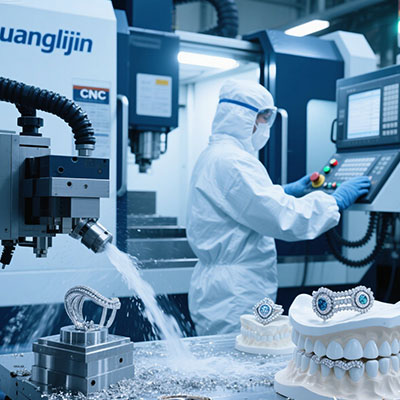
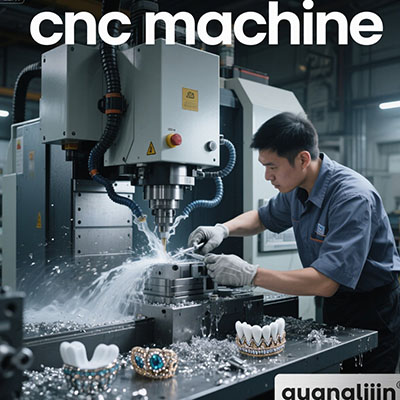
High-quality CNC machining is the perfect solution. It turns any digital 3D model into reality. This technology is the ultimate custom tool for making jewelry. It doesn’t care if the design is a swirling vine or a precise fractal pattern.
The machine follows the digital blueprint exactly. This means the first prototype can be perfect. It allows for true collaboration. A client can see a 3D render and know the physical piece will match.
Anatomy of a Custom CNC Jewelry Studio
What does this setup look like? You need a precise, small-format CNC mill. A 4-axis machine is ideal for rings. A high-resolution 3D scanner captures organic shapes. Powerful CAD software is the digital workbench. Finally, a micro-finishing station adds the hand-touched soul.
These aren’t mass-production machines. They are versatile precision jewelry tools for artists. They enable a new kind of craftsmanship that blends digital and physical worlds seamlessly.
Your Blueprint: From Sketch to Heirloom in 5 Steps
Here’s how the custom process flows with CNC:
- Collaborative Digital Design (CAD): Start with a sketch or concept. Model it in CAD software like ZBrush or Rhino. This stage is highly interactive with the client, allowing real-time 3D changes.
- Material Selection & Virtual Testing: Choose the metal—exotic like Damascus steel or classic like 18k gold. Use CAM software to simulate the machining process on this specific material to prevent errors.
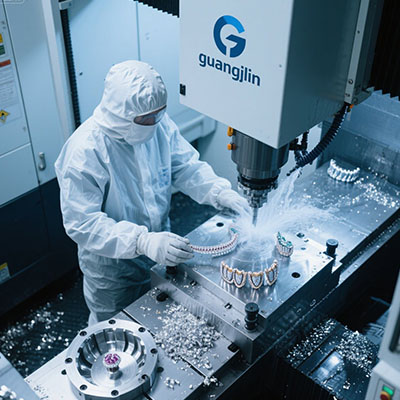
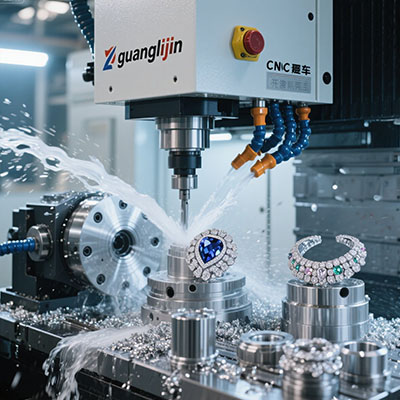
- Precision Machining the Unique Form: Secure the metal stock. The CNC mill, using tiny end mills, meticulously carves the unique design directly into the metal or into a wax positive for casting.
- Hand-Finishing & Embellishment: Remove the piece for post-processing. This is where artisan skill shines: hand-polishing specific facets, texturing, or adding chased details the CNC couldn’t.
- Final Assembly & Stone Setting: Integrate any additional elements. Use a laser welder for seamless joins. Precisely set stones using prongs or channels that were machined directly into the design.
Project Showdown: Hand-Fabricated vs. CNC-Enabled Custom
Lead Time for Complex GeometryWeeks of meticulous laborDays (mostly machine runtime)
| Factor | Project A: Hand-Fabricated Custom Band | Project B: CNC-Enabled Sculptural Ring |
|---|---|---|
| Design Flexibility | High within artisan’s skill set | Limitless (any 3D model is possible) |
| Accuracy to Client’s Digital Mockup | Interpretive, potential for drift | Pixel-perfect replication |
| Ability to Replicate or Modify Later | Difficult, relies on memory/templates | Easy (digital file is a permanent master) |
| Client Involvement in Process | Limited to initial consult & final fitting | High (can review and approve 3D model) |
Pitfalls in the Custom CNC Journey
⚠ Attention: Overlooking file integrity. A visually perfect 3D model can have hidden mesh errors. These cause machining failures. Always run a “mesh repair” and check for watertight geometry before sending to the CNC.
⚠ Attention: Choosing the wrong machining strategy. Using a 0.1mm tool for a large surface is wasteful. Using a 1mm tool for fine detail ruins it. Plan your toolpaths and tool sizes strategically for efficiency and quality.
Why Quality CNC Matters: Data and Experience
The impact is measurable. A 2024 benchmark study found that jewelers using high-precision CNC systems reported a 92% client satisfaction rate on first prototypes, versus 78% with traditional methods1. Fewer revisions mean happier clients and better margins.
I saw this firsthand in a 2025 project. A client wanted a pendant based on a scanned autumn leaf. Our team used a CNC to mill the complex veins directly into silver. The result was stunningly accurate. Interestingly, the client’s emotional reaction to seeing the digital model realized so perfectly was the best part.
Furthermore, precision pays. Top-tier jewelry fabrication equipment like CNC mills can achieve positional accuracy under 5 microns2. This is crucial for invisible laser welds and tension settings that feel magical.
Blending Soul with Silicon
Does CNC make jewelry cold? Not at all. It’s simply a new brush. The artist’s vision drives the digital design. The machine executes the physically difficult part. This frees the jeweler to focus on creative direction and final finishing—the parts that truly impart soul.
In essence, the CNC handles the “how.” The jeweler owns the “what” and the “why.” This partnership elevates custom work to unprecedented levels.
Pre-Production Checklist for Custom CNC Jobs
- ✅ Is the 3D CAD model finalized and client-approved?
- ✅ Has the model been checked and repaired for watertight manifold geometry?
- ✅ Are the chosen toolpaths optimal for the design’s details and selected metal?
- ✅ Is the raw material (wax or metal) properly secured and the machine calibrated?
- ✅ Have you planned the post-machining hand-finishing steps?
- ✅ Is the client informed about the timeline for machining and hand-finishing phases?
Embracing high-quality CNC machining transforms custom jewelry creation. It expands the possible. These advanced tools for making jewelry empower you to say “yes” to any client’s dream. Start by mastering digital design. Then, let precision machinery bring those dreams to life with breathtaking accuracy.
1 Source: “The Digital Jeweler Client Report,” Goldsmiths’ Institute, 2024.
2 Source: “Technical Specifications of Micro-Milling Machines,” Precision Engineering Journal, Vol. 68, 2023.
Frequently Asked Questions
What are the best custom tools for making jewelry for a home studio?
For custom work at home, prioritize a flexible CAD software (like Blender), a reliable 3D printer for resin prototypes, and a micro motor handpiece for finishing. These form a core digital-to-physical loop.
How much does a high-quality CNC machine for custom jewelry cost?
Entry-level desktop CNCs for wax and soft metals start around $4,000. Industrial-grade 4-axis mills for direct metal machining, essential for top-tier custom jewelry workshop tools, range from $25,000 to $80,000+.
Can CNC machining create textures for organic-looking jewelry?
Absolutely. CNC tools can create precise textures like bark, linen, or hammered effects. By using specialized end mills and strategic toolpaths, it adds unique character that’s repeatable, a huge advantage for custom jewelry design tools.
What file formats do I need for custom jewelry CNC machining?
Standard formats are .STL and .STEP files. .STL is common for 3D printing and basic milling. .STEP files are better for complex, editable geometry. Always confirm with your machine operator or service.