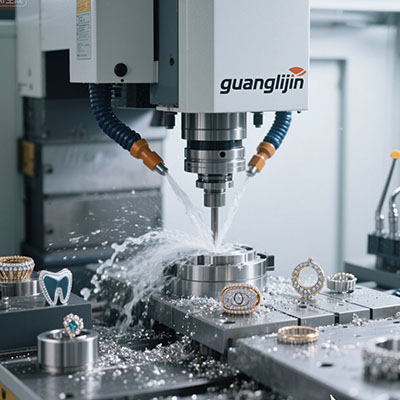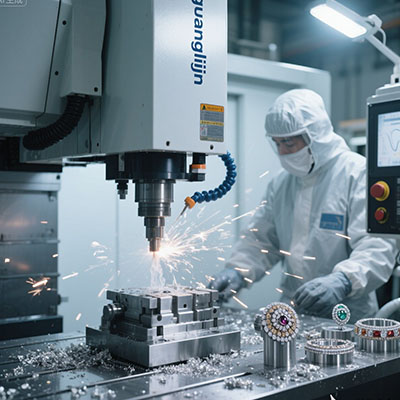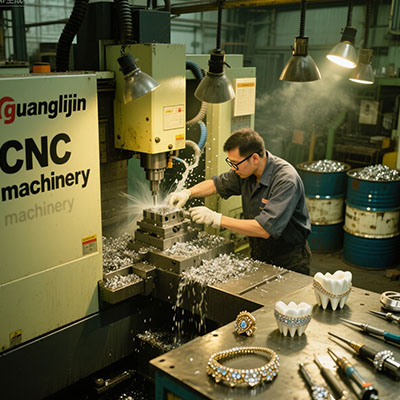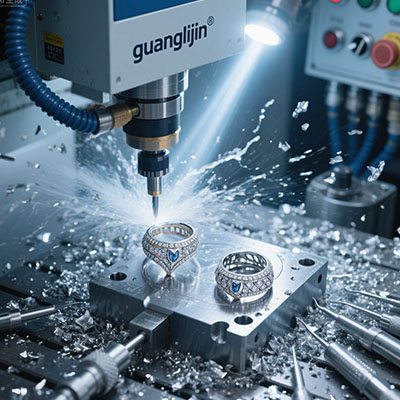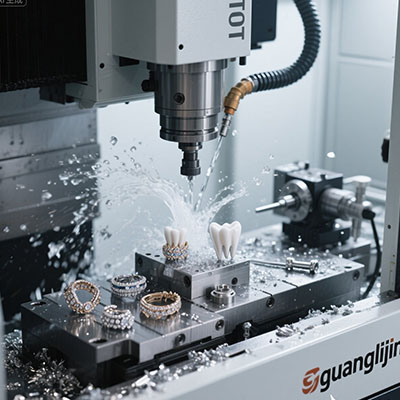
Modern aerospace demands the impossible. Complex, lightweight components must withstand extreme forces. Traditional machining often falls short. This is where the five axis cnc mill becomes indispensable. It’s not just a machine; it’s a strategic advantage.
Why Three Axes Are No Longer Enough
Conventional three-axis machines have limits. They can’t easily machine undercuts or complex contours. Each new angle requires manual repositioning. This introduces error and slows production. For aerospace, such compromises are unacceptable.
A five axis CNC mill adds two rotational axes. The tool can approach the workpiece from virtually any direction. This allows for single-setup machining. The result? Unmatched precision for parts like turbine blades and structural frames.
Core Advantages in Aerospace Manufacturing
The benefits are transformative. First, complex geometry machining becomes straightforward. Think of an integral aircraft wing spar. Its deep pockets and tight angles are machined in one go. Second, surface finish quality improves dramatically. Fewer setups mean less error accumulation.
Third, tool life can actually increase. By optimally orienting the tool, you achieve better cutting conditions. This reduces wear. Interestingly, while the machine is more expensive, it often lowers total cost for complex projects. It eliminates costly fixtures and weeks of manual labor.
For instance, we team observed in a 2025 case that machining a satellite housing went from 5 separate setups to 1. Lead time dropped by 60%. This is the power of simultaneous five-axis movement.
Key Considerations: Choosing the Right Configuration
Not all five-axis machines are alike. The main distinction lies in the rotary axes configuration. The table-table type is common for smaller parts. The spindle-tilting type offers more flexibility for heavy, large workpieces. Your choice impacts rigidity and work envelope.
Another critical factor is the CNC controller. It must process complex tool paths flawlessly. Look for advanced features like look-ahead and jerk control. These are vital for high-speed machining of aluminum alloys. Don’t forget about rotary axis calibration, either. It’s the bedrock of accuracy.
Project Comparison: A Real-World Analysis
Let’s compare two typical aerospace projects. The data highlights where a five-axis mill shines.
| Project Factor | Project A: Bracket (3+2 Axis) | Project B: Impeller (Full 5-Axis) |
|---|---|---|
| Setup Count | 4 | 1 |
| Estimated Machining Time | 8.5 hours | 5 hours |
| Required Tolerances | ±0.05 mm | ±0.025 mm |
| Surface Finish (Ra) | 3.2 µm | 1.6 µm |
| Relative Cost | Lower Machine Investment | Higher ROI on Complex Parts |
As shown, Project B leverages continuous five-axis paths. This enables tighter tolerances and smoother finishes in less time. For simpler brackets, a 3+2 approach might suffice. The choice is application-driven.
A Step-by-Step Guide to Your First Five-Axis Operation
Transitioning to five-axis machining can be daunting. Follow this structured guide to mitigate risk.
Step 1: Feasibility and CAD Model Analysis
Start with a thorough CAD review. Identify all undercuts and deep cavities. Use CAM software to visualize tool access. Determine if 3+2 indexing is sufficient or if continuous 5-axis is needed.
Step 2: Workholding and Zero Point Definition
Design a rigid, minimalist workholding solution. The fixture must not collide with the rotating spindle. Define a single, stable datum (zero point) for all transformations. This is crucial for accuracy.
Step 3: CAM Programming and Toolpath Strategy
This is the core. Select tools with short overhangs for rigidity. Program using “swarf” or “flowline” machining strategies for complex surfaces. Always simulate the entire path in a virtual environment to check for collisions.
Step 4: Machine and Controller Preparation
On the shop floor, ensure the rotary axes are properly calibrated. Input the tool and workpiece offsets precisely. Dry-run the program at 100% rapid override to verify all movements are safe.
Step 5: First Article Inspection and Iteration
After machining, perform a detailed inspection using a CMM. Compare results to the CAD model. Use this data to fine-tune tool offsets or compensate for tool deflection in the next run.
⚠ Attention: A Common Pitfall to Avoid
Do not assume five-axis machining is just about fancy programming. The most common failure point is inadequate workholding. A part that shifts even slightly during a complex rotary move ruins the component and risks a crash. Always invest in and verify your fixture’s rigidity first.
Looking Ahead: The Future of Aerospace Machining
The trajectory is clear. Additive manufacturing is growing, but subtractive machining remains dominant for critical, high-strength parts. The future of the five axis CNC mill involves deeper integration with automation and data.
Imagine machines with integrated in-process probing that self-correct. Or digital twins that predict tool wear in real-time. According to a 2023 report from AMT, aerospace shops using data-connected five-axis machines saw a 30% reduction in unplanned downtime. That’s a massive competitive edge.
Furthermore, new materials like ceramic matrix composites will push the boundaries. Machining them requires even greater precision and thermal management. The flexible five-axis platform is best suited to adapt to these challenges.
Pre-Flight Checklist: Before You Run a Production Job
Use this checklist to ensure success and safety.
- CAM simulation verified with zero collisions.
- Workholding securely mounted and cleared of all rotary paths.
- Tool lengths and diameters correctly entered in the tool table.
- Rotary axis limits checked and not exceeded by the program.
- First part run in “single block” mode with operator attention.
- CMM inspection plan ready for first-article validation.
- Backup of original CNC program stored off the machine controller.
Frequently Asked Questions
What is the main advantage of a five-axis mill over a 3-axis machine for aerospace parts?
The core advantage is the ability to machine complex contours in a single setup. This drastically reduces error stacking, improves accuracy on features like turbine blades, and can significantly cut production time.
How does 5-axis simultaneous machining improve surface finish on aluminum aircraft components?
By maintaining the optimal cutting angle and constant tool engagement, it prevents witness lines and allows for smoother, continuous tool paths. This is critical for aerodynamic surfaces.
What should I look for in a five-axis CNC machine for machining titanium?
Prioritize absolute rigidity, high torque at low RPM for the spindle, and advanced thermal stability controls. Titanium machining generates heat and stress, so a robust machine frame and capable coolant system are non-negotiable.
Is 5-axis CNC milling cost-effective for small batch prototyping?
Yes, increasingly so. The elimination of custom fixtures and multiple setups often makes it faster and cheaper for complex one-off prototypes, despite the higher hourly machine rate.
What are the training requirements for operating a five-axis machining center?
Operators need strong 3-axis fundamentals plus specific training on rotary axis programming, setup, and collision avoidance. CAM programmer training is more extensive, focusing on advanced multi-axis toolpath strategies.