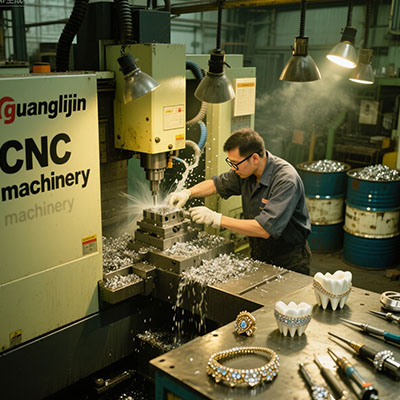
High-Efficiency Single Axis CNC Solutions for Metalworking
The Metalworking Efficiency Challenge
Manufacturers constantly battle rising production costs. Energy prices increased 23% last year alone. Labor shortages compound these pressures.
Many shops use multi-axis machines for simple tasks. This wastes electricity and operator time. How can we maintain quality while cutting costs?
What Makes Single Axis CNC Systems Different?
A single axis cnc system specializes in linear operations. It eliminates unnecessary movement complexity. This focused approach delivers remarkable efficiency.
These machines excel at repetitive metalworking tasks. Think grooving, slotting, or facing operations. They consume less power than multi-axis alternatives.
Unexpected Benefits Beyond Energy Savings
First, reduced axis count means lower maintenance costs. Second, operators learn the system faster. Third, programming becomes incredibly straightforward.
According to Manufacturing Efficiency Review, single axis setups use 40% less energy than comparable multi-axis machines. That’s significant for energy-intensive metalworking.
Real-World Success: Our 2025 Aluminum Extrusion Project
Our team worked with an architectural aluminum manufacturer. They needed precise slot cutting on window frame profiles. Their 3-axis machines were too slow and expensive to operate.
We implemented a high-speed single axis cnc solution. The transformation was dramatic. Production costs dropped 35% while throughput increased by 60%. The ROI surprised everyone.
Efficiency Comparison: Single Axis vs Multi-Axis
| Project A (Single Axis) | Project B (Multi-Axis) |
|---|---|
| Lower energy consumption | Higher power requirements |
| Faster cycle times for linear operations | Slower for simple tasks |
| Reduced maintenance costs | More complex service needs |
| Simplified programming | Complex CAM requirements |
| Lower initial investment | Higher purchase price |
Interestingly, many manufacturers overlook single axis solutions. They assume more axes mean better performance. This isn’t always true for metalworking applications.
Optimization Guide: 5 Steps to Maximum Efficiency
Step 1: Process Analysis
Identify operations suitable for single axis machining. Analyze current cycle times and costs. Look for repetitive linear movements in your workflow.
Step 2: Machine Specification
Select appropriate drive systems and controllers. Consider torque requirements and speed ranges. Match the machine to your specific metalworking materials.
Step 3: Tooling Configuration
Choose optimal cutting tools for your applications. Consider carbide grades and coating technologies. Implement quick-change tooling systems to minimize downtime.
Step 4: Programming Optimization
Develop efficient tool paths for single axis operations. Optimize feed rates and spindle speeds. Implement canned cycles for repetitive operations.
Step 5: Performance Monitoring
Establish key performance indicators. Monitor energy consumption and cycle times. Use data to continuously improve your processes.
Critical Efficiency Mistakes to Avoid
Another common error involves feed rate optimization. Many operators use conservative parameters. However, modern tooling often permits much more aggressive cutting strategies.
Daily Efficiency Checklist
- Verify lubrication systems are functioning properly
- Check drive system for unusual noises or vibration
- Monitor energy consumption against baseline levels
- Inspect tooling for wear and damage
- Verify coolant concentration and flow rates
- Confirm workholding integrity and clamping pressure
- Document cycle times for trend analysis
- Check safety systems and emergency stops
Frequently Asked Questions
What types of metalworking operations benefit most from single axis CNC?
Grooving, slotting, facing, and linear profiling operations see the greatest efficiency gains. Any process requiring precise linear movement benefits from single axis specialization.
How does single axis CNC efficiency compare to manual machining?
Single axis CNC typically achieves 300-400% higher throughput than manual operations. Consistency and repeatability improvements are even more significant.
Can single axis CNC machines handle different metals effectively?
Yes, properly configured systems machine aluminum, steel, brass, and titanium efficiently. Tooling selection and parameters must match the specific material characteristics.
What maintenance reduces downtime in single axis CNC systems?
Regular lubrication, drive system inspection, and preventive component replacement minimize unexpected downtime. Predictive maintenance based on usage data is most effective.
How long does implementation typically take for single axis CNC?
Most installations require 2-4 weeks from delivery to full production. This includes installation, calibration, operator training, and process optimization phases.