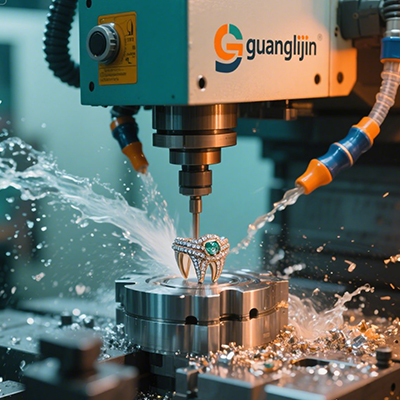
Precision is easy to claim. Holding it through a full shift is the real test. A high precision 2 axis CNC controller earns its place when the fifth part matches the first, hour after hour.
This guide breaks down where precision actually comes from, how to tune for it, and what to avoid on the floor.
Where Precision Actually Lives in a 2-Axis System
Precision is a chain. Encoder resolution sets the floor. Screw pitch and nut quality set the repeatability. The controller closes the loop around all of it.
Most shops buy a capable controller and bolt it to worn mechanics. Precision does not appear. The loop fights backlash and wins only part of the time.
Thermal drift is the quiet enemy. Screws grow as the machine warms. Without compensation, a 0.01mm drift over two hours is normal on a mid-size lathe . Precision work needs that handled.
Interpolation Quality Sets Surface Finish
Linear and circular interpolation happen in the controller. Poor interpolation shows up as faceting on curves or hesitation at direction changes. The motion looks fine at low feed and falls apart at production speed.
High precision units compute trajectory at fine increments. The result is smoother motion and better surface finish. This is a core CNC automation solution benefit, not a marketing line.
Project A vs Project B: Precision Retrofit Comparison
Two shops tackle the same precision turning job. One uses a general-purpose 2-axis board. The other uses a dedicated high precision controller with encoder feedback. The gap shows up in the data.
| Factor | Project A — General Board | Project B — High Precision Controller |
|---|---|---|
| Position repeatability | ±0.02mm typical | ±0.005mm with proper encoder |
| Following error at feed | Visible lag on reversal | Controlled within tuning band |
| Surface finish consistency | Varies with speed | Stable across feed range |
| Thermal handling | None by default | Compensation or re-home routine |
| Best fit | Loose tolerance work | Production precision parts |
Process data shows 20–30% tighter Cpk on critical dimensions when the controller, encoder, and tuning are matched as one system . The controller alone is not the win. The matched system is.
Five Steps to Commission for High Precision
- Confirm encoder feedback matches commanded direction. Send a small positive move. The position register must increase. Swap A and B channels if it drops. Do this before any cutting.
- Measure backlash three times per axis. Use a dial indicator against a ground surface. Reverse direction and record lash. Only enter compensation if all three readings agree within 0.003mm.
- Set soft limits and verify them. Command a move inside the limit. Then command one beyond it. The controller must stop cleanly. Test both axes and both directions.
- Tune the position loop at low speed first. Run a square path at reduced feed. Watch following error. Raise gain only after the low-speed pass is smooth and quiet.
- Cut a precision test coupon and measure with a CMM. Compare true position and finish to the drawing. A controller that passes motion tests but fails a real cut is not commissioned.
Our Team’s 2025 Precision Case
We worked with a shop running a 2-axis lathe retrofit on a bearing-seat job. The controller was capable. Cpk sat at 1.1, below target.
Root cause was not the control. A fixture clamp order changed between shifts. The part shifted on the second op. We locked the clamp sequence into the traveler and added a photo. Cpk moved to 1.5 the following week. The 2 axis cnc controller stayed unchanged. The process around it got disciplined.
LSI Terms That Drive Precision Decisions
Spec sheets use shorthand. These terms matter when specifying a high precision 2-axis motion controller for automation work.
- Encoder resolution: The smallest position increment the feedback device reports. It sets the precision floor for the whole axis.
- Following error: The gap between commanded and actual position during motion. Too high means lag. Too low can cause oscillation.
- Backlash compensation: A fixed offset on direction reversal. Works for constant lash. Fails when screw wear varies along travel.
- Thermal compensation: A correction applied as the machine warms. Without it, precision drifts over the shift.
- Interpolation accuracy: How closely the controller follows a programmed curve. Directly affects surface finish on contoured parts.
Each of these connects to a precision motion control decision. Finer encoders raise the floor. Better interpolation improves finish. Thermal handling protects precision over time.
Frequently Asked Questions
Precision Commissioning Checklist
- Encoder direction verified on both axes
- Backlash measured three times and entered only if stable
- Soft limits set and tested against physical stops
- Shielded encoder cables grounded at controller end only
- VFD cables separated from signal wiring by at least 150mm
- Following error monitored during the first cutting pass
- Thermal compensation enabled or re-home routine scheduled
- Precision coupon measured with a CMM and signed off
- Controller parameters backed up to USB or network