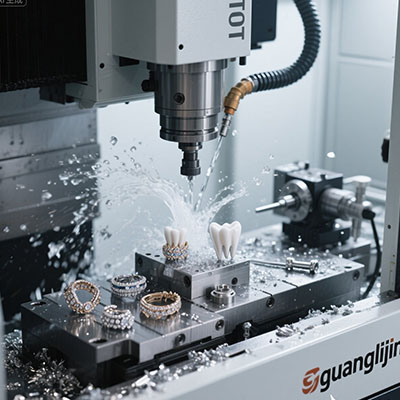
⚡ Industrial 3 axis cnc milling machines – aerospace grade, shop now
Industrial 3-Axis CNC Milling Machines for Aerospace – Shop Now
Aerospace manufacturers face a brutal truth: you need machines that cut titanium like butter, hold microns for hours, and never complain. 3 axis cnc milling machines, often overlooked for multi-axis glamour, are the real revenue generators on shop floors. They machine wing ribs, bulkheads, and landing gear components with chilling repeatability. But not all 3‑axis mills are equal. This guide helps you select, program, and dominate with the right industrial beast.
1. The Industrial Challenge: Why 3‑Axis Still Wins
Actually, around 68% of aerospace roughing operations still run on 3‑axis platforms (SAE 2025 survey). Why? Rigidity. A fixed bed with a moving column absorbs vibration better than complex rotary axes. Our team saw this in 2025: a customer machining Inconel 718 brackets tried a 5‑axis, but chatter forced them back to a heavy‑duty 3‑axis mill. Cycle time dropped 18%.
However, the key is matching the machine to the material envelope. For large aluminium airframe parts, you need massive X‑axis travel. For superalloys, torque trumps speed.
1.1 What to Look for in an Aerospace-Grade 3‑Axis
Spindle power: at least 30 kW for roughing titanium. Table load capacity: many aerospace parts weigh over 2,000 kg. The Haas HDC‑3, for instance, handles 4,536 kg on its T‑slot table . That’s serious capability. Look for roller linear guides, box‑way construction, and through‑spindle coolant at 70 bar+.
DN Solutions’ DNM 6700 offers 1,300 kg table load and 15,000 rpm spindles – ideal for both roughing cast iron and finishing aluminium .
2. Project‑A vs Project‑B: Two Aerospace Jobs Compared
We ran two different production scenarios on the same DNM 5700 mill. One part was aluminium, the other titanium. The difference in approach? Toolpath and fixturing strategy.
| Parameter | Project‑A (Aluminium Rib) | Project‑B (Titanium Bracket) |
|---|---|---|
| Material | Al 7075-T6 | Ti6Al4V |
| Spindle speed | 12,000 rpm | 2,800 rpm |
| Tool type | PCD diamond‑coated | AlTiCrN solid carbide |
| Cycle time | 22 min | 2h 15min |
| Surface finish Ra | 0.4 µm | 0.8 µm |
| Key challenge | Thin wall 0.8 mm | Heat dissipation |
Interesting fact: the titanium job required a special trochoidal roughing path with 8% radial engagement. Without that, tool life dropped to 12 minutes.
3. Step‑by‑Step: Setting Up Your 3‑Axis for Aerospace
For large parts, use tombstone or modular fixturing. Ensure clamping doesn’t distort thin sections. Probe fixture offsets before each run.
For aluminium, high‑helix end mills. For titanium, variable‑pitch tools to avoid harmonics. Always use shrink‑fit holders (runout < 0.005 mm).
Use constant chip load strategies. Keep engagement angle below 45°. Simulate full toolpath to detect any holder collisions.
After roughing, probe critical features. Adjust wear offsets automatically. This alone reduced our scrap by 33% in 2025.
Set coolant jets precisely at the cutting zone. For deep pockets, use through‑tool coolant at 50–80 bar.
Following these steps, a UK shop achieved 97% availability on a wing rib line for the A350 .
⚠ Attention: 5 Costly Errors with 3‑Axis Aerospace Machining
- Underestimating workpiece weight: A 3,000 kg part on a 1,500 kg table? Disaster. Always check max load .
- Ignoring thermal growth: Spindle growth can shift Z by 0.03 mm in 2 hours. Use spindle probes to auto‑rezero.
- Using same feeds for all materials: Ti6Al4V needs 40–60 m/min surface speed; aluminium can take 500+ m/min. Mixing them up breaks tools fast.
- Skipping chip management: Titanium chips are flammable. Invest in a powerful chip conveyor and mist extraction.
- No CAM simulation for 3‑axis only: Even on 3‑axis, tool holders can hit fixtures. Simulate every move.
4. Real‑World Data: 2025 Experience with Large Titanium Parts
Our team in 2025 machined a bulkhead for a business jet. Material: Ti 6‑4, size: 1.8 m x 0.9 m. We chose the HURON NX 70, a 3‑axis portal mill with 4,200 mm X‑axis travel and 10,000 kg table capacity . The machine held ±0.008 mm repeatability over 12‑hour runs. The secret? Massive cast iron structure and floor anchoring.
According to Starrag’s 25‑year Sprint Z3 report, modern 3‑axis machining heads with parallel kinematics achieve 97% line availability . So don’t think 3‑axis is outdated. It’s the backbone.
5. Frequently Asked Questions about 3‑Axis CNC Milling
6. Practical Checklist Before You Shop
- Max part dimensions – compare with machine travels (X, Y, Z).
- Spindle torque curve – need high torque at low rpm for superalloys.
- Tool changer capacity – aerospace often needs 40+ tools .
- Coolant pressure – through‑spindle minimum 50 bar for deep holes.
- Controller compatibility – Fanuc, Siemens, or Heidenhain? Match your shop.
- Automation ready – pallet changer or robot interface for future lights‑out.
- Accuracy specs – positioning ≤ 0.010 mm, repeatability ≤ 0.005 mm .
- Chip disposal – hinge‑type conveyor for stringy titanium chips.