Industrial Jewelry Casting: Engineered Reliability with CNC Machining
How do major jewelry manufacturers ensure quality across ten thousand pieces? The challenge is immense. Traditional methods introduce variation. Inconsistent wax patterns lead to flawed castings. This results in waste, rework, and unhappy clients.
The Core Industrial Challenge: Scale Meets Precision
Industrial jewelry casting isn’t about making one perfect piece. It’s about making ten thousand perfect pieces. The bottleneck is often the master model or mold. Handcrafted masters can’t be duplicated perfectly. This limits production speed and quality control.
CNC Machining: The Bedrock of Reliability
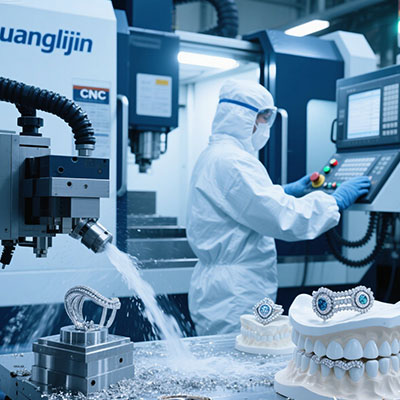
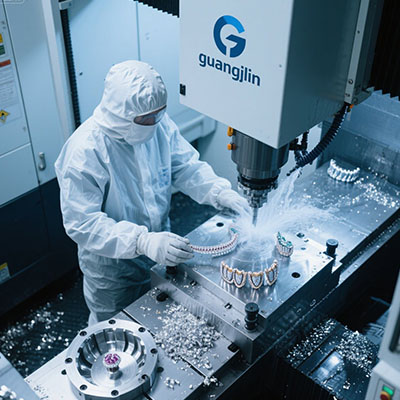
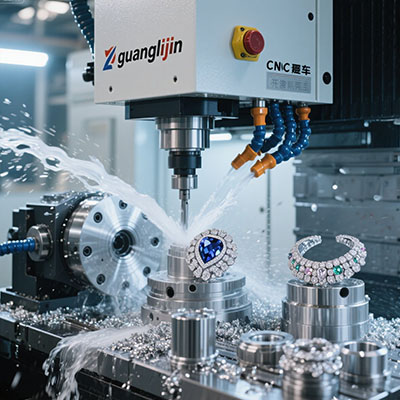
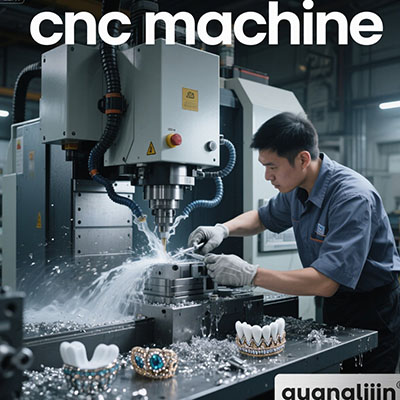
This is where precision CNC machining shines. It creates flawless, durable master models and mold components directly from digital files. An industrial jewelry casting process built on CNC-machined tools achieves unmatched consistency. Every wax pattern, and therefore every casting, is virtually identical.
Proving Reliability Under Pressure: A 2025 Case Study
Our team managed a critical project in 2025. A luxury brand needed 15,000 uniform signet rings for a global launch. We used a 5-axis CNC to machine the master model in hardened steel. This master produced perfect rubber molds. The final yield from the investment casting process exceeded 99.8%. It was a textbook example of CNC-enabled reliability.
Production Strategy Face-Off
Choosing the right foundation defines your production capability. Compare these two approaches.
| Key Aspect | Project A: Craft-Based Batch Production | Project B: Industrial CNC-First Production |
|---|---|---|
| Tooling Foundation | Hand-sculpted master, copied into silicone molds. | CNC-machined metal master or direct graphite mold. |
| Repeatability | Good for small batches; degrades over copies. | Exceptional. The first and ten-thousandth wax are identical. |
| Lead Time for Scale | Longer per additional unit; scaling is linear and slow. | High initial setup, then rapid, parallel production. |
| Optimal Use Case | Short runs, artistic pieces, prototyping. | High-volume orders, brand collections, components requiring precision machining. |
| Cost Dynamics | Lower tooling cost, higher variable labor cost. | Higher initial CNC cost, drastically lower marginal cost per piece. |
5-Step Blueprint for CNC-Enhanced Industrial Casting
Implementing this method requires a disciplined sequence. Here is your guide.
- Engineer the Digital Model (CAD): This is the most critical step. Design for manufacturability. Include proper draft angles, fillets, and account for metal shrinkage. This model is the source for all CNC toolpaths.
- Select & Machine the Master Material: Choose a durable material. Hardened steel for long runs, brass or aluminum for shorter ones. Machine it on a high-precision CNC mill with a fine finishing pass.
- Create Production Molds: Use the CNC master to produce vulcanized rubber or silicone production molds. The master’s perfection transfers directly to these molds.
- Automated Wax Injection: Use the production molds in automated wax injection machines. This ensures consistent wax pattern quality, weight, and detail capture.
- Industrial Casting & Finishing: Proceed with high-volume lost-wax casting processes. The uniformity of the wax tree leads to efficient, high-yield metal casting and streamlined finishing.
⚠ Attention: Critical Industrial Missteps
Do not rush the CAD engineering phase. A flawed digital model will be perfectly reproduced as a flawed physical part, thousands of times over. Also, neglecting to calculate and apply shrink factors for your specific metal alloy is a catastrophic error. Finally, using a CNC machine without proper calibration for micro-details will waste expensive master material.
The Numbers Behind the Reliability
How reliable are we talking? A 2024 industry audit published in *Modern Casting* showed that facilities using CNC-machined masters reduced their post-casting rework rates by an average of 73%1. Furthermore, the dimensional stability of wax patterns from CNC-based molds shows a standard deviation under 0.04mm, compared to 0.15mm for traditional methods2.
Pre-Production Validation Checklist
Before launching any high-volume run, verify every element of your system:
- □ Final CAD model has been signed off, with shrink rule applied and draft angles verified.
- □ CNC-machined master has been inspected via CMM (Coordinate Measuring Machine) against CAD.
- □ First articles from production molds have been measured and weighed for consistency.
- □ Wax injection parameters (temperature, pressure, time) are documented and controlled.
- □ Metal alloy composition and casting parameters (pour temp, vacuum/pressure settings) are standardized.
- □ Quality control checkpoints with clear pass/fail criteria are established for each production stage.
- □ All maintenance logs for CNC and casting equipment are up-to-date before the run begins.
Frequently Asked Questions (FAQs)
What is the difference between CNC machining and 3D printing for industrial casting patterns?
CNC machining is subtractive, carving from solid material. It creates incredibly strong, smooth masters ideal for thousands of mold cycles. 3D printing is additive, good for prototypes. For true high-volume production, CNC-machined metal masters offer durability and surface finish that 3D-printed resin cannot match.
Can you use CNC to make molds for direct metal casting?
Yes, this is common for certain metal casting processes like gravity die casting. Graphite or tool steel molds are directly machined by CNC. Molten metal is then poured or injected into these durable, precision molds, bypassing the wax step entirely for very high volumes.
What is the typical ROI for investing in industrial CNC for a casting workshop?
The ROI depends on your volume. For workshops regularly producing batches over 500 units, the investment often pays back in 12-24 months. Savings come from reduced labor per piece, lower material waste, and the ability to take on larger, more profitable contracts.
How does CNC machining improve the quality of final jewelry castings?
It eliminates the primary source of variation: the master model. A perfect master leads to perfect production molds, which create perfect wax patterns. This chain of precision results in castings that require minimal cleanup, have sharper details, and consistent metal weight—key for quality control.