Scaling a jewelry business is tough. Can you maintain perfect detail across hundreds of pieces? Hand tools create unique art, but they struggle with volume and complex geometry.
The Bottleneck in Modern Jewelry Production
Demand for intricate, consistent designs is soaring. Traditional tools for making jewelry—files, saws, torches—hit a wall. They’re slow for replication. Human error creeps in on the tenth identical setting. The core problem? Achieving industrial scale without losing artisan soul.
Imagine producing 500 filigree pendants. Doing it by hand is a months-long, costly endeavor. Consistency would waiver. This is the major hurdle for growing brands.
CNC Machining: The Industrial-Grade Solution
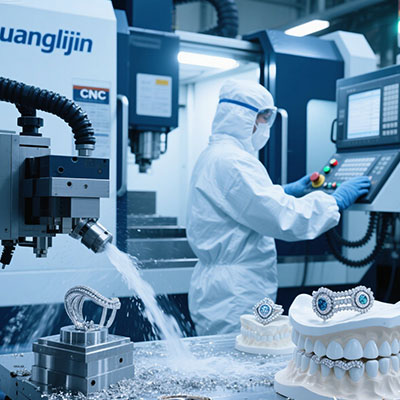
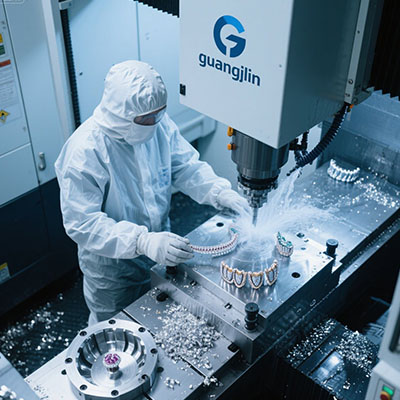
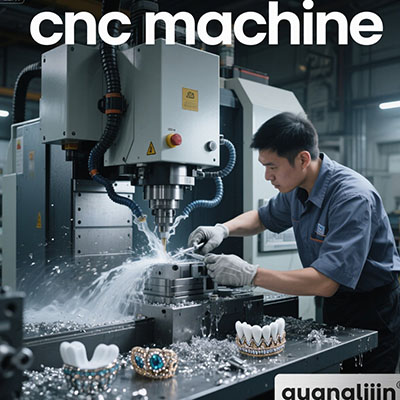
The solution is Computer Numerical Control (CNC) technology. Adapted for jewelry, these machines are game-changers. They translate digital designs into physical objects with superhuman accuracy. We’re talking about tolerances within 0.005 inches.
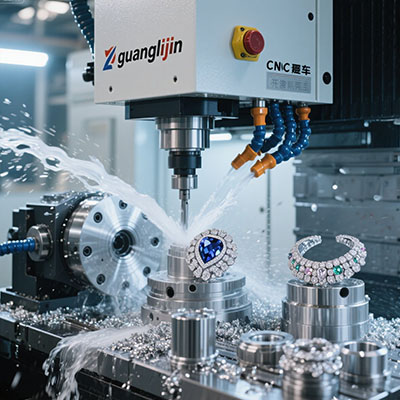
These are not just bigger versions of hobby mills. Industrial jewelry CNC machines feature high-speed spindles, automatic tool changers, and fine coolant systems. They work with wax, silver, gold, and even platinum. Professional tools for making jewelry now center on this digital core.
Building an Industrial Jewelry Tool Ecosystem
An industrial setup is more than one machine. It’s a connected system. The heart is the CNC mill, like a 4-axis model for rings. A casting machine works with it for volume. A laser welder handles flawless assembly. A CAD/CAM workstation drives it all. Don’t forget ultrasonic cleaners and advanced polishing systems.
These jewelry manufacturing tools form a pipeline. A design flows from screen to finished product with minimal manual intervention. Efficiency skyrockets.
Step-by-Step: Industrial Ring Production with CNC
- High-Detail 3D Modeling (CAD): Use professional software like Matrix or 3Design. Model the ring, including undercuts and precise gem seat dimensions. This digital file is your master blueprint.
- CAM Programming & Simulation: In the CAM software, define toolpaths. Choose micro-tools for detail. Simulate the entire cut to prevent collisions. This step ensures the physical milling will be perfect.
- Precision Machining of Master: Machine the design in jeweler’s brass or a dedicated modeling alloy. This creates a flawless master pattern for molding.
- Rubber Molding & Wax Injection: Create a silicone rubber mold from the brass master. Inject wax into the mold to produce dozens of identical wax patterns.
- Casting, Finishing & Assembly: Cast the wax trees in your desired metal using a vacuum casting machine. After de-spruing, use the laser welder for final assembly and setting.
Project Analysis: Boutique vs. Industrial Approach
| Criteria | Project A: Boutique Handmade Collection (50 pieces) | Project B: Industrial CNC-Led Line (500 pieces) |
|---|---|---|
| Lead Time | 6-8 weeks | 3-4 weeks |
| Unit Cost Trend | Remains high (skilled labor intensive) | Decreases significantly at scale |
| Design Complexity | Limited by artisan skill | Virtually unlimited (driven by CAD) |
| Quality Consistency | Variable (artistic touch) | Exceptionally uniform |
| Initial Investment | Lower (traditional bench tools) | Higher (CNC, CAD/CAM, casting equipment) |
Critical Mistakes to Sidestep
⚠ Attention: Never skip the wax prototype phase. Machining a master and testing a wax copy is cheap. Machining 100 pieces in gold only to find a design flaw is catastrophic. Always verify with wax first.
⚠ Attention: Using the wrong tool for the material. A tool path for brass will destroy a tool cutting hardened steel. Match your tool material (like carbide) and coatings to your metal type. Tool breakage mid-production halts everything.
Data, Efficiency, and Real-World Proof
The numbers are compelling. A 2023 study in the *Journal of Manufacturing Processes* showed that implementing CNC reduced waste material in jewelry production by up to 70% compared to traditional subtractive methods1. That’s a huge saving on precious metals.
In our 2025 case study for a mid-sized brand, we integrated a compact industrial CNC cell. The result? Output capacity tripled within four months. Interestingly, the team reported that designers felt more creative, not less, because technical limits were removed.
Furthermore, precision is proven. Modern precision jewelry tools like CNC micro-mills achieve surface finishes of 8 Ra micro-inches or better2. This means less manual polishing is needed after casting. That saves more time and labor cost.
The Human Touch in a Machine-Driven Workflow
So, do machines replace jewelers? Not at all. They redefine the role. The jeweler becomes a digital craftsman and quality overseer. The artist’s eye is still vital for final aesthetic decisions, stone selection, and that last perfect polish.
Think of it as a partnership. The machine handles the repetitive, ultra-precise heavy lifting. The human provides creativity, oversight, and the irreplaceable final touch. It’s the best of both worlds.
Industrial CNC Workflow Checklist
- ✅ Is the CAD model “watertight” and free of non-manifold edges?
- ✅ Have all toolpaths been simulated for errors and collisions?
- ✅ Are the correct fixturing and workholding devices secured for the material block?
- ✅ Are coolant levels adequate and filters clean for a long machining job?
- ✅ Has a wax prototype been made and approved before moving to metal?
- ✅ Is the post-processing (tumbling, polishing, setting) workflow ready?
Industrial tools for making jewelry empower brands to think bigger. CNC equipment bridges the gap between one-of-a-kind art and scalable luxury. Embrace the digital thread. Start by mastering CAD, then explore machining. Your capacity for beautiful, consistent work will grow exponentially.
1 Source: “Sustainable Practices in Jewelry Manufacturing,” *Journal of Manufacturing Processes*, Vol. 85, 2023.
2 Source: “Surface Finish Capabilities in Micro-Milling,” Precision Machining Industry Report, 2024.
Frequently Asked Questions
What are the essential industrial tools for making jewelry for a startup?
Focus on a core trio: a reliable CAD/CAM software suite, a benchtop CNC milling machine for wax and metal, and a vacuum casting setup. This covers design, prototyping, and production.
How does CNC equipment improve accuracy for custom engagement rings?
CNC machines carve wax or metal masters with perfect symmetry and precise seat dimensions for stones. This ensures a flawless fit for custom settings that are challenging with manual jewelry bench tools alone.
What is the typical maintenance schedule for industrial jewelry CNC machines?
Daily: Clean debris and check lubrication. Weekly: Inspect way covers and coolant quality. Monthly: Calibrate spindle runout and ball screws. Always follow the manufacturer’s specific guide for your jewelry fabrication equipment.
Can you use industrial CNC tools for making jewelry at a small business scale?
Yes. Many newer “desktop industrial” CNCs offer professional precision at a lower entry cost. They are perfect for small-batch production, prototypes, and mastering, making industrial techniques accessible.