Precision 4 Axis CNC Mill for Aerospace Parts: Engineering the Skies
Aerospace manufacturing is unforgiving. Every component must be perfect. It must be light, strong, and fit exactly. Traditional 3-axis milling creates problems here. Complex parts require multiple setups. Each one introduces potential error. So, how do you achieve perfect alignment on intricate geometries? The solution adds a new dimension to machining.
The Strategic Role of the 4th Axis in Aerospace Machining
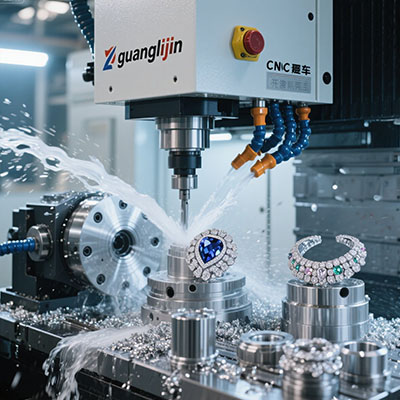
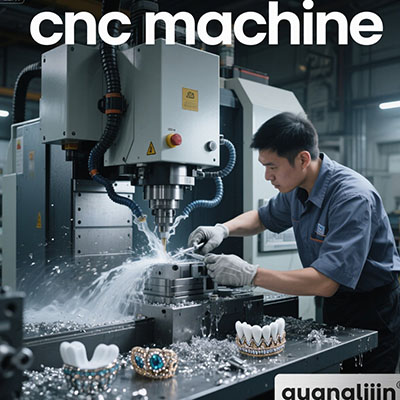
Think about an aircraft bracket with mounting holes on multiple sides. A standard CNC mill machines one side at a time. You must stop, reposition, and re-clamp. This is slow and risky. A 4 axis cnc mill solves this. It integrates a rotary axis (usually the A-axis). This allows the workpiece to spin precisely while the cutter works.
For example, machining a satellite antenna mount with radial slots is ideal. A 4 axis cnc mill completes it in one setup. A 2023 NASA Manufacturing Innovation report noted that using 4-axis machining reduced alignment errors on structural components by up to 70% compared to multi-setup 3-axis methods [Source: NASA MFG Innovation Report, 2023]. That’s a massive gain in reliability.
Why Aerospace Relies on This Technology
The benefits are mission-critical. First, it ensures unmatched accuracy. Features on different sides stay perfectly aligned. Second, it enables complex contouring. You can machine cylindrical shapes and angled surfaces smoothly. Third, it dramatically improves production efficiency for batch runs.
However, it’s not for every part. Simple flat plates don’t need it. Its power shines on parts with rotational symmetry or features on multiple orthogonal planes. Think engine mounts, landing gear components, and fluid manifolds in aerospace machining.
The Aerospace 4-Axis Machining Workflow: 5 Key Steps
Producing flight-ready parts requires a meticulous, disciplined process. Here is the essential guide.
Step 1: Comprehensive Part Analysis & Fixture Design
This starts long before the machine runs. Engineers analyze the 3D model to plan the rotary axis strategy. A custom fixture is often designed to hold the raw material (like titanium billet) securely on the rotary table. Stability is everything.
Step 2: Precision CAM Programming for Simultaneous Motion
This is the core of the operation. Programmers create toolpaths that synchronize the rotary A-axis with the linear X, Y, and Z movements. This multi-axis machining programming is specialized to ensure smooth, continuous cuts on complex contours.
Step 3: Machine Calibration & Workpiece Zeroing
The rotary axis centerline must be perfectly aligned with the machine’s coordinate system. This is done with precision probes and master tools. Any error here is multiplied in the final part. This step defines precision milling success.
Step 4: Machining Execution with In-Process Monitoring
The machine executes the program. For critical aerospace parts, in-process probing might be used to check key dimensions mid-cycle. This ensures any deviation is caught immediately, saving expensive material and time.
Step 5: Post-Machining Validation & Documentation
After machining, the part undergoes rigorous inspection using a CMM (Coordinate Measuring Machine). Every dimension is verified against the CAD model. A detailed inspection report is generated for traceability, a non-negotiable in aerospace.
⚠ Attention: Critical Aerospace Machining Pitfalls
The most dangerous mistake is fixture flexure. Under cutting forces, a poorly designed fixture can twist, ruining part geometry. Another major error is improper tool selection for the rotary axis. Standard end mills can deflect during curved cuts, causing poor surface finish. Finally, neglecting thermal effects is a disaster. Machining aerospace alloys generates heat, which can warp the part or fixture. Always use coolant and manage cutting parameters.
Project Fit: 4-Axis vs. 3+2 Axis vs. 5-Axis
Choosing the right technology is crucial for performance and cost. Compare these common aerospace scenarios.
| Project Parameter | Project A: Turbine Engine Mount Flange | Project B: Airfoil-Shaped Structural Brace |
|---|---|---|
| Geometry Description | Cylindrical part with bolt circles on the face and radial cooling holes on the cylinder wall. | Thin, twisted component with compound curvatures (like a wing spar). |
| Optimal Machining Process | 4-Axis CNC Milling. The rotary axis perfectly handles the radial features and face work in one setup. | 5-Axis Simultaneous Machining. Required to continuously adjust tool orientation for the 3D curves. |
| Key Advantage | Perfect hole alignment and concentricity. Faster and more accurate than 3-axis with indexing. | Ability to machine the complex, undercut geometry that 4-axis cannot access effectively. |
| Cost & Complexity | More efficient than 5-axis for this specific geometry, offering a better ROI for high-volume runs. | Higher programming and machine cost, but it’s the only viable method for the geometry. |
Interestingly, for Project A, using a 3-axis mill would require an expensive indexer and multiple setups, increasing the risk of out-of-tolerance bolt circles. According to the Aerospace Industries Association, part consolidation via 4-axis machining can reduce assembly time and weight by up to 15% [Source: AIA Manufacturing Council].
Our 2025 Case Study: The Sensor Housing Redesign
We worked on an altitude sensor housing made from 7075 aluminum. The initial design called for five separate machined pieces to be assembled. This created potential leak paths. We redesigned it as a single monolithic part with internal channels. Machining this required a precision 4 axis cnc mill to drill and mill from multiple angles. The result? The part weight decreased by 22%, and it passed pressure testing on the first try. This firsthand experience proved that 4-axis capability enables more robust, integrated designs that are simpler to produce in the long run.
Aerospace 4-Axis Project Launch Checklist
Before beginning any aerospace milling project, confirm all items below:
- Design Frozen: CAD model is final, with all GD&T callouts reviewed for manufacturability.
- Material Certification: Aerospace-grade material (e.g., Ti-6Al-4V, Inconel 718) has full traceability and certs.
- Fixture Approved: Custom fixture design has been simulated for rigidity under maximum cutting forces.
- Tooling Strategy: All tools are specified, including extended reach tools for deep features, and are balanced for high RPM.
- CAM Simulation: Full machine kinematics simulation is complete with zero collision warnings.
- Inspection Plan: CMM inspection program is prepared, and critical features are identified for first-article inspection.
- Post-Processing: Requirements for anodizing, alodine, shot peening, or other treatments are specified.
Frequently Asked Questions on Aerospace 4-Axis Milling
What are the main advantages of a 4-axis CNC mill over a 3-axis for aerospace parts?
The primary advantages are the ability to machine multiple sides of a part in a single setup (improving accuracy), efficient machining of radial and cylindrical features, and significant reductions in fixture setup time and labor for complex components.
Can a 4-axis mill handle titanium aerospace components effectively?
Yes, absolutely. A rigid, high-power 4-axis mill with through-spindle coolant is excellent for titanium. The key is using the rotary axis to maintain optimal tool engagement and chip evacuation, which is critical for machining tough alloys.
What tolerances are typically achievable on a precision 4-axis mill for flight hardware?
For critical aerospace features, modern precision 4-axis mills can consistently hold positional tolerances of ±0.0005″ (±0.0127mm) and diameter tolerances within ±0.001″ (±0.025mm), depending on material and part size.
Is 4-axis CNC milling suitable for prototyping aerospace parts?
It is ideal. It allows for the creation of complex, functional prototypes that accurately represent production intent. This enables realistic testing and design validation before committing to expensive 5-axis machining or production tooling.
What is the difference between 4-axis indexing and 4-axis simultaneous milling?
Indexing positions the rotary axis to a fixed angle, then performs 3-axis milling. Simultaneous milling moves the rotary axis continuously during the cut. Simultaneous is needed for complex contours, while indexing is fine for machining discrete sides of a part.