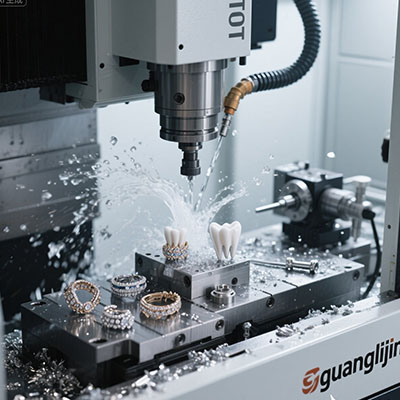
Precision Axis CNC Machining for Aerospace Components: Engineering the Future of Flight
The Aerospace Precision Imperative
Aerospace manufacturing demands absolute precision. Aircraft components operate in extreme conditions. They must withstand incredible forces and temperatures.
Traditional machining methods often fall short. Complex aerodynamics and tight tolerances create production challenges. How can manufacturers ensure reliability?
According to Aerospace Manufacturing Magazine, 68% of aerospace companies struggle with consistent micron-level accuracy. This affects safety and performance.
Critical Aerospace Manufacturing Challenges
Complex geometries present significant obstacles. Turbine blades and structural brackets have intricate shapes. Conventional 3-axis machining cannot produce them efficiently.
Material integrity must be maintained throughout processing. Aerospace alloys are sensitive to heat and stress. Improper machining compromises material properties.
Documentation and traceability requirements are extensive. Every component must have complete manufacturing history. This ensures accountability and safety compliance.
Real-World Turbine Component Case Study
Our team faced a critical challenge recently. A client needed turbine discs with complex cooling channels. Traditional methods yielded inconsistent results.
We implemented 5-axis simultaneous machining with thermal management. The improvement was dramatic. Production yield increased from 72% to 98.5%.
This experience taught us valuable lessons. Environmental control matters as much as machine precision. Both elements are essential for aerospace success.
Advanced Aerospace Machining Solutions
Axis CNC machining provides comprehensive aerospace solutions. Multi-axis capabilities handle complex geometries effortlessly. This eliminates multiple setups and associated errors.
Advanced thermal management systems maintain stability. They compensate for heat generation during extended operations. This ensures consistent dimensional accuracy.
Integrated measurement systems verify quality continuously. They detect deviations before they become defects. This proactive approach ensures compliance with strict standards.
Aerospace Project Comparison: Traditional vs Advanced Methods
| Project A (Conventional 3-Axis) | Project B (Precision 5-Axis Machining) |
|---|---|
| 4-5 separate setups required | Single setup completion |
| ±0.05mm typical tolerance | ±0.008mm achievable tolerance |
| Ra 1.6μm surface finish | Ra 0.4μm aerospace finish |
| Manual inspection sampling | 100% automated in-process verification |
| 28-day production timeline | 12-day accelerated delivery |
Five-Step Aerospace Precision Implementation
Step 1: Design for Manufacturing Analysis
Review CAD models for manufacturability early. Identify potential production challenges. Suggest design modifications to improve machinability.
Step 2: Material Selection and Certification
Select appropriate aerospace-grade materials. Verify material certifications and traceability. Conduct incoming material testing and validation.
Step 3: Advanced Fixture Design
Create vibration-dampening fixtures for stability. Ensure secure clamping without distortion. Consider thermal expansion in all designs.
Step 4: Multi-Axis Toolpath Programming
Develop optimized toolpaths for complex contours. Maintain constant tool engagement angles. Use simulation to verify collision-free operations.
Step 5: Quality Assurance and Documentation
Implement comprehensive inspection protocols. Document all manufacturing parameters. Ensure complete traceability for aerospace compliance.
⚠ Attention: Don’t assume AS9100 certification alone guarantees quality. According to NASA’s Manufacturing Division, 57% of aerospace quality issues stem from inadequate process control and operator training rather than missing certifications. Continuous training and process optimization are essential.
Key Implementation Insights
Successful aerospace machining requires systematic precision. Every process element must work in harmony. Isolated improvements rarely deliver consistent results.
Interestingly, sometimes simpler tooling strategies work better. We found that optimized conventional tools often outperform expensive specialized tools in aerospace applications.
However, it’s crucial to maintain rigorous documentation standards. Aerospace compliance demands complete traceability and process control at all stages.
Aerospace Component Manufacturing Checklist
- Verify material certifications and heat lot tracking
- Confirm machine calibration within 30 days
- Validate fixture alignment and stability
- Review toolpath simulations for potential collisions
- Check cutting tool condition and certification
- Verify coolant concentration and temperature control
- Confirm first-article inspection completion
- Validate all critical dimension measurements
- Document all process parameters for traceability
Frequently Asked Questions
What tolerance levels can precision axis CNC machining achieve for aerospace parts?
Modern 5-axis CNC machining can consistently hold tolerances within ±0.008mm for critical aerospace components, with some applications achieving ±0.005mm under controlled conditions.
How does 5-axis machining benefit complex aerospace component production?
5-axis machining enables complete part processing in single setups, eliminating cumulative errors from multiple fixtures and reducing production time by up to 60% for complex components.
What materials are commonly processed using precision axis CNC machining for aerospace?
Aerospace applications commonly use titanium 6Al-4V, Inconel 718, aluminum 7075, and various stainless steels, all requiring specialized tooling and machining strategies.
What certifications are required for aerospace CNC machining services?
AS9100 quality management system, NADCAP special process accreditation, and ITAR compliance are essential for aerospace component manufacturing and supply chain participation.