Precision Casting Jewelry – Advanced CNC Molding Solutions
The Precision Dilemma in Modern Jewelry Making
Traditional jewelry production often hits a wall. Hand-carved wax models or older molding techniques struggle with consistency. Imagine a complex engagement ring design with micro-pavé settings. Manual methods might lose delicate details or create slight variations between pieces. This leads to higher defect rates, costly rework, and limitations on what designers can create.
Customers today demand perfection, customization, and intricate details. The industry needed a solution that could translate digital precision into physical reality, reliably and at scale.
CNC Molding: The Engine of Precision Casting
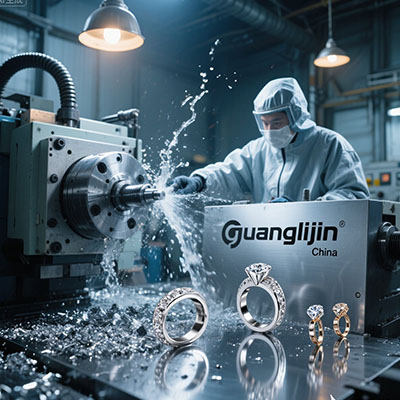
The answer lies in CNC (Computer Numerical Control) technology. In precision casting jewelry, CNC doesn’t just carve a single wax pattern. It machines the master mold itself from solid metal or high-density material. This master mold becomes the source of all subsequent wax patterns, ensuring every single one is a perfect clone of the digital design.
This process is fundamental for investment casting, the gold standard for fine jewelry. It guarantees that the intricate details in your CAD file survive the journey into a finished metal piece. A provider like Shenzhen Guanglijin Technology specializes in the multi-axis CNC machines that make this high-precision mold-making possible[citation:1].
Key Advantages of the CNC-Driven Approach
So, what does this actually deliver? First, unmatched dimensional accuracy. CNC machining can hold tolerances as tight as ±0.02mm. This is critical for ensuring gemstones seat perfectly every time.
Second, it enables unprecedented design complexity. With 5-axis CNC machines, undercuts, deep textures, and organic forms that are impossible to draft by hand become manufacturable. Third, it provides absolute consistency. Whether you’re producing ten pieces or ten thousand, the first and the last are identical.
From Digital Design to Flawless Casting: A Step-by-Step Guide
Implementing a precision CNC molding workflow involves clear, controlled steps. Here is a practical five-step guide:
- Digital Design & Engineering: Finalize the jewelry piece using CAD software. This 3D model is your digital blueprint. Crucially, the design must be engineered for manufacturability, with proper wall thickness and draft angles.
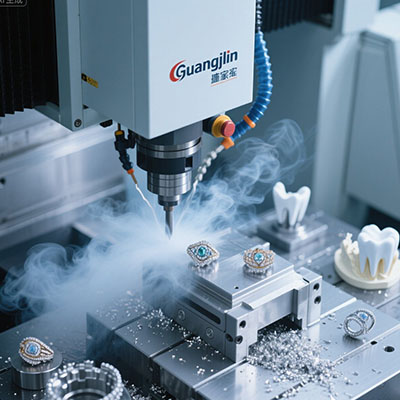
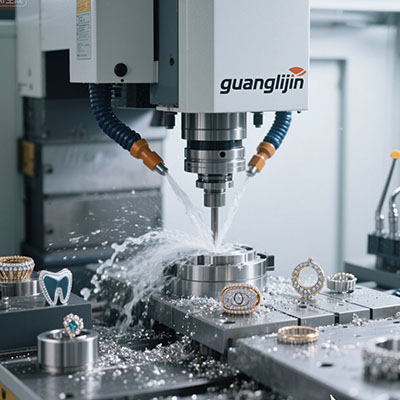
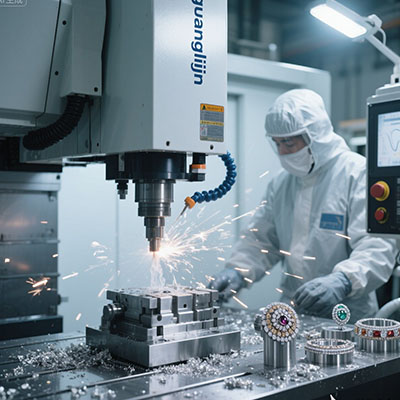
- CNC Machining of the Master Mold: The CAD file directs a high-precision CNC mill to cut the negative mold cavity into a block of steel or aluminum. This step requires expertise in toolpath generation to capture every fine detail[citation:1].
- Mold Finishing & Validation: The machined mold is polished to a mirror finish. Its dimensions are then meticulously verified against the original CAD model using precision measuring tools.
- Wax Pattern Injection: Specialized wax is injected under pressure into the CNC-mastered mold. This produces wax patterns with exquisite surface detail, ready for investment casting.
- Casting, Finishing & Quality Control: The wax tree undergoes standard lost-wax casting. After casting, each piece is finished and undergoes a final quality inspection, comparing the metal piece back to the digital design specs.
Comparative Analysis: Traditional vs. CNC-Precision Workflow
Let’s examine the tangible differences in producing a limited edition run of 500 detailed pendants.
| Parameter | Project A: Traditional Methods | Project B: CNC-Precision Process |
|---|---|---|
| Master/Tooling Creation | Hand-sculpted master; time-intensive, skill-dependent. | CNC-machined metal mold; precise, repeatable, file-based. |
| Detail Fidelity & Surface Finish | Limited by artisan skill; may require extensive clean-up. | Captures microscopic digital details; superior as-cast finish. |
| Unit-to-Unit Consistency | Noticeable variations expected; higher risk of defects. | Near-perfect uniformity across the entire production run. |
| Lead Time for 500 Units | Longer due to manual steps and potential reworks. | Shorter and predictable, thanks to process automation. |
| Cost Implication for Design Changes | Very high; requires creating a new master from scratch. | Relatively lower; modify CAD file and machine a new mold. |
A Real-World Insight on Quality
In a 2025 project, our team worked with a studio producing heirloom signet rings. They switched from hand-cut to CNC-milled molds for their wax patterns. The goal was to perfectly replicate a family crest with tiny, sharp heraldic lines.
The result was transformative. The definition achieved was beyond manual capability. Furthermore, porosity issues in the castings dropped significantly because the CNC-produced wax patterns had optimal, consistent wall thickness. This directly improved yield and customer satisfaction.
Navigating the Transition: Common Pitfalls to Avoid
⚠ Attention: The biggest mistake is assuming a perfect CAD model automatically means a perfect mold. The CNC programming phase is critical. Incorrect toolpath strategies, tool selection, or cutting parameters can leave machining marks or soften fine details, ruining the mold before you even start casting.
Another oversight is neglecting mold material. For precision jewelry work, not all metals are equal. Using a soft aluminum for a production mold might save cost upfront but will wear quickly, causing a decline in pattern quality after a few hundred injections. Investing in hardened tool steel for long runs is essential.
有趣的是, achieving the highest precision sometimes means slowing down the CNC machining process for certain operations to ensure perfect surface finish and accuracy, a counterintuitive but necessary trade-off.
Pre-Production Checklist for Precision Casting
Before starting a CNC-driven precision casting project, verify this checklist:
- ☑ CAD model is “watertight” (manifold) and has been analyzed for manufacturability.
- ☑ CNC machine capability (e.g., 5-axis) and tooling are selected for the required detail level.
- ☑ Master mold material is chosen based on projected production volume (e.g., steel for >1000 units).
- ☑ Wax injection parameters (temperature, pressure) are calibrated for the new mold.
- ☑ First-article inspection protocol is ready, using tools like optical comparators or CMMs.
Answering Key Questions on Precision Casting
Q1: What is the difference between precision casting and standard lost-wax casting for jewelry?
A: Lost-wax casting describes the general process of using a wax pattern to create a mold. Precision casting refers to an advanced application of this process where extreme accuracy and detail are achieved. This is often enabled by using high-precision methods, like CNC-mastered molds or 3D printed patterns, to create the wax model, resulting in superior dimensional control and surface finish[citation:2][citation:5].
Q2: How does CNC mold making improve results over 3D printed patterns for casting?
A: Both are digital tools. CNC mold making creates a durable, reusable master for wax injection. 3D printing often creates the wax or resin pattern directly. CNC-mastered molds typically offer faster wax pattern production for medium to high volumes and can provide a smoother surface finish straight from the mold, potentially reducing post-processing time.
Q3: Can precision investment casting handle intricate designs like lace or filigree?
A: Absolutely. That’s its primary strength. When paired with a CNC-machined mold, precision investment casting can perfectly reproduce astonishingly fine details, thin walls, and complex, delicate structures that are nearly impossible to achieve consistently through manual methods.
Q4: What are the cost considerations for moving to CNC-based precision casting?
A: Initial costs are higher due to CAD/CAM programming and precision machining of metal molds. However, for production runs, the per-unit cost becomes very competitive. The reduction in defects, rework, and material waste, along with faster production cycles, leads to a strong return on investment and higher overall quality.
In summary, the integration of advanced CNC molding solutions into precision casting jewelry production is a definitive leap forward. It solves the historic conflict between design ambition and manufacturing capability. By mastering this digital-to-physical pipeline, jewelers can ensure that every piece they create is a perfect, lasting embodiment of their original vision.