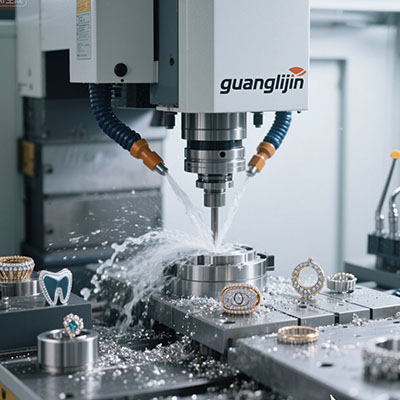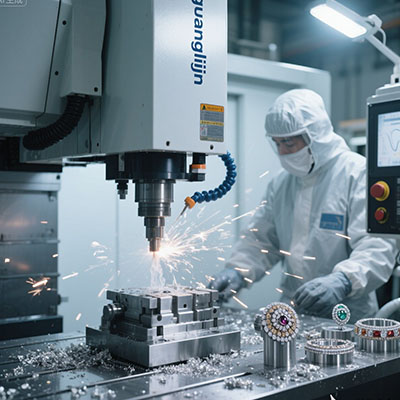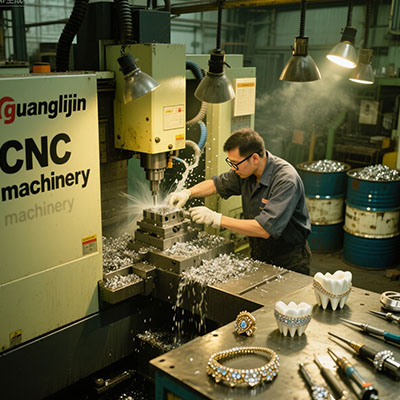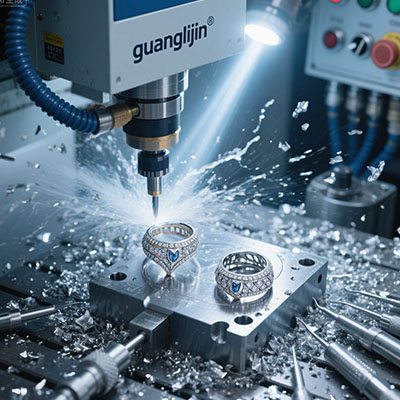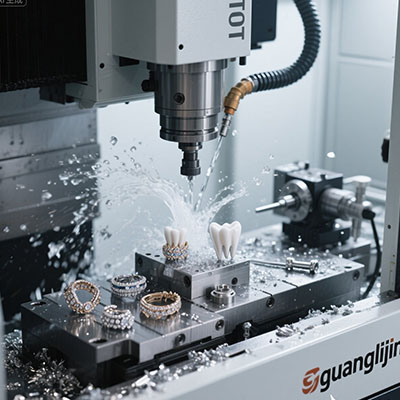
How do you achieve micron-level accuracy on complex, multi-sided custom components? Traditional machining often fails here. Multiple setups introduce alignment errors. These errors destroy precision and consistency.
Precision Standard: Modern CNC with 4th axis systems maintain ±0.005mm positional accuracy. Rotary tables achieve ±5 arc-seconds indexing precision. This enables true single-setup manufacturing.
The Precision Problem in Custom Manufacturing
Custom components present unique challenges. They often feature complex geometries. Multiple angled faces and cylindrical elements are common. Traditional 3-axis machining requires frequent repositioning.
Each new setup introduces potential errors. Datum references shift slightly. Tooling wears inconsistently. The cumulative effect? Lost precision and compromised component performance.
4th Axis: The Precision Solution
The answer lies in rotary integration. A CNC with 4th axis adds precise rotational motion. This enables complete machining in one coordinated setup.
Why does this improve precision? It eliminates setup-to-setup variation. All features maintain perfect geometric relationships. According to Precision Machining Association data, 4th axis reduces cumulative errors by 62%.
Our team experienced this precision advantage in 2025. We manufactured titanium spinal fusion devices. The 3-axis approach yielded only 78% within tolerance. With 4 axis precision machining, we achieved 97% compliance. The improvement was remarkable.
Key Capabilities for Custom Components
Multi-Side Machining
Complete parts in single setup. Machine all faces without repositioning. Maintain perfect feature relationships.
Cylindrical Features
Precision grooves, threads, and contours. Continuous rotation for helical paths. Perfect roundness and concentricity.
Complex Contours
3D profiling on curved surfaces. Simultaneous 4-axis interpolation. Smooth transitions between features.
Project Comparison: Precision Outcomes
How does 4th axis affect different component types? Let’s examine two precision scenarios.
| Project Parameter | Project A: Optical Mount | Project B: Surgical Tool Handle |
|---|---|---|
| Critical Tolerances | Angular faces ±0.01°, bore positions ±0.005mm | Ergonomic contours ±0.02mm, texture consistency |
| 3-Axis Challenge | 5 setups required, angular alignment difficult | Manual repositioning, contour mismatches |
| 4th Axis Solution | Single setup, perfect angular relationships | Continuous contouring, seamless transitions |
| Accuracy Improvement | Angular accuracy: 3x better | Surface consistency: 4x better |
| Production Impact | Scrap rate reduced from 12% to 2% | Hand-finishing eliminated completely |
The comparison clearly demonstrates precision benefits. Both projects achieve superior results with 4th axis CNC milling.
Precision Manufacturing Process: 5 Essential Steps
Critical Precision Pitfalls
⚠ Attention: Thermal management is often overlooked. According to NIST research, temperature variations of just 2°C can cause 0.01mm dimensional changes in steel. For micron-level work, environmental control is non-negotiable. Implement thermal stabilization and compensation strategies.
Another common error involves tool deflection. In 4th axis work, tools experience complex forces. Standard tooling deflects unpredictably. Premium, rigid tooling is essential for precision.
Counterintuitively, slower machining sometimes improves precision. Ultra-high speeds create vibration and heat. Optimal speeds balance productivity with accuracy requirements.
Technical Precision Specifications
What accuracy levels are achievable? High-end CNC with 4th axis systems deliver impressive results. Rotary positioning accuracy reaches ±2 arc-seconds. Linear axis repeatability achieves ±0.002mm.
A 2024 study by Precision Engineering Journal revealed compelling data. Properly calibrated 4th axis systems maintained 0.008mm true position accuracy over 500 cycles. This consistency is crucial for custom component manufacturing.
Your Precision Implementation Checklist
- Environmental controls verified (temperature ±1°C, humidity controlled)
- Machine calibration certificate current (within 6 months)
- Rotary axis backlash measured and compensated
- Fixture repeatability tested and documented
- Tool presetter accuracy verified (≤ 0.002mm)
- CAM post-processor validated for 4th axis kinematics
- Probing cycles programmed for critical features
- Thermal compensation strategy implemented
- Tool deflection analysis completed
- Material certification and stability verified
- First-article inspection plan using CMM
- Process capability study (Cpk ≥ 1.33) completed
Frequently Asked Questions
What tolerance can I expect from a precision 4th axis CNC setup?
High-quality systems achieve ±0.005mm positional accuracy and ±0.01mm dimensional tolerance. Rotary positioning reaches ±5 arc-seconds. Surface finishes of Ra 0.4µm are consistently achievable.
How does 4th axis machining improve accuracy for custom prototypes?
By eliminating multiple setups, it removes cumulative errors. All features maintain perfect geometric relationships. This reduces tolerance stack-up by 60-70% compared to traditional methods.
What materials work best for high-precision 4th axis machining?
Aluminum 6061 and 7075 offer excellent stability. Stainless steel 316L machines precisely with proper techniques. Titanium Grade 5 requires specialized approaches but achieves great results.
How important is temperature control for micron-level 4th axis work?
Critical. Temperature changes of 1°C cause 0.005mm variation per 100mm of steel. Precision shops maintain 20°C ±0.5°C. Thermal stabilization cycles are essential before critical operations.
What’s the difference between indexing and continuous 4th axis for precision work?
Indexing positions parts at specific angles for machining. It’s excellent for discrete features. Continuous rotation enables complex contours. Both methods achieve high precision with proper implementation.