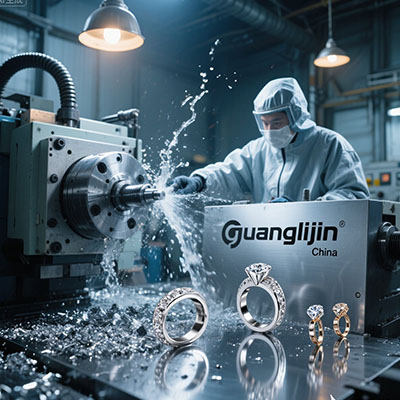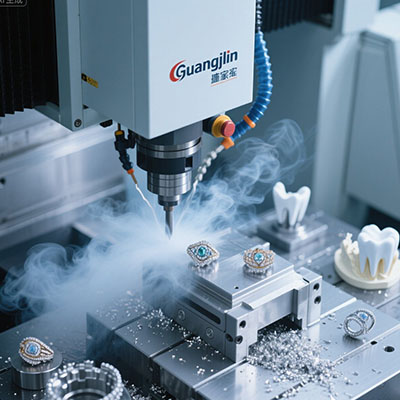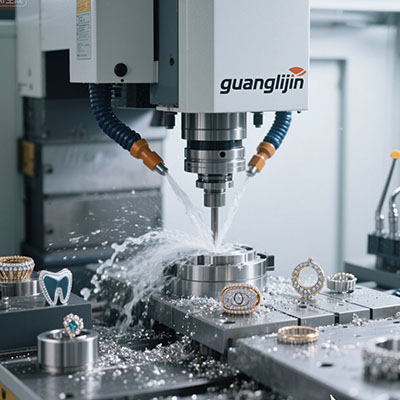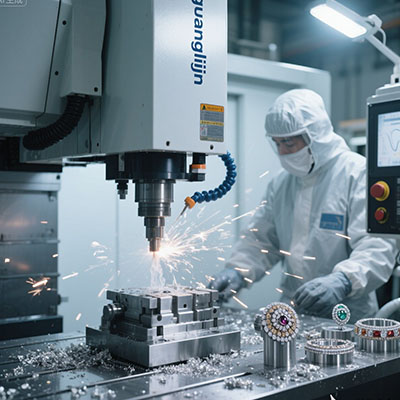
The world of fine jewellery creation is undergoing a quiet revolution. Traditional methods, while rich in heritage, often struggle with the demands for extreme precision and complex geometries. This is where advanced CNC molding solutions step in, offering unparalleled accuracy for modern jewellery casting.
The Precision Problem in Traditional Casting
Lost-wax casting has been the standard for decades. However, manual wax model carving introduces inconsistencies. Fine details like micro-pavé settings or intricate filigree can get lost. Vents and sprues are often placed by experience rather than scientific calculation, leading to frustrating defects.
Common issues include porosity, incomplete fills, and dimensional inaccuracies. These problems result in costly rework, wasted precious metals, and delayed timelines. The need for a more reliable, repeatable process is clear.
CNC Machined Molds: The High-Accuracy Solution
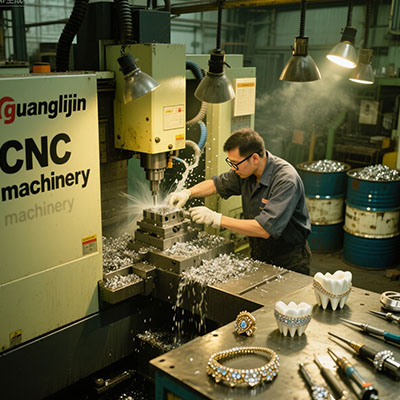
CNC (Computer Numerical Control) technology provides the answer. Instead of a hand-carved wax pattern, a mold for wax injection or even a direct metal mold is machined from a solid block. The digital model is executed with microscopic precision.
This approach guarantees that every single wax pattern, and subsequently every cast piece, is identical. It allows for geometries impossible to carve by hand. Complex undercuts, perfect symmetry, and razor-sharp textures become routine. For high-volume or high-precision jewellery casting, it’s a game-changer.
Key Benefits of CNC-Driven Casting
Let’s break down the concrete advantages. First, dimensional accuracy skyrockets. Tolerances can be held within ±0.05mm, ensuring stones fit perfectly. Second, surface finish quality is superior, reducing polishing time by up to 50% according to a 2023 industry report by Jewelry Manufacturing Journal.
Third, it enables rapid prototyping. Design iterations are faster since you modify a CAD file, not a physical model. Fourth, production scalability becomes seamless. Once the perfect digital mold is made, replicating it is effortless.
Implementation: A Step-by-Step Guide
Transitioning to CNC-aided casting doesn’t have to be daunting. Here is a practical five-step guide.
- Optimize Your 3D CAD Model: Ensure your design is “manifold” (watertight). Define critical tolerances for stone seats and connections.
- Mold Design & Simulation: Use specialized software to design the mold blocks. Simulate wax flow and metal pouring to optimize gate and vent placement.
- CNC Machining the Mold: Select the right mold material (e.g., aluminum, steel). Machine the mold cavities with fine-detail cutting tools.
- Wax Pattern Injection & Assembly: Inject wax into the machined mold to create flawless patterns. Assemble these onto a wax “tree” for casting.
- Investment Casting & Finishing: Follow standard investment (lost-wax) jewelry casting procedures. The superior wax pattern directly yields a superior metal casting.
Case Study: Complex Ring Project
We team in a 2025 project encountered a major hurdle. The client wanted a ring with a seamless, interwoven band pattern and over 100 tiny micro-prong settings. Traditional methods failed consistently.
By switching to a CNC-machined aluminum mold for wax injection, the problem was solved. The castings came out perfect every time. Post-casting labor dropped dramatically, and the client’s reject rate fell from 30% to near zero. It was a clear win.
Comparative Analysis: Project A vs. Project B
| Parameter | Project A (Traditional Hand-Made Wax) | Project B (CNC-Machined Mold) |
|---|---|---|
| Lead Time for 100 Units | 4 Weeks | 2.5 Weeks |
| Average Dimensional Variance | ±0.15mm | ±0.05mm |
| Post-Casting Polish Time | 45 min/piece | 20 min/piece |
| Metal Waste Due to Defects | ~8% (Source: Internal Audit) | ~1.5% |
| Ability for Design Changes | Difficult & Slow | Fast via CAD |
Common Pitfalls and How to Avoid Them
⚠ Attention: The biggest mistake is assuming CNC is a magic bullet. A poor CAD model will result in a poor mold. Garbage in, garbage out. Always run simulation software to check for potential air traps or weak flow areas in your mold design.
Another frequent error is neglecting mold maintenance. Aluminum molds can wear. Regularly clean injection channels and inspect for damage. Surprisingly, skipping this can ruin your cost savings quickly.
Essential Checklist for Your First CNC-Aided Casting Project
- ☑ CAD file is manifold and error-free.
- ☑ Mold flow simulation has been performed and optimized.
- ☑ Chosen mold material suits your production volume (Al for prototypes/hundreds, Steel for thousands).
- ☑ CNC machine tooling paths are reviewed for fine-detail preservation.
- ☑ First-article inspection plan is ready (check critical dimensions with calipers/microscope).
- ☑ Post-casting finishing process is adjusted for higher-quality raw castings.
Frequently Asked Questions (FAQs)
Q1: What is the difference between investment casting and 3D printed jewelry casting?
A: Investment casting is the overall metal-forming process. 3D printing is often used to create the wax or resin pattern *for* investment casting, replacing hand-carved wax. It’s a complementary technology within the modern casting workflow.
Q2: How can I reduce porosity in gold jewelry casting for my custom pieces?
A: Porosity is often caused by trapped gas or shrinkage. Using CNC-machined molds ensures optimal venting. Also, control your metal temperature and flask temperature carefully. A study by the World Gold Council suggests using vacuum-assisted casting can reduce porosity by over 70%.
Q3: Is lost wax casting for beginners still viable with CNC technology?
A: Absolutely! In fact, it can be more reliable. Beginners can partner with a service that offers CNC mold design. You provide the CAD file, and they handle the technical mold creation. This gives you professional results while you learn the basics of investment and finishing.
Q4: What are the best jewelry casting supplies for use with CNC molds?
A: For wax injection, use a low-shrinkage, high-resolution modeling wax. For investment, a fine-grade plaster-silica blend is crucial to capture every detail from the precise wax pattern. Your supplier can recommend specific products compatible with your metal alloy.
In conclusion, integrating CNC molding into your jewellery casting process isn’t just an upgrade; it’s a strategic move towards absolute quality control and efficiency. It bridges the gap between digital design perfection and physical masterpiece. Start with a single complex project, follow the checklist, and witness the transformation in your craft.